From vallenato and cumbia to salsa and rock, Colombia is one of the most musical places in the world. Because of its strategic location, it assimilated styles from other regions and incorporated them into its own, stubbornly idiosyncratic stew.
Barely restrained passion is an apt description for most Colombian genres — from the giddy speed of its pioneering salsa brand, to the tragic narratives of vallenato lore and the fleshy sensuality of cutting-edge reggaetón. Tracing the development of Colombian popular music from the ‘60s to the present, these 10 albums offer an introduction to a land of wonders.
Leonor González Mina - Cantos de mi Tierra y de mi Raza (1964)
There is a stately, almost otherworldly feel to this session of Colombian Afro genres – the debut of cultural icon Leonor González Mina, known as la negra grande de Colombia.
Born in the Valle del Cauca department in 1934 — and still with us — she began her artistic career touring the world with a dance company, and recorded this album when she returned home. It breathes and sways to the golden era of Colombian music, when virtuoso bandleaders such as Lucho Bermúdez and Pacho Galán infused traditional folk formats with the cosmopolitan swagger of big band jazz. There are some wondrous cumbias here — "Canoa Ranchera" would be covered by Grupo Niche in the ‘90s — but it is Leonor’s voice that steals the show.
La Banda Nueva - La Gran Feria (1973)
Leave it to Colombian musicians to create a prog-rock masterpiece with a tinge of salsa and a healthy sense of humor. The Bogota quartet formed by Orlando Betancur — former member of ‘60s rock group Los Flippers – was short-lived, but La Gran Feria will remain in memory as one of the grand Latin albums of the ‘70s.
There are echoes of Argentinian supergroup Sui Generis in this tender, vulnerable and hippiesque trip into the adventurous youth culture of the time. Hit single "Emiliano Pinilla" brims with Afro-Caribbean euphoria, whereas "El Blues del Bus" traverses the treacherous streets of Bogota and "La Gran Feria" would make early Yes proud.
Fruko - El Grande (1975)
Yes, it’s a salsa record — but it’s also so much more than that. At the time, Fruko y sus Tesos was one of the most epic orchestras in Latin America, combining the prodigious talent of arranger, bandleader and multi-instrumentalist Julio Ernesto Estrada ("Fruko," because he looked just like the character drawn on a can of tomato sauce) and his two stars, singer/songwriters Joe Arroyo and Wilson "Saoko" Manyoma.
Go beyond the timeless mega-hit "El Preso" and you will find the James Brown-inspired funkathon of "Confundido," the wickedly psychedelic "Flores Silvestres" and the sweet melody that permeates "Manyoma," among other delights.
Joe Arroyo – Fuego En Mi Mente (1988)
As a teen, Arroyo performed in the brothels of his native Cartagena, and the sounds of calypso, reggae and funk that arrived in the busy port town influenced the creation of his own frantic and mellifluous subgenre, the joe-son.
Arroyo tasted stardom as a member of Fruko y sus Tesos, but his creativity as a singer/songwriter peaked with his own band, La Verdad, and the albums he recorded for Discos Fuentes in the ‘80s. Famously covered by Juanes, "La Noche" is a love letter to the luster of Afro-Caribbean nights. A raucous cumbión, "A Mi Dios Todo Le Debo" addresses the divine intervention that pulled him from a coma and gave him a second lease of life. "Las Cajas" distills his essence — a pan-tropical performer of unerring instinct and charisma.
Grupo Niche – Sutil y Contundente (1989)
With Jairo Varela’s Grupo Niche, salsa gained in tightness and attitude, lurid moral fables and magical realism. A self-taught songwriter and bandleader from the province of Chocó, Varela left this world in 2012 at age 62, but left behind a rich discography.
This late ‘80s session is one of his best, if only for the inclusion of slow-boiling scorchers like "Miserable" and "Bar y Copas." Both gain in intensity thanks to the delivery of Puerto Rican singer Tito Gómez, whom Varela poached from the venerable Sonora Ponceña after both orchestras coincided in a festival. Watch for the spiraling synth melodies that bring Niche’s salsa an inch away from bubblegum pop.
Diomedes Díaz & Juancho Rois – Título de Amor (1993)
A one-way ticket to vallenato heaven, this 1993 session finds the beloved singer/songwriter Diomedes Díaz and accordion genius Juancho Rois at the highest point of their creative partnership. From Díaz’s self-penned opener "Mi Primera Cana" (where the discovery of a first white hair leads to a bitter meditation on lost youth and romantic disappointment) to the hypnotic melody of "Tú Eres La Reina," this session soars from beginning to end. Sadly, Rois died in a plane crash at 35 on the way to a gig, while Díaz succumbed to a heart attack in 2013 at age 56.
Aterciopelados – Caribe Atómico (1998)
There was punky anger and irreverence to spare in the initial recordings of the duo formed by vocalist Andrea Echeverri and multi-instrumentalist Héctor Buitrago — in concert, a ball of fire. But by the time they released their fourth effort in 1998, the Aterciopelados persona had matured into an inspired melding of Latin trip-hop and fuzzy tropical rock. In retrospect, this is one of the tightest albums of its era — check out the bass line on "Humor y Alquitrán" — and Echeverri’s gorgeous vocals positively soar.
Carlos Vives – El Amor de mi Tierra (1999)
A former soap opera star, Vives single-handedly renewed Colombian music with a pop-rock hybrid that drew from the heart-wrenching vallenato genre, which he called "the rock’n’roll of his land."
Hopeful, sentimental and endlessly romantic — colored by folk instruments like the gaita flute and the feisty accordion lines of master player Egidio Cuadrado — the new sound enjoyed critical and commercial success, and the ever smiling Vives became a worldwide cultural ambassador of his land. El Amor de mi Tierra marks the highest point of his sonic expression, where timeless, self-penned hits are enhanced by his peerless revision of the classic José Barros cumbia "La Piragua."
Monsieur Periné – Caja de Música (2015)
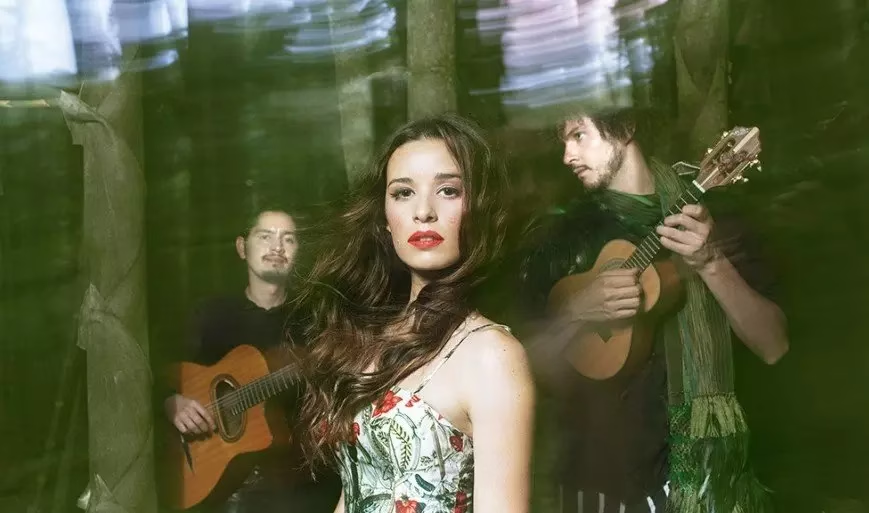
Wonderful as they are, the studio albums of Bogota band Monsieur Periné are a pale reflection of their joyful adrenaline onstage, as singer Catalina García dances in unison to the brass section.
Inspired by the rollicking retro charm of Django Reinhardt and 1930’s gypsy jazz, Periné uses swing harmonies and the subtle shades of French chanson as primary colors in its palette — but there’s also space for reggae, bolero and indie rock. García brings it all together with the clarity and optimism of her voice. This, their second album, is probably their best.
J Balvin – Vibras (2018)
Sometime in the future, an academic paper will be written about the exuberance with which Colombia embraced the reggaetón movement that emerged from Puerto Rico in the early 2000’s — not with the flattery of imitation, but rather the desire to enhance and transform.
The third album by international urbano star J Balvin, Vibras represents the emergence of 21st century Latin as the new global pop. Who could resist "Mi Gente," with its eerie digital sonics, decadent moombahton pulse and pluralistic idealism ("my music discriminates no one"). From the theatrical beauty of "Brillo" — with a pre-MOTOMAMI Rosalía — to the languid musings of the Carla Morrison-infused opener "Vibras," this is an aural snapshot of Colombia poised for global nomination.