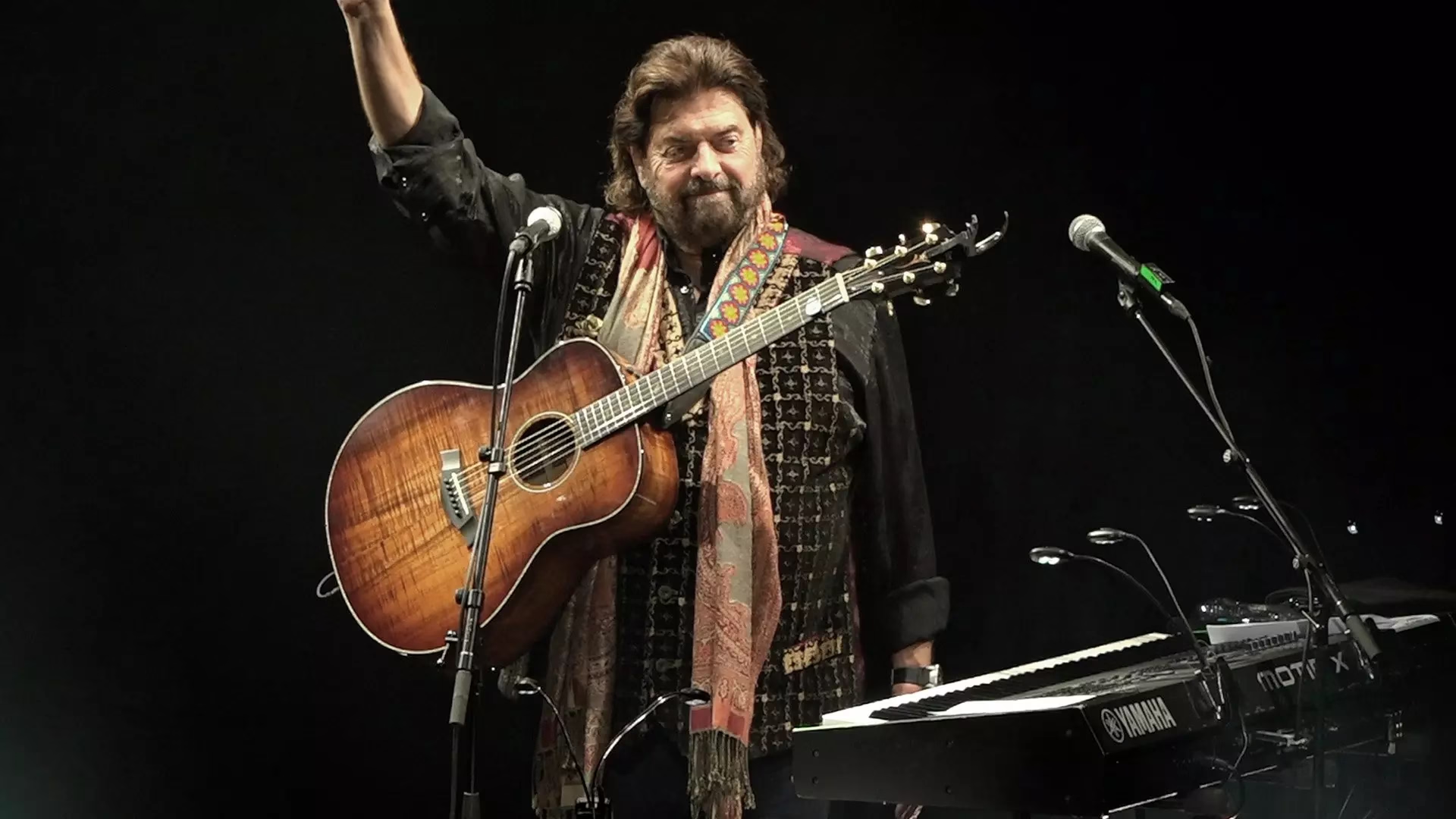
Alan Parsons is a legend in the recording studio. He earned his first engineering credit on the Beatles' Abbey Road album when he was still a teenager, and since then, he's been an engineer on albums by the likes of Pink Floyd and The Hollies, as well as helming his own act, The Alan Parsons Project.
Since his early days in music, Parsons used a technique in the studio that's gone on to become his signature sound. He may not have a favorite piece of physical gear, but he certainly has a favorite method — and in this episode of It Goes to 11, he explains how it works and why it's such an effective studio tool.
"It's not that it's so much a favorite piece of equipment, as it's a concept that I've used for all my records, almost since I started engineering," he says. "And that concept is double track with varispeed."
English musician Roy Wood first taught Parsons this concept, and he learned to love it in the days when analog tapes were the go-to method of studio recording.
"I would change the speed very slightly on the tape machine — a tiny bit faster, or a tiny bit slower," Parsons explains. "Then I would double track the instrument being recorded at that slightly different speed. And that gives a wonderful chorus-ing effect. It's become almost a trademark sound of my records."
In the digital era, however, he's had to adapt to how he pulls off this signature move. "Back in the days of analog, it was pretty easy — you'd just press a button," Parsons continues. "But in the digital age, it's become a lot more difficult to do that."
Yet he still manages to make records using the varispeed concept, with the help of a piece of equipment called the Apogee Big Ben Master Clock. The studio timepiece keeps pace on master tracks, and includes subtle enough adjusters and modifiers that it's possible to use Parson's favorite method.
Press play on the video above to hear Parsons explain more about the concept of double tracking with varispeed — and how he continues to do it in the studio today — and keep checking GRAMMY.com for more episodes of It Goes to 11.
Sex Pistols' Steve Jones Re-Loads "Jonesy's Jukebox" Podcast Following FX Series Success