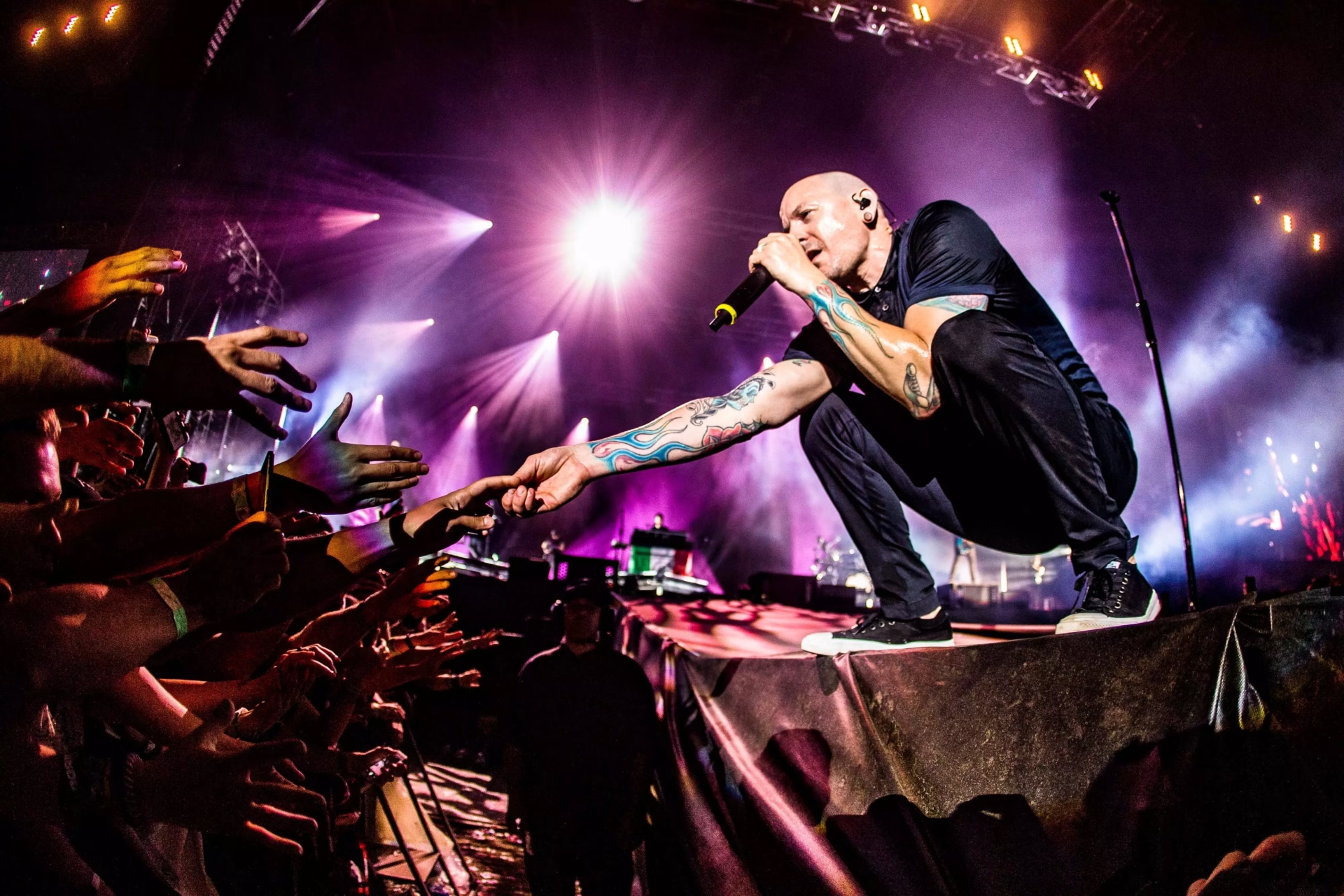
On July 20, 2017, the world mourned the loss of Chester Bennington, the beloved frontman of Linkin Park. It was devastating news that jolted the rock community who had just lost Soundgarden's Chris Cornell two months prior. With the loss of Bennington — on what would've been Cornell's 53rd birthday — the genre said goodbye to two of its most influential voices.
Five years later, Bennington's influence is still reverberating, with generations of bands and vocalists still taking creative cues from the artistic road Linkin Park paved. Upon their debut with 2000's Hybrid Theory, the group sent a shockwave through popular culture with their unflinchingly unique sound that fused metal, hip-hop and electronic music. Coupled with confessional lyrics, Linkin Park's music helped usher rock into a new, more emotive era — with Bennington's powerful voice at the helm.
"For all its testosterone rage, the band violated the notion that to be male is to be steady, unstudied, and tough," suggested The Atlantic in 2018, noting that they made music "the family could mosh to" thanks to its curse-free lyrics. "Linkin Park's form of nu metal — the rap-rock style in vogue around the turn of the millennium — was polished." Limp Bizkit frontman Fred Durst was frank about the singer's personal impact on nu metal. "I told him if it weren't for him and his voice and his words, this genre would never have reached the masses and affected so many lives."
That nu metal sound, a rarity for a rock outfit, made Bennington and his bandmates (co-vocalist/keyboardist Mike Shinoda, lead guitarist Brad Delson, turntablist Joe Hahn, bassist Dave Farrell and drummer Rob Bourdon) global juggernauts. "Linkin Park turned nu metal universal," notedBillboard in the wake of Bennington's death. "It's hard to imagine many other hard-rock vocalists reaching so many souls." Buzzfeed reflected on the band's impact in 2020, with an article aptly titled "How Linkin Park Helped Suburban Teenagers Feel Their Feelings."
When Linkin Park first began making music together (initially under the name Xero), Bennington wasn't part of its original lineup. After fronting a couple of short-lived rock bands in his native Phoenix, Bennington worked a droll technology job until he got a fateful call from a music industry lawyer he knew. "[He said], 'Hey, there's this band in L.A. that has tons of people watching them. They're going to go places if they get the right guy, and I think you're the guy who can help them pull it off,'" Bennington once recalled.
The fledgling band in question had their musical tires spinning in the mud, knowing something was missing. That certain something turned out to be a dynamic frontman — and Bennington felt he needed them as much as they needed him. He promptly quit his job and joined the group upon hearing their demo. "When this opportunity came up, I was like, 'This is it!'" he'd later recall. "I had a feeling about this one."
Shinoda was immediately taken aback by Bennington's vocal power. "Chester's voice was insane," he mused to Music Radar in 2020. "There was nothing else like it." Remembering Bennington's knack for vocals that conveyed both strength and vulnerability, Shinoda added, "I feel like we didn't even know the extent, meaning he and I, when we met and started writing together and experimenting with how he would fit into the band."
Shinoda's chemistry with Bennington quickly became clear as Linkin Park put together their debut album. And once Hybrid Theory was out in the world, it was evident that they had captured a sound that was both special and influential.
As Shinoda has said himself, "so many artists" have told him that they were only listening to one style of music before Linkin Park. "Now when I listen to new music and hear that seamless integration of so many different styles, I'm really proud to have played a part in bridging those gaps and blending those things," he added.
Linkin Park's expansive, genre-bending sound has inspired countless artists, especially those who were young when the group first debuted — like Colson Baker, who would later become known as Machine Gun Kelly. "Hybrid Theory was one of the first three CDs that I ever had in my life," Baker told Kerrang in 2020.
Released when Kelly was just 10 years old, Hybrid Theory and its unique tracks — including Linkin Park's biggest hit, "In The End," and the GRAMMY-winning single "Crawling" — proved to be a formative musical lesson for the future star. As Shinoda alluded, MGK said he was listening to decidedly different music before Linkin Park. "When 'Papercut' comes on and that f*ing beat kicks in — oh my God! Imagine going from listening to the Grease soundtrack to listening to that!"
Hybrid Theory was a ubiquitous creative beacon for aspiring musicians. That includes Austin Carlile, the frontman for the rock band Of Mice and Men. "I bought Hybrid Theory when I was a sophomore in high school," he told Revolver in 2015. "It was the angriest thing I'd ever heard at the time, other than Pantera — but Pantera was my dad's music, and this was the first record I really got into that I didn't learn about through him. Linkin Park has been my band for such a long time."
"They're one of those bands that I always have in the back of my mind when we're thinking about where a song should go next," Oli Sykes, singer for British rock group Bring Me the Horizon, told Alternative Press in an interview for Hybrid Theory's 20th anniversary. Upon Bennington's death, Corin Roddick (of electro-pop act Purity Ring) shared a similar sentiment in a Twitter tribute. "Linkin Park was my first concert," he wrote, "and it inspired me to make music."
That influence continued with 2003's Meteora, their acclaimed sophomore album that resulted in the hit single "Numb." (A year later, they released "Numb/Encore," a duet with Jay-Z from their 2004 collaborative album Collision Course; the collab won a GRAMMY for Best Rap/Sung Collaboration in 2006.) By 2007, the band joined forces with the legendary producer Rick Rubin for Minutes to Midnight, their third album which subsequently went five times platinum and spawned the GRAMMY-nominated smash "What I've Done."
It was a penchant for boundary pushing that extended late into Bennington's run in the band, including their seventh studio album, One More Light, released two months before his death. Though the band's lyrics had never shied away from discussing mental struggles, the album's lead single, "Heavy," specifically disclosed the depression and demons that were haunting Bennington. "I don't like my mind right now," his painful lyrics go. "Stacking up problems that are so unnecessary."
Five years on, Bennington's legacy is still thriving, both musically and through 320 Changes Direction, the mental health advocacy organization his wife, Talinda, started in his memory. "Just sitting here thinking that I can't believe it's been 5 years since I last saw you and kissed your sweet face goodbye," she recently wrote on social media.
Fans also took to social media to remember Bennington on the fifth anniversary of his passing, with many using the hashtag #MakeChesterProud. "It's been 5 years and it hasn't been easy," one fan wrote on Twitter. "But thank you for always clearing my head, healing my heart and lifting my spirit. We miss you so much."