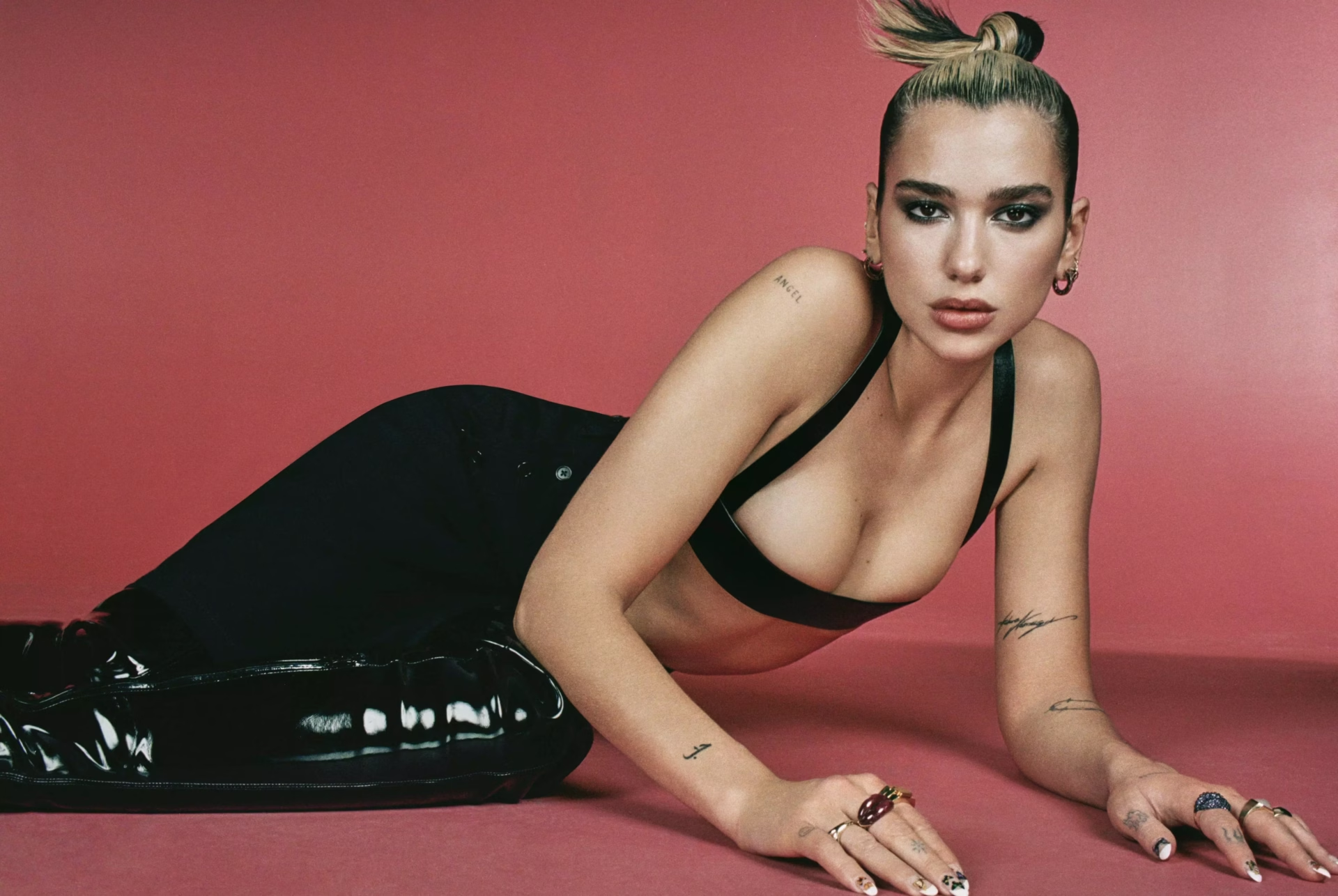
For Women's History Month 2021, GRAMMY.com is celebrating some of the women artists nominated at the 2021 GRAMMY Awards show. Today, we honor Dua Lipa, who's currently nominated for six GRAMMYs.
There was so much to mourn in 2020: The last time we hugged our families, traveled to new places and swayed among sweaty strangers on a dance floor. But that didn't stop Dua Lipa.
Since last March, the English pop star has released not one, but three albums. The first of the trilogy, her defiant dance pop sophomore record, Future Nostalgia, released last March just as the COVID-19 pandemic was beginning to take hold over the world, quickly became a nu-disco-tinged masterpiece. It was a bold move for Lipa to release a record in a pandemic, with the major-label pop album rollout upended and international touring put on pause.
The risk paid off: Future Nostalgia became her first album to enter the Top 5 on Billboard's Hot 200 chart. And if Future Nostalgia was any indication, the thrill of taking risks was far from over.
Last August, the singer released Club Future Nostalgia, an adrenaline-filled remix album for the digital dance floor, made with DJ/producer the Blessed Madonna. For the album, she enlisted collaborators Blackpink, Mark Ronson, Madonna, Missy Elliott and Gwen Stefani.
But she still wasn't done expanding the Future Nostalgia universe. Just last month, she shared another version of the album, The Moonlight Edition, which included three new singles as well as Lipa's "Prisoner" collaboration with Miley Cyrus; "Un Día" with J Balvin, Bad Bunny and Tainy, for which she's currently nominated for Best Pop Duo/Group Performance; and "Not My Problem" with J.I.D.
It's clear Lipa put in the work to get here. With the release of her 2017 self-titled debut album, the singer became crystallized as a feminist force in the pop world. Singles like the beguiling synth-pop anthem "Be the One" and the club-ready "Blow Your Mind (Mwah)" captivated listeners. But it was the empowering smash "New Rules" that ignited a viral craze for its infectious lyrics and GIF-able music video, which is filled with women holding and uplifting each other while dancing sleepover-themed choreography.
Dua Lipa and the subsequent success of "New Rules" helped Lipa nab a Best New Artist GRAMMY in 2019—plus an internet nickname ("Dula Peep")—and primed her for pop superstardom. While her self-titled album established her as a headlining pop contender, Lipa continued to push herself.
Part of challenging herself came in the fallout of the pandemic. The pop album release cycle is generally highly orchestrated, teeming with the careful planning of single releases, music videos and tour dates. But one cannot prepare for unprecedented times: Per The New York Times, as Lipa's 85-date arena tour was pushed back, there were talks in her camp of postponing the drop of Future Nostalgia—then days before her livestream of the album leaked—and an imminent release became necessary. This was all happening in parallel with the collective trauma and grief the world was facing with COVID.
Future Nostalgia delivered exactly the escapism people around the world sought.
<style>.embed-container { position: relative; padding-bottom: 56.25%; height: 0; overflow: hidden; max-width: 100%; } .embed-container iframe, .embed-container object, .embed-container embed { position: absolute; top: 0; left: 0; width: 100%; height: 100%; }</style><div class='embed-container'><iframe src='https://www.youtube.com/embed/oygrmJFKYZY' frameborder='0' allowfullscreen></iframe></div>
The anthemic single "Don't Start Now," currently nominated for Record Of The Year, Song Of The Year and Best Pop Solo Performance at the 2021 GRAMMY Awards show, was the kind of carefree, disco-inflected number you'd hear while skating backward at a '70s roller rink. What followed was the candy-coated, dance pop track "Physical," which delivered '80s aerobics touchstones, and "Break My Heart," a glittery, disco funk jaunt with swaggering guitar riffs. (The album's retro-futuristic slant touched everything: from the songs themselves to the neon leotards in the music videos.)
Lipa saw how cathartic the music had become for her fans. The album hailed quarantine anthems and received the meme treatment: "Don't Start Now" for its refrain ("Don't show up/Don't come out") and "Break My Heart" for its very timely chorus ("I should have stayed home").
As fans found new ways to connect with Future Nostalgia, so did Lipa—and innovation took the lead. Doing late-night TV performances required a newfound sense of creativity.
Then there was the idea of trying to recreate concerts. While a garden variety of livestreams had been sprinkled throughout 2020, the absence of flashy arena performances was an obvious void. But despite live shows being canceled indefinitely, Lipa led the charge behind one of the year's most highly anticipated—and polished—virtual concerts with Studio 2054, which paid homage to the Future Nostalgia universe. Filmed in a sprawling London warehouse, the livestream concert saw Lipa command the stage of custom-built sets with sleek choreography, glitter, glam, raves and roller discos, along with special appearances from Elton John, FKA twigs, Kylie Minogue, Bad Bunny and more.
Future Nostalgia was indeed a game-changer for Lipa's musical arc and aesthetic; it was a transformation for her career, too. She didn't just create an album—she created an era. "Her voice changes a song the same way her presence lights up a room," Future Nostalgia producer Ian Kirkpatrick tells GRAMMY.com.
Future Nostalgia took Lipa into powerhouse territory, with the singer making the massive leap from Best New Artist to pop's newest reigning queen. Most of all, it showed that Lipa could seamlessly redefine herself. Sarah Hudson, who co-wrote songs on her debut album as well as "Levitating" and "Physical" off Future Nostalgia, had "no doubt" that Lipa "would take over the world." "[Dua] had a very specific vision for Future Nostalgia, and she executed it flawlessly," she tells GRAMMY.com. "It comes genuinely from her heart, and you can feel that in every single song."
It also helped that Lipa had a top-tier team behind her. Chris Gehringer, who mastered Future Nostalgia, says that the album's success stemmed from the fact that Lipa enlisted producers and engineers who all "worked on a No. 1 song and album before." "I mastered three songs from her debut album, 'Lost In Your Light,' 'Blow Your Mind' and 'New Rules,' so I knew this new album was going to be big," he tells GRAMMY.com. Ali Tamposi, who co-wrote "Break My Heart," describes Lipa as a "force to be reckoned with." "We're lucky to have someone like her at the forefront of music who [continuously] raises the bar."
<style>.embed-container { position: relative; padding-bottom: 56.25%; height: 0; overflow: hidden; max-width: 100%; } .embed-container iframe, .embed-container object, .embed-container embed { position: absolute; top: 0; left: 0; width: 100%; height: 100%; }</style><div class='embed-container'><iframe src='https://www.youtube.com/embed/9HDEHj2yzew' frameborder='0' allowfullscreen></iframe></div>
And the 2021 GRAMMYs reflect that. With six GRAMMY nominations, including Album Of The Year and Best Pop Vocal Album, Lipa is one of the most nominated artists this year.
Following this year's GRAMMYs, it'll be interesting to watch how Dua Lipa continues to evolve as an artist. Future Nostalgia was such a sonic departure from her first album—how will she push the boundaries of pop next?
How Harry Styles Emerged From Teen Pop Sensation To First-Time GRAMMY Nominee