It’s easy to underestimate the reach and influence of the Elephant 6 Recording Company. After all, bands like the Apples In Stereo and the Olivia Tremor Control aren’t exactly household names. And yet, for indie rock fans, the little label that could typically conveys not just musical excellence but also true artistic passion.
Born in Ruston, Louisiana in the late ‘80s, Elephant 6 has always been part label, part ethos, and part art collective, birthing intertwined psych pop acts like Neutral Milk Hotel, Elf Power, Of Montreal, and the Minders. It’s intimately associated with both the Denver and the Athens, Georgia music scenes, and it’s inspired acts like Arcade Fire, the Shins, and Tame Impala.
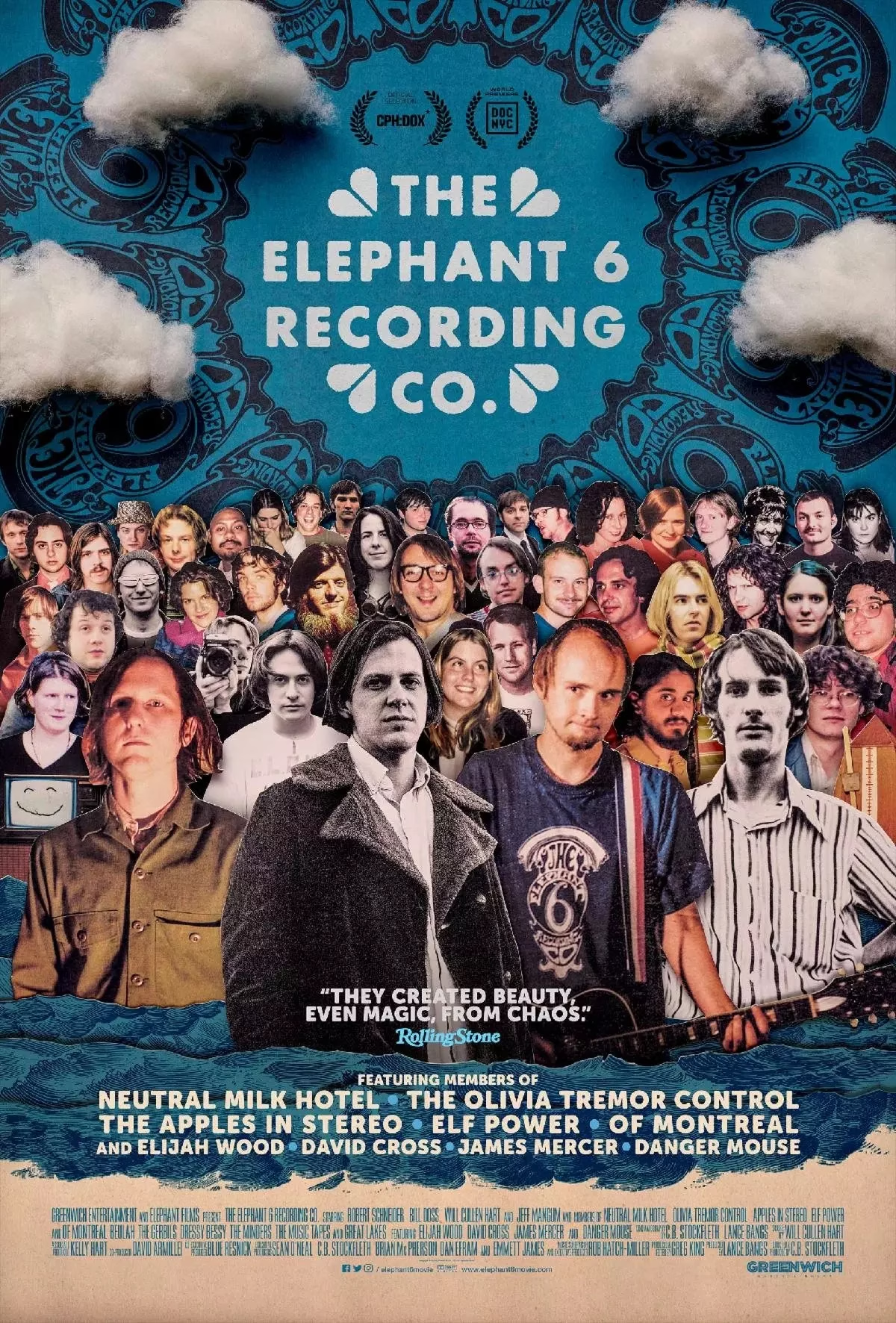
It’s also the subject of a new documentary, The Elephant 6 Recording Co., which hits streaming VOD on Sept. 1. Directed by C.B. Stockfleth, the film attempts to sum up 30-odd years of musical achievement and growth in under two hours, interweaving personal dramas, harrowing tales of awful apartments, and talking head appearances from people like Elijah Wood and David Cross.
It’s a beautiful and deeply intimate look at the collective, as well as a crash course on all of E6’s most beloved and influential recordings. Here are eight cool things we took away from the movie.
It All Started With Four High School Friends
Growing up in Ruston, Louisiana in the ‘80s, Bill Ross, Will Cullen Hart, Jeff Mangum, and Robert Schneider didn’t have a whole lot to do. When they were bored they’d go goof around at the local music shop, and they all took lessons from the same long-haired hippie guitar teacher. Mangum eventually got a gig working at Louisiana Tech’s college radio station, and, like his three friends, dove headfirst into listening to, sharing, and creating music.
That quartet began to share tapes of songs they made on four-track recorders, forming de facto bands to open for acts like Sebadoh who’d come through town looking for living room shows. In the doc, E6 members say that in Ruston they learned to be each other’s support system, saying that "kids in places like that tend to get deeper into the things they love… [in order to] escape into something."
The Collective's Name Comes From A Max Ernst Painting
When the group decided to release some of the music they’d made as 7-inch records, they knew they needed a name. They went with Elephant 6 after Hart misread the name of a Max Ernst painting, "The Elephant Celebes." Hart designed the group’s logo, which seems inspired by the swoopy, psychedelic art that was popular in the ‘60s.
The Group Valued Authenticity & Experimentation Above All Else
Much of E6’s early output was self-recorded on four- and eight-track recorders, with band members manipulating found sounds and offbeat instruments to create the tones they wanted. Hart says the Beatles’ "Tomorrow Never Knows" was an inspiration for some of "super layered" tracks he loved, while Doss — a much more meticulous performer — says in the doc that he’s a fan of the distinct sound you get from recording on actual tape.
Schneider also says in the doc that he’s always been passionately committed to "not being slick," and says that, for a lot of members of the collective, a slick veneer just isn’t an option.
Members Lived In Different Cities, But Always Worked Together
Eventually, Schneider moved to Denver while Ross, Hart, Mangum, and about 17 or so other Rustonians moved to Athens, Georgia. They knew from watching acts like R.E.M. and Pylon that the college town had a supportive music scene, calling it a "beacon for weirdos" and a "comfortable fit" for people moving from a small Southern town.
In Denver, Schneider formed the Apples In Stereo after meeting Jim McIntyre on a city bus and striking up a chat about the Beach Boys. The group produced fun, melodic music that got noticed by indie tastemakers like the creators of the Nickelodeon show "The Adventures Of Pete And Pete," and eventually, in 1995, released a full-length LP, the much-loved Fun Trick Noisemaker. Schneider calls that record "Pavement crossed with the Beach Boys crossed with Interstellar Overdrive," but notes that the band also called itself a psych act.
Schneider also opened Pet Sounds Studio in Denver66, and Mangum would often swing through to stay and work through musical ideas.
Athens Was Essential To Olivia Tremor Control & Neutral Milk Hotel
In a way, The Elephant 6 Recording Co. feels like a bit of a love letter to Athens, Georgia, the kooky little town that helped pave the way for so much musical experimentation.
The town, E6 members say, was cheap enough that you could work part time and get by, sharing a run-down old house with the rest of your band. Bands could spend hours upon end working through ideas and playing together, in part because they loved it but also because they were all dirt poor and didn’t have much else to do.
All of that combined into a stew that yielded inspiring, interesting music, with one E6 member remarking in the doc that, "there are certain records you can’t make in New York City."
In The Aeroplane Over The Sea Was A Masterpiece From The Jump
Mangum and the rest of Neutral Milk Hotel recorded In The Aeroplane Over The Sea with Schneider at Pet Sounds Studio. (Schneider says he was also working on the Minders’ Hooray For Tuesday around the same time.) The sessions seem to have been fairly quick and magical, with Mangum nailing all of "Oh Comely" in one take.
When Mangum brought the record back to Athens and played it for friends, he told them he wanted Hart to lay cool electronic blips and bleeps over parts of the record. The friends, who had been stunned into silence after hearing the record, strongly advised against it, saying "No, this is the record." Even now, In The Aeroplane is considered an indie masterpiece.
Elephant 6 Created A Big Extended Family
While indie scenes in cities like Chicago and New York were rife with infighting, the Elephant 6 gang in Athens kept things friendly. One member said that their biggest problem was "how do we get all seven bands on the same bill."
That friendliness ultimately led to E6’s power being diluted, as more and more indie pop and psych bands around the country sought out and were permitted to put the collective’s logo on their records. What was once a mark of a tight group of friends and collaborators became more of a vibe and, in the early ‘00s, the collective became artistically stagnant.
When Bill Doss Died, A Part Of Elephant 6 Did Too
There’s a lot of footage of Bill Doss in the documentary — both in solo interviews and in tandem with OTC bandmate Will Hart. Unfortunately, though, Doss died suddenly of an aneurysm in 2012, throwing the members of the collective into a bit of an emotional tailspin.
The film documents his beautiful musical memorial at the 40 Watt Club in Athens, and features footage of Hart and Schneider trying to finish up the unreleased third OTC record in Doss’ honor. Hart has since gone on to focus mainly on his work in other bands like the Circulatory System, while Schneider got a doctorate in mathematics and now works as a professor in Michigan.
6 Takeaways From Netflix's "Ladies First: A Story Of Women In Hip-Hop"