This month, Calling All Stations — the 15th and last studio album by British group Genesis — turns 25. It offers an intriguing (yet somewhat underwhelming) conclusion to the discography of a band that infused popular music with poetry and theatricality. Genesis enjoyed two careers in one; first as prog-rock pioneers in the '70s, then mainstream hitmakers throughout the '80s and early '90s. Both chapters share a common element: songwriting that surprises at every corner and defies expectations.
After producer Jonathan King discovered the group in the late '60s, he suggested the name Genesis, implying the promise of something new. It was a time of turmoil and growth for the English music scene, as the explosion of psychedelia, acid-folk and art-pop eventually coalesced into the heyday of progressive rock.
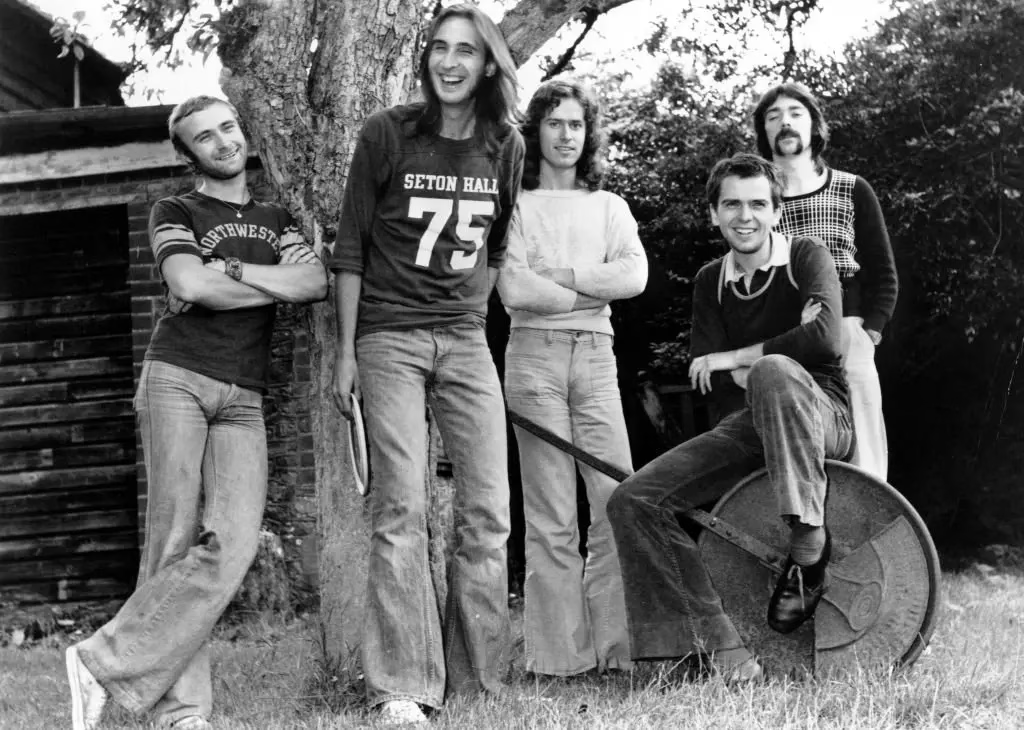
Genesis began as a teenage pop group, and after changing a couple of members, emerged in 1971 with its definitive lineup: singer Peter Gabriel, keyboardist Tony Banks, bassist Mike Rutherford, guitarist Steve Hackett and drummer Phil Collins. Lauded for representing the limitless imagination of prog, the GRAMMY-winning band quickly ventured beyond the confines of the genre.
Gabriel left in 1975, Hackett in '77, and Collins in '96. With Banks and Rutherford as core members, the group found resilience in change, eventually selling over 100 million records worldwide across their nearly three-decade run. Their final reunion tour, with Collins back on board, ended in March of this year.
Omitting the obvious hits, this list of 15 essential tracks highlights the Genesis songbook at its most majestic and ambitious.
"The Musical Box" (1971)
The opening track of Genesis' third album Nursery Cryme, this 10-minute mini-opera features the newly arrived Collins and Hackett. It also showcases the quintet's fully formed obsessions: a preoccupation with nocturnal moods and odd time signatures, pastoral passages and lyrics that merge Lewis Carroll-like whimsy with the surreal and macabre. The story's grand finale — the aged spirit of a murdered child returns from the dead to unleash a lifetime of pent-up desire — allowed 21 year-old Peter Gabriel to create a memorable onstage moment by wearing a creepy mask resembling an old man while performing.
"Harlequin" (1971)
At the beginning, Genesis sat comfortably next to like-minded bands such as King Crimson and Van Der Graaf Generator. It was perhaps the staggering individual talent of its members that allowed them to transcend their prog roots and become one of the most popular rock bands in history. A deep album cut like "Harlequin" brims with promise — its vulnerable, luminous energy has aged particularly well.
"Supper's Ready" (1972)
Together with "Close to the Edge" by Yes — both released the same year — "Supper's Ready" sums up the beautiful madness of the British progressive school, its attempt to elevate rock 'n' roll into a level of complexity and ambition that was unimaginable until then. The song features music-hall extravagance, cozy folk harmonies and 12-string guitars, cutting edge 9/8 drum patterns, and the apocalypse itself ("as sure as eggs is eggs"), its 23-minute run time occupying the entire side B of the Foxtrot LP. The ending crescendo, with Gabriel in stunning vocal form, evokes the rapture of a classical symphony.
"Firth Of Fifth" (1973)
Keyboardist Tony Banks was inspired by Rachmaninoff for the hyper-romantic piano intro to this Genesis stage favorite. Only five albums into its career, the band had achieved full artistic maturity — a rare state of grace that wouldn't last long. The melodies are particularly rich on this solemn rock hymn, and Hackett's byzantine electric solo became a point of reference for generations of future guitarists like Eddie Van Halen and Brian May.
"Carpet Crawlers" (1974)
A proposed album based on The Little Prince was canned in favor of Gabriel's patchy narrative about a disaffected Puerto Rican teen in New York City. Eerily predating the punk revolution, double LP The Lamb Lies Down On Broadway found the band overreaching for the first and only time. Still, it boasts many spectacular moments — and a Brian Eno contribution — such as this dreamy ballad with nonsensical lyrics and a spectral, spiraling piano pattern. Perhaps prematurely, Gabriel decided to leave the band while playing the entire album live across America.
"Dance On A Volcano" (1976)
They considered carrying on as an instrumental unit, then held auditions in search of a new vocalist. But in the end, Genesis decided to give Phil Collins a chance as lead singer, with Yes virtuoso Bill Bruford joining behind the drum kit on tour. Released in 1976, the first two post-Gabriel albums — A Trick of the Tail and Wind & Wuthering — include some of the band's finest work; the revamped sound direct and pristine. "Dance on a Volcano" reflects the influence that the then-popular jazz-rock fusion had on Collins.
"Ripples" (1976)
Genesis shone the brightest whenever they explored the more delicate, mournful shades of their sonic palette. From 1980 onwards, pop balladry would be the framework of choice. Before then, songs like "Ripples" combined the band's folk-rock vein with the influence of classical music. There are hints of Debussy and Ravel in the floating instrumental bridge — a passage seeped in longing, which arguably stands as the quintessential Genesis moment.
"Eleventh Earl Of Mar" (1976)
One of those rare instances when an album's title and cover sum up the specific aura of the music inside, Wind & Wuthering is misty and autumnal to the core. It is the one Genesis session most influenced by Hackett — his complex acoustic guitar contributing to the haunting mood. This was his last record with the band, followed by a string of brilliant solo albums.
"Duchess" (1980)
Hitting a sweet spot between art-rock density and mainstream vigor, Duke showcased Genesis as champions of eccentricity — sweeping instrumental workouts next to sad ballads about getting divorced. "Duchess" uses a primitive drum machine pattern as launching pad for a saga about the inevitable decline of a veteran singer. Years of nonstop touring had opened up Collins' vocal chords, resulting in performances that sounded positively soulful.
"Dodo/Lurker" (1981)
Beginning with Abacab, Genesis abandoned individual song credits and started writing from scratch in their newly built home studio. They infuriated longtime fans by adding a brass section to a couple of hits, experimenting joyfully with noise and booming drums, and incorporating Collins' hitmaking recipes once his solo career took off. It was undoubtedly a different band, but the subterranean prog tendencies were still there. There's a new-wave polish to "Dodo/Lurker," but the grandiose melodrama of years past shines through.
"You Might Recall" (1981)
Perhaps the biggest strength of the trio's commercial heyday was its ability to begin with a small idea like a riff or melody and allow it to blossom into a pop miniature. A B-side from the Abacab sessions, "You Might Recall" underscores the grit in Collins' voice — all those Motown records that he loved growing up — as well as the ease with which Banks and Rutherford became succinct and economical, without sacrificing the magic in their songwriting.
"In The Cage Medley" (1981)
Pittsburgh '76. Zurich '77. London Lyceum '80. Some Genesis concerts became the stuff of legend among fans, boosted by breathtaking light shows and the drum duets between Collins and former Weather Report percussionist Chester Thompson. Lifting a song from The Lamb and connecting it with various instrumental sections and the somber "Afterglow," the "In The Cage Medley" was always the high point of their concerts. This version from the double album Three Sides Live is electrifying.
"Home By The Sea" (1983)
With electronic drums and a new arsenal of keyboard patches, this is the tight, quirky edition of Genesis: a trio of wealthy rockers in their '30s who played four sold-out shows at Wembley in 1987. Some of their creative choices were baffling during this period, but when the magic worked, it was the very "pictures of delight" referenced in the lyrics of "Home by the Sea." The instrumental section in the middle sums up the best of '80s Genesis — grand, funky and cohesive. Vari-Lites were invented for songs such as this one.
"The Brazilian" (1986)
At the end of their journey together, Genesis excelled in a stark brand of minimalism. The trio found precious harmonic nuggets and maximized their emotional impact through the art of orchestration. This tribal percussive workout — almost like the theme to an imaginary movie — builds up subtle variations on the same lush melody and offers a striking coda to Invisible Touch, an album filled with massive pop singles.
"Hold On My Heart" (1991)
From 1981's "In The Air Tonight" until his departure from the band, Collins juggled solo stardom with his Genesis commitments. As a result, the despondent breakup ballads for which he became famous started infiltrating the group material. Still, the contribution of Banks and Rutherford to perennial radio favorites like "Hold On My Heart" added subtlety and sophistication. The result was openly commercial, but also possessed an indelible, peculiar beauty of its own.