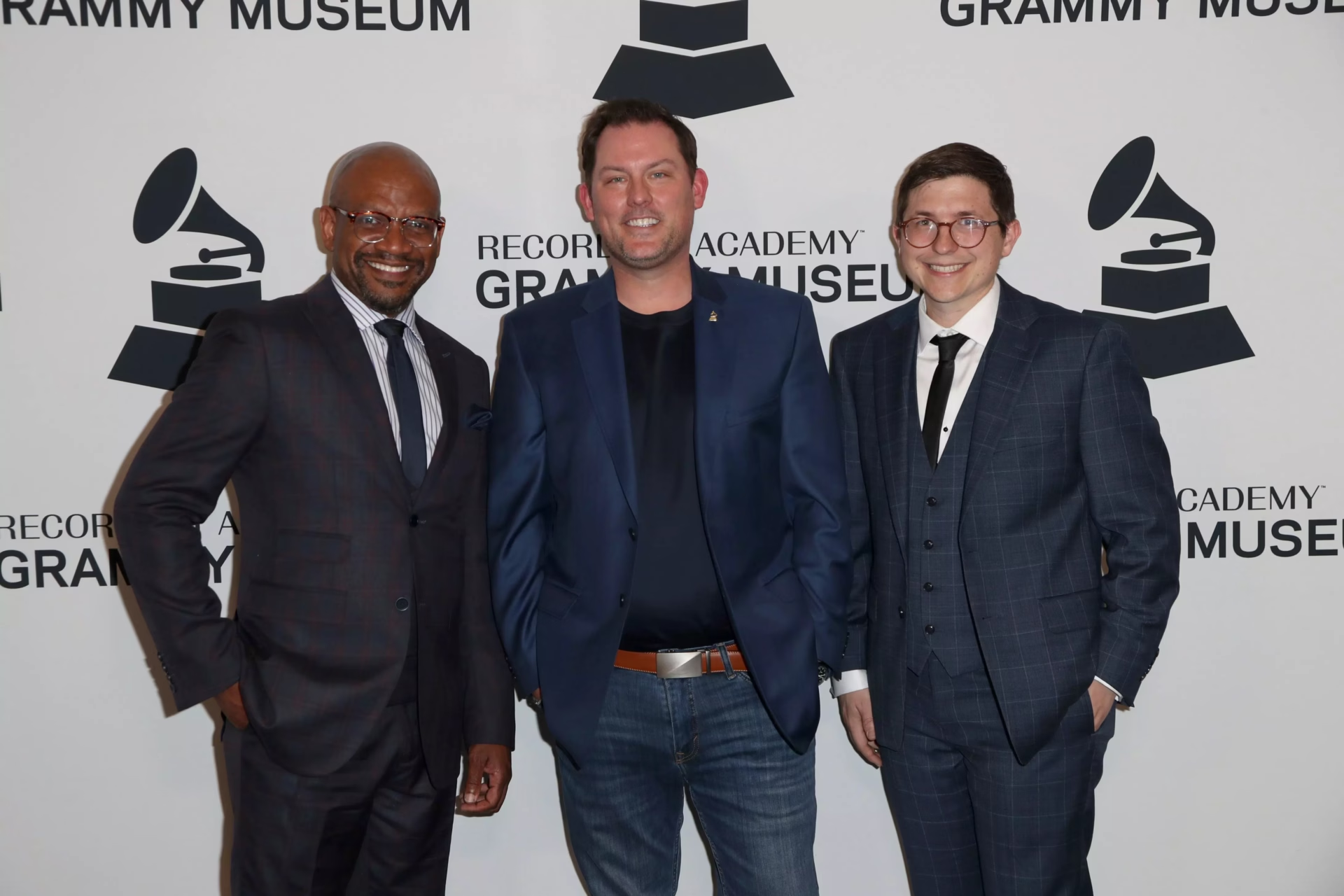
During this year's GRAMMY Week, executives, teachers, and students came together for the GRAMMY In The Schools Salute To Music Education. The evening — a collaborative effort from the Recording Academy and the GRAMMY Museum, presented by MGM Resorts International — celebrated the power of music education.
"Music education is now more important than ever. The GRAMMY Museum's preservation of music is so important — we recognize and honor our history, embrace our present and think toward the future," Valeisha Butterfield Jones, co-president of the Recording Academy, told GRAMMY.com on the red carpet. "When we think about tonight's mission, focus on education, focus on young people, it's all about the future — making sure that young people have a creative outlet, have artistic freedom and ways to express themselves. What better way to heal and unify."
Before Nathaniel Rateliff & The Night Sweats took the House of Blues Las Vegas stage for a special one-hour set, president and CEO of the GRAMMY Museum, Michael Sticka, presented the Music Educator Award to Jeffrey Murdock from University of Arkansas, and Stephen Cox from Eastland High School in Eastland, Texas, the respective 2021 and 2022 recipients.
As Sticka explained, the award recognizes educators who have made a significant and lasting contribution to the music education field, and demonstrated a commitment to the broader cause of maintaining music education in the schools. He added that they receive about 3,000 nominations each year.
Murdock and Cox both received a $10,000 honorarium and matching grant for their school's music program. Every year, nine additional finalists receive a $1,000 honorarium and matching grants. The remaining 15 semifinalists receive a $500 honorarium with matching school grants.
Prior to the ceremony, Murdock and Cox gave GRAMMY.com perspective on how the honor highlights the work they do in their classrooms, and what it signifies to their students.
"Having done this for the last year — going in and out of schools, watching educators — I am keenly aware that there are so many in the trenches everyday leveling the playing field in music education," said Murdock. "I feel like I'm a representative of all of those people who are doing this important work."
For Cox, it's about giving his students purpose. "I come from a little bitty town and a little bitty community — with 4,000 people — and the kids at my school sometimes think, 'We're in a little town, it doesn't matter.' What I hope this means to them, is that they matter," he said. "What I do in my classroom, I do because I think it's right. And I don't think that changes just because of the recognition. What I hope it does for my community, my kids, is that they know that they matter. They don't have to question it. They know that people in small places, small towns, matter."
Murdock said he told his students the award would not change him or what he does. "Students always say, 'You are going to be big time, and you're going to be doing this and that. No, we do the same work every day," he added. "After the award was announced last year, I went right back to my classroom that same day. 'Let's start over, let's continue to do this work.' I want them to know that they, too, can reach the masses and do so in meaningful ways — while not changing who they are," Murdock says.
Those who helped put on the GRAMMY In The Schools Salute To Music Education also spoke on the formative music experiences that impacted their lives and careers.
"In high school, my first concert was the BeeGees. Right before COVID, we had the awards for lifetime achievement and I got to hand the award to the last remaining Gibb," said Tim Bucher, chair of the GRAMMY Museum Board of Directors. "I told him about that story, and he hugged me. It was really cool. I think a lot of kids, when they experience live music, it really inspires them, as well as teachers — so teachers and artists together can inspire the next generation."
Read More: 5 Organizations And Scholarships Supporting Music Education
Sticka shared how he found comfort in music growing up. He hopes to bolster the same kind of support for kids through the many programs the Museum offers.
"Everything from Dolly Parton to Neil Young, I've listened to it all. It's something I've always had a passion for. I've always found a lot of solace in music; working in music is a dream," Sticka said. "We foster the next generation of music creators and leaders through GRAMMY Camp." Through GRAMMY in the Schools programming, workshops and tours, more than 25,000 students come through the museum yearly, Sticka noted. "Hopefully, they all find inspiration throughout that," he added. "They love the workshops and music production."
Butterfield Jones — who can relate to Cox's small-town woes — found solace in Salt-N-Pepa. "I remember at seven years old, listening to one of my favorite songs by Salt-N-Pepa, and feeling like it was an outlet, and a way to escape from a very small country town in Wilson, North Carolina," she recalled. "I remember having big dreams through music and the power of radio — listening to women in hip-hop, with so much freedom, liberated and using their voices so boldly."
Early teaching at home played a pivotal role for Rateliff. "I didn't really have much of a formal education," he said. "My parents were musicians, so I got most of my education and music through them. At a pretty early age, their influence is what made me want to pursue music."
GRAMMY In The Schools Salute To Music Education is just one of the countless ways the GRAMMY Museum shines light on the impact of music, both in and out of the classroom. Looking ahead to the organization's mission for the next five years, Rita George, chief program officer of the GRAMMY Museum, says there will be a continued amplification of the education work being done through the museum.
"We are proud that Billie Eilish and Finneas went through our education programs, as well as Jon Batiste, Maren Morris. They've all been so good to us as we try to work with the next generation of creators and give them a platform and a place to find a community," she said. "The other part is [students] finding a passion, understanding or link to an exhibit — or a music form, production, or a career that isn't just about being the person on the stage. We want to be a resource for students and educators on every level."