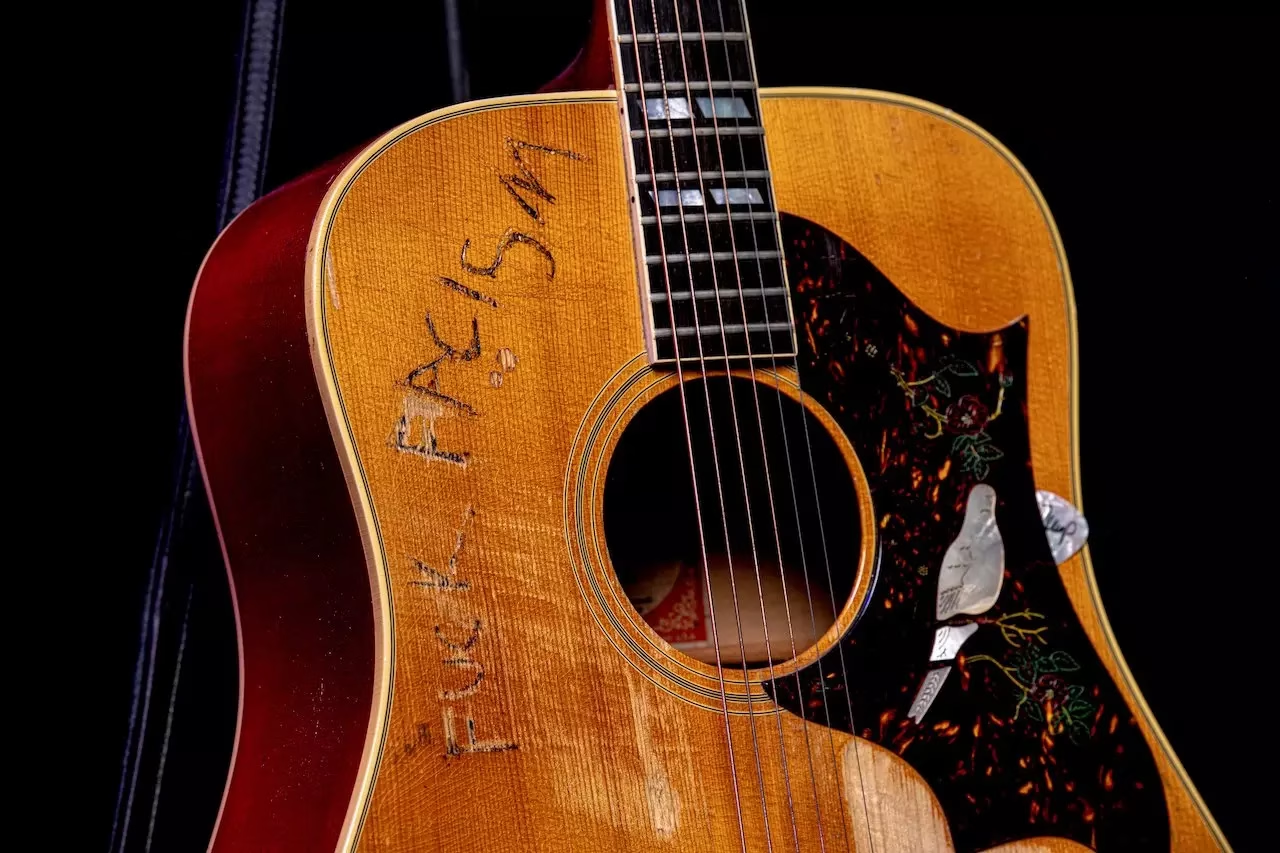
The Songs Of Conscience, Sounds Of Freedom exhibit opened Jan. 15 at the GRAMMY Museum in Los Angeles and is an inspiring must-see for music lovers of all ages. Covering over 250 years of American musical activism, the exhibit showcases songwriters and performers, including many under-sung heroes, who pushed culture and social justice forward through music.
Songs Of Conscience, Sounds Of Freedom was the debut exhibition at the then-brand new GRAMMY Museum in 2008. The 2022 edition offers a new section celebrating LGBTQIA+ and Black Lives Matter anthems, along with an expanded exploration into The Sounds of Los Angeles, an in-depth look at the city's musical activism from the '60s to today.
The current exhibit features a plethora of exciting memorabilia including handwritten lyrics, guitars and concert posters. There are a sizable number of video performances on view in the Clive Davis Theater, including eight moving GRAMMY performances of socially poignant songs. While perusing the exhibit, you'll hear a raucous playlist of songs featured in the exhibit, from H.E.R. and N.W.A to Bob Dylan.
Read on to get a taste of what you'll learn at this important, timely exhibit:
Socially Conscious Anthems Began Before The Country’s Founding
Before the United States of America was established in 1776, American songwriters wrote and sang songs against British colonial rule. Using traditional drinking, folk and military marching melodies, these songs flipped known lyrics for political statements. Everyday townspeople also took to the pen in this anti-British musical fervor, writing and printing their own lyrics — known as "broadsides" — and selling them on street corners. The earliest song cited at the exhibit, teacher Peter St. John's "American Taxation," protested the 1765 Stamp Act and was sung to the tune of the English marching song "The British Grenadiers."
Anti-War And Abolitionist Music Had Far-Reaching Influence
After the American Revolution, music protesting the Civil War, as well as anti-slavery songs by abolitionist composers, were popular throughout the country. A vital part of American musical history are the spirituals sung by enslaved peoples, which were coded with messages of freedom and liberation. These songs became the roots of many blues songs, which later influenced R&B and rock ‘n’ roll.
The well-known song "Swing Low, Sweet Chariot" is a Black spiritual often credited to Wallace Willis, a freed slave born in Mississippi. First recorded by the Fisk University (a Nashville HBCU) Jubilee Quartet in 1909, the song inspired Black choral ensembles across the country and internationally to perform renditions of spirituals. The enduring power of these spirituals would be utilized a century later during the Civil Rights Movement by gospel artists like Mahalia Jackson.
Odetta Was The Queen Of American Folk Music
Odetta — a Black woman born in Birmingham, Ala. in 1930 — inspired countless fellow folk singers, including Joan Baez and Bob Dylan, as well as Janis Joplin and Tracy Chapman. She was known as the "voice of the Civil Rights movement," and, as Martin Luther King, Jr. called her, the "queen Of American folk music." She performed at countless Civil Rights events, including the March on Washington in 1963.
When the momentum of the Civil Rights movement slowed following King’s assasination, the spotlight also shifted away from Odetta. Yet she never stopped performing and using her music to fight oppression and effect change. Odetta remained active until her passing in 2008 and her guitar, "Baby," (as well as its unicorn stickered case) is on display in the exhibit.
A Supergroup Stood Up Against Apartheid Through Song
In 1985, E Street Band member Steven Van Zandt gathered together a stellar cast of rock, rap, country and pop musicians to record "Sun City" as Artists United Against Apartheid. On display are Melle Mel’s hand-written lyrics from his "Sun City" verse and Van Zandt's electric guitar, next to a visually captivating music video.
The catchy, synthy song called out the injustice of South Africa’s apartheid government and was a vow by the artists — which also included Bono, Bruce Springsteen, Bonnie Raitt, Run-D.M.C., Pat Benatar and Peter Gabriel — to not perform at the Sun City luxury resort in South Africa, which was luring in global superstars with high fees despite the cultural boycott.
To celebrate the 40th anniversary of the U.N.'s Universal Declaration of Human Rights three years later, some of these same artists took part in multi-continent tours to encourage continued support for human rights.
The Father Of Chicano Rap, Frost, Was Signed To Eazy-E's Ruthless Records
When we think of major movements in L.A.'s musical history, the '80s and '90s West Coast rap of N.W.A, Snoop Dogg, 2Pac and others immediately comes to mind. Yet, just miles away from the powerful street lyricists of South Central, were a group of Latino rappers in East L.A. creating Chicano anthems.
Frost (formerly Kid Frost, born Arturo Molina Jr.) is known as the father of Chicano rap, creating punchy bars in Spanish and English. His first solo single, 1984's "Rough Cut," was produced by N.W.A's DJ Yella, and he'd later become the first Latino artist to sign with Ruthless Records.
In 1990, Frost dropped his debut album, Hispanic Causing Panic, which included the hit single "La Raza." That essential song is cited as one the first Latin hip-hop songs to go mainstream and sampled El Chicano's 1970 track "Viva Tirado," directly nodding to the earlier Chicano rock movement. Always one for building bridges, Frost created the Latin Alliance in 1989, a collective featuring Latino rappers and producers from East L.A., Cuba, New York, Puerto Rico and beyond.
Los Angeles Has Always Been A Hotbed For Political Music
The public image of L.A. is often limited to its miles of beaches, palm tree-lined streets, crowded highways and the neon glitz of Hollywood. But the reality of life in the City of Angels is often far from a beachy V.I.P. daydream, and many L.A.-based artists have offered a glimpse of that reality.
Just as we saw the connection between South Central and eastside rappers, and the Chicano rock and rap movements, the exhibit details contemporary, ongoing activism by artists of color. These artists address systemic oppression in their neighborhoods and beyond, writing songs that reflect upon historic moments such as the 1965 Watts Rebellion and the Los Angeles Uprising in 1992.
“If you look at our community's history, there have been so many historical events that have sparked and inspired the formation of socially conscious music. So that’s why we really wanted to add the Sounds Of L.A. section in,” Nicholas Vega, GRAMMY Museum’s Curator and Director of Exhibitions, told GRAMMY.com.
Exemplifying this intersection are the Compton Cowboys, who run one of the few remaining Black-owned ranches in America. The debut single from cowboy Randy Savvy, "COLORBLIND," was mixed by Compton legend Dr. Dre and released in 2020. Addressing violence and trauma in Savvy’s community, “COLORBLIND’ became an anthem during Black Lives Matter protests — which the cowboys attended on horseback.
“We look at specific events — everything from the Watts Riots/Uprising to the Chicano Movement to the 1992 Riots/Uprising — but we also look at these ongoing issues that for decades have plagued our city; gang violence, police brutality, economic disparity and poverty,” Vega continued. “So it was the perfect fit to bring this exhibition back here to L.A. and really highlight the music and the artistry.”
Songs of Conscience, Sounds of Freedom runs until May 8 at the GRAMMY Museum. Other special exhibits currently on display are Para Siempre: Marco Antonio Solís through spring 2022), Dave Matthews Band: Inside And Out (until Jan. 31) and Nat King Cole (closing soon). Visit grammymuseum.org to purchase advance tickets to visit the GRAMMY Museum and learn about their COVID-19 safety protocol measures.
Fight The Power: 11 Powerful Protest Songs Advocating For Racial Justice