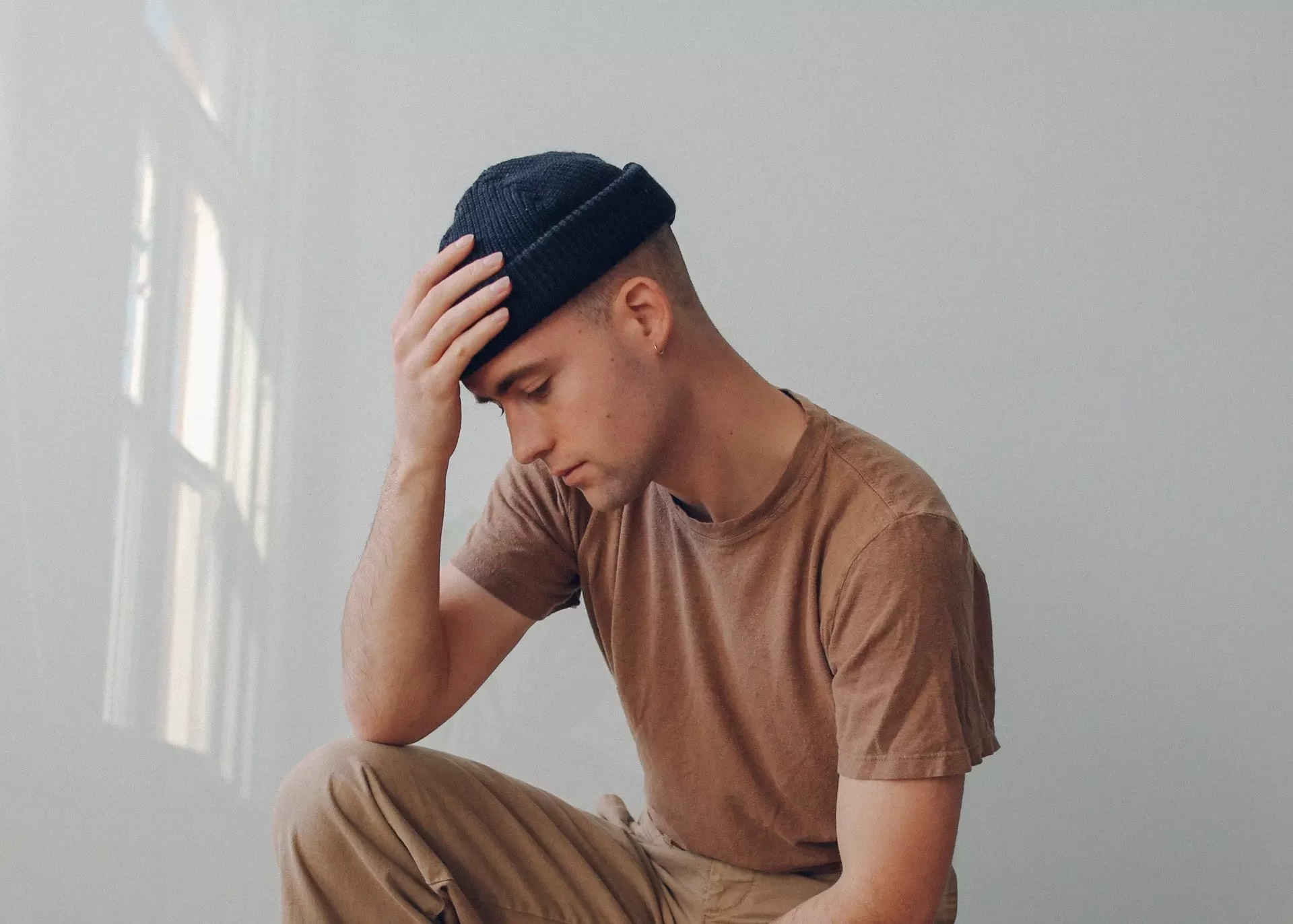
A debut album is a big deal for an artist. Even in the era of streaming singles and EPs, a full-length debut can serve as an artistic introduction to a bigger audience than they’ve previously had. For Woodson Black, his debut carries even more personal significance. Violence In a Quiet Mind (out July 17), Black’s first record under his performance moniker Haux, is the detailed, often painful story of his family.
Black, a Massachusetts native, was raised by a combination of his mother, sisters and aunts as the family struggled through many crises. Addiction runs through many generations of the family, and the strain on the relationships in the family and the deaths they endured greatly affected Black. Listening to Violence In a Quiet Mind, every aspect of the album points to the emotional processing he's had to go through, from the sadness in his delicate falsetto to the haunting piano lines. Album track "Eight" finds Black most explicitly recalling a death in the family, but even tracks like "Heavy" that convey more general reminiscing have a hefty emotional weight even as synths gently move the track along.
The recording process for the album took Black on a journey both emotional and physical (much of the work on the record happened in Scotland), and the internal processing and growth he went through makes Violence In a Quiet Mind a powerful experience for both fans and creator. Black chatted with GRAMMY.com over FaceTime (no phone calls, as he jokes the entire area around his Massachusetts studio is "a big drop zone") about revealing so much about himself on his debut, letting other people in on his journey and how this album has allowed him to move forward.
<style>.embed-container { position: relative; padding-bottom: 56.25%; height: 0; overflow: hidden; max-width: 100%; } .embed-container iframe, .embed-container object, .embed-container embed { position: absolute; top: 0; left: 0; width: 100%; height: 100%; }</style><div class='embed-container'><iframe src='https://www.youtube.com/embed/63b0OQZoPH8' frameborder='0' allowfullscreen></iframe></div>
Not only is your debut album coming out, but it's a very personal one about your family. How does it feel that people other than you are going to hear this album?
It’s kind of scary. I feel like I was just talking about this the other day—that I’ve kinda gotten over the fear of telling my story, or this part of it. Once you start getting these stories out and these songs out it becomes easier in a way to share it because you’ve done the internal work yourself to get to a place where you can do it. And I think it’s just been great to see responses from people. It definitely gives me a lot more confidence that other people can relate to the stories and the personal things I’m sharing. I’ve always been a private person so it’s nice to get that positive affirmation [and] feedback. Otherwise I’d just be scared to death all the time.
I do think it’s a very scary thing to share that much of yourself. Did you know from the start that this is what you wanted your debut album to be about?
Absolutely not. [Laughs.] Not at all. I think in many ways stuff that we avoid ends up coming back and recycling over and over again until we actually look at it. And I think a lot of the music I’ve made has revolved around my childhood and a lot of these themes and experiences I’ve had, even the stuff in the music that came before this album. I think this album was the first time I actually started taking ownership of the stories and started telling the truth behind them. It is incredibly personal and it’s scary to share that much, but at the same time it is empowering in a way and it allows a bigger conversation to happen in my family and with fans. It's been good.
In that case, at what point during this whole process of putting together a debut album did you realize or decide "this is going to be an album about my family"?
It was like I knew what the songs were about, I just never really wanted to unpack them in the way that I have now. I wrote most of the songs for the album in the span of a month the winter before last, and they all came out really quickly and I was thinking a lot about my family at the time. I didn’t necessarily want to write about it, but it felt like the only thing that I could really write about, just purely there was nothing else I could put the pen to the pad about. At that point, I was definitely scared to dive in and tell the stories of the songs, so I just focused on making the songs themselves and avoiding the messaging behind them. Once I went to Scotland and recorded the album, I was like, "Oh shit, I have to actually tell the stories behind these songs." At that point, with some nudging from family and my manager I started to dig into the songs a little bit more and unearth what I was trying to say. That's when I got into everything and started really processing it and dealing with it, because music has always been something I used as a way of coping about talking about things that were uncomfortable to do otherwise. It was basically like therapy. [Laughs.]
When you were writing this material, was this a "lyrics first, music later" kind of album?
I always end up writing some kind of musical instrumental piece and then the lyrics come with that. Most of the time it was me on guitar or piano and messing around, and then I would just start humming and words just basically come up through that. It's mainly the music first, but the lyrics are definitely once I get an idea of what I'm mumbling, then things start to take shape and I can build the structure upon that. Because I do it that way it ends up being very ethereal at times and almost like a dream state, like a stream of consciousness. I think that’s how we remember things too, little bits and pieces of a time and a place and how it felt or how it smelled.
With the sound on the album, you can very much tell that it started on a guitar or piano, and then you have the programming and the synths on top of that. How do you balance those two components around this emotional message so it doesn’t get overpowered?
I worked with [producer] Thomas Bartlett and he did most of the synths on the record, pretty much all of them minus some of the ones at the beginning. He is incredibly delicate and I think he knows exactly when to highlight something or dial it back, and so a lot of that came from him. My go-to is always just keeping things minimalist and clean, so I was always pushing for things to have an atmosphere but not for that to overpower the message of what’s being said because all the music I've loved growing up always has such a clear vocal at the center of it. [It's] something you can follow no matter what is going on in the background. I’m looking forward to messing with that in the future.
I know the team working on this album wasn’t huge, but what was it like letting these new people into your mental space as you processed and wrote this album?
Honestly, it was hard. There were certain times when I really struggled with it. I've always done all the production and the writing, the artwork, everything myself. I think that’s part of something I’m working on, it’s part of a coping mechanism. But at the same time, when I was given the opportunity to work with more people, it took me a minute to trust them. But once I trusted them, it was so natural and things on the album are so much better for it because they added their own magic to it. In the future, it’s something I would love to get into more, collaboration that is, and it’s obviously a little difficult now to be in the same room with other people, but hopefully that changes.
Now that the album is done and almost out, what are you going to take from this process either personally or musically for future projects?
There’s so much that I processed through not only the writing of this album, but also the way I have been talking about it. Telling stories and everything with more honesty, I think that is unavoidable in my future music now. I feel like I just have a certain level of honesty even within myself that I can’t really avoid. It’s been a really long and good process and really healthy, but I’m definitely happy to be writing music about the present as opposed to writing music about my 12-year-old self.
Read More: Soko Explores Her Feelings