Salsa was born in New York City, so it's only natural that there should be a museum dedicated to its origins, influence and multifarious sounds.
The Bronx-based nonprofit International Salsa Museum is at the center of that mission. While they don't have a dedicated space yet — organizers hope to take over a decommissioned armory in the Bronx within five years — ISM brought part of their collection to the New York International Salsa Congress over Labor Day weekend.
Featuring art, clothing, instruments and photography, the exhibit highlighted legendary musicians such as percussionist Ralph Irizarry and singer/songwriter Luis Figueroa, as well as trailblazing choreographer Eddie Torres sr. Images of Latin culture in New York from the 1980s and '90s, from block parties to early shots of Marc Anthony, were also present.
Yet the heart of the exhibit centered on Tito Puente, the six-time GRAMMY-winning percussionist, bandleader and producer, and Cuban singer La Lupe. Dubbed "The Queen of Latin Soul" in her 1960s heyday, La Lupe sold millions of records and was the first Latina to perform at Carnegie Hall and Madison Square Garden. She was a friend and frequent collaborator of Puente's in the '60s.
ISM Co-Founder and musician Willy Rodriguez went to the musicians' families to speak to them about their relative's legacy. "I get emotional talking about it," Rodriguez told GRAMMY.com. "Us doing this is not necessarily just showing the history, but it's also healing for the families."
On display is one of Puente's suits — a black three-piece with a wide lapel, which he wore while performing with the Puerto Rican Symphony — alongside his bandstand, musical charts, contracts and various honors. La Lupe's music charts, photos and albums were all rescued following a devastating fire in her New York City apartment in the 1980s; some of the items bear water and fire damage. "Looking at these pictures, I can envision her going into the apartment, grabbing her kids, grabbing all these items and just running out. That's why this is so important," Rodriguez says.
The Puente/La Lupe section of the exhibit was curated around feeling, Rodriguez adds. "It's about going out to the family, speaking to them about: What is it that we're doing? Why are we doing it? It's not about the money; it's about the legacies of these people."
With preservation and education in mind, read on for eight things GRAMMY.com learned about La Lupe and Tito Puente.
La Lupe Transcended Genre And Broke Barriers For Women In Latin Music
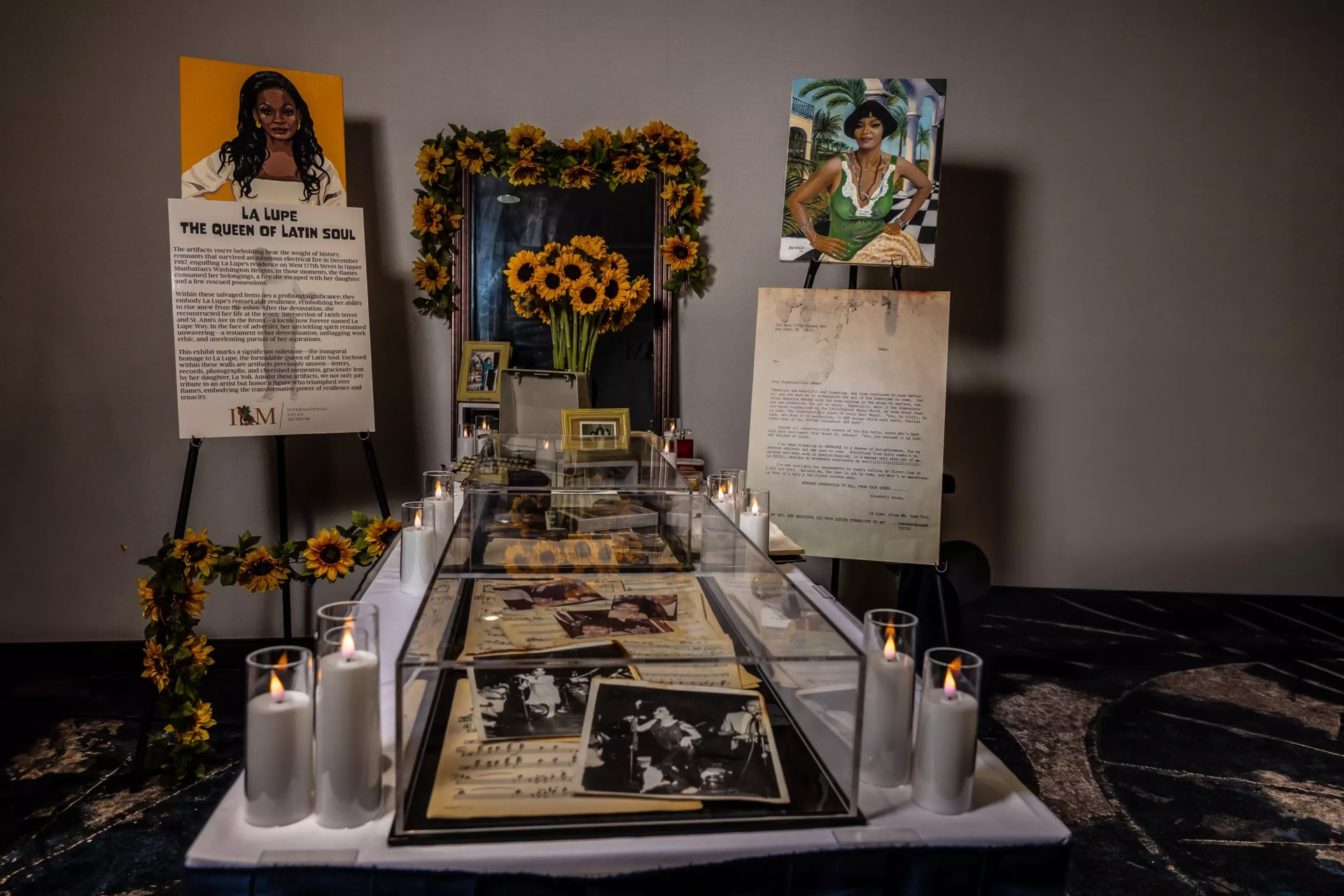
A display of salvaged items owned by La Lupe┃ISM
Born Lupe Yoli Raymond, La Lupe arrived in New York from Cuba in 1962. Already a successful performer in her home country prior to the revolution, La Lupe initially worked with percussionist Mongo Santamaría before connecting with Tito Puente. La Lupe's work with Puente predates his work with that of legendary Cuban singer Celia Cruz.
By 1968, La Lupe performed as a solo artist, singing boleros, boogaloos and Latin soul in both English and Spanish. Some of her biggest hits were "Fiebre," Qué te pedí?" and “La Tirana,” an anthem about the aftermath of a love affair. Although maligned for her sexual performances and forthright personality in the male-dominated Latin music industry, it's impossible to deny La Lupe's talent and professionalism.
At the ISM exhibit, Rodriguez points out a handwritten musical chart. "The entire band is here: the piano, the trombone, the trumpet. This is soul/salsa and all the parts are there, all original with her hand signature. That's her handwriting."
La Lupe created polyrhythmic arrangements, "putting them into sounds that you hear in R&B and pop music and soul music,” artist-scholar Jadele McPherson told "Latino USA."
La Lupe Personified Resilience
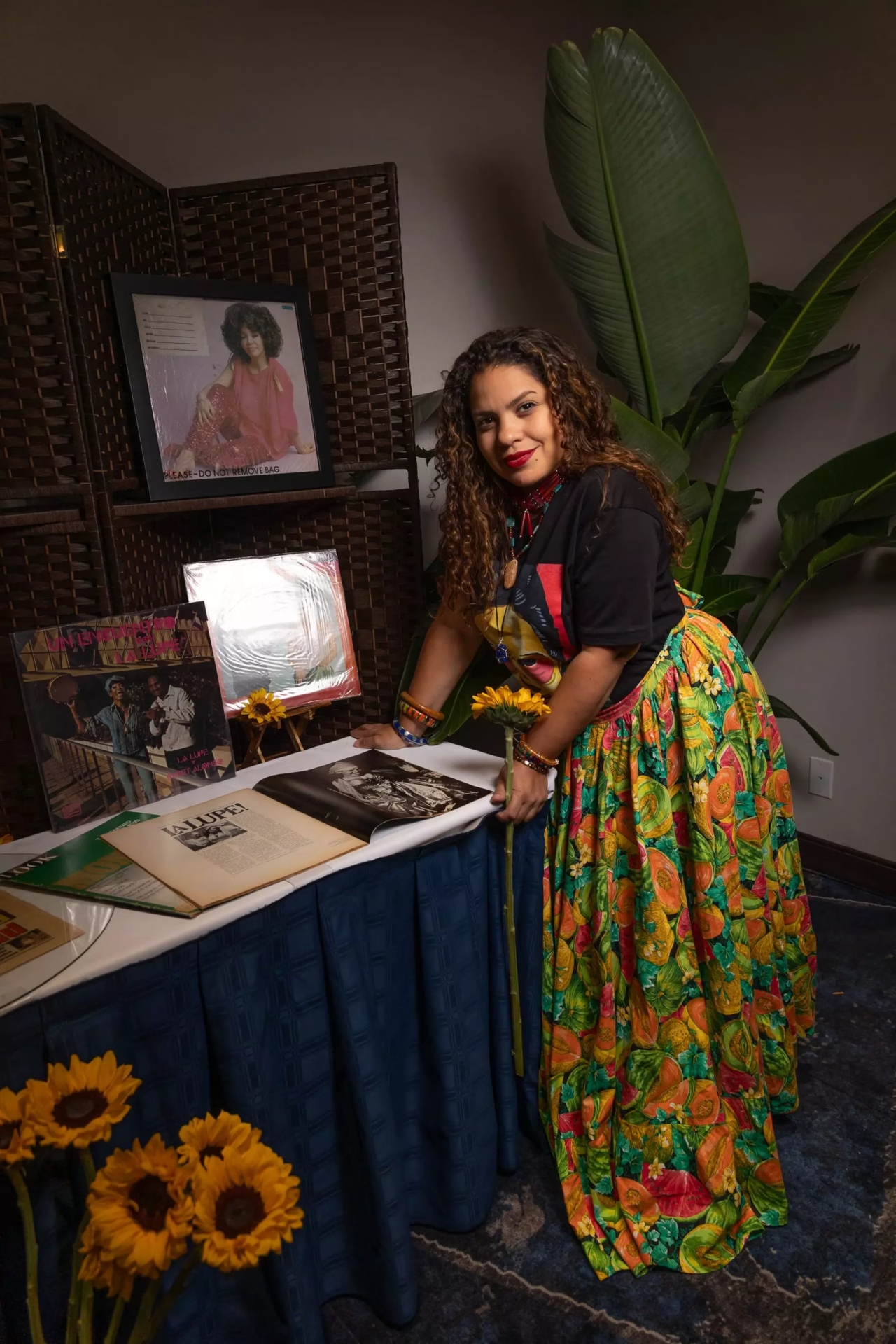
Creative Producer, Philanthropist, and Publicist Janice Torres-Perez with La Lupe albums ISM
A fierce performer with a powerful voice, La Lupe embodied a particular sensuality on stage that drew admiration and criticism. She would regularly "improvise lyrics, change styles, tear her dress up, pull her hair, moan her trademark cry of 'ayyy yiyiyí,' clutch her breasts and push the pianist to go faster and faster," documentarian Ela Troyano [wrote for](https://fania.com/record/la-lupe-the-best/) Fania Records, the boogaloo and salsa label that acquired Puente's Tico Records.
As salsa rose to prominence La Lupe was sidelined, [the Guardian](https://www.theguardian.com/lifeandstyle/2008/oct/01/women.worldmusic) noted. Celia Cruz, a powerful and unique voice in her own right but a less provocative act, became the Queen of Salsa.
Still, La Lupe "never gave up. She was never fake. She was always her authentic self," Rodriguez says. "She doesn't care what people think about her. She goes off, she takes off her shoes, and she does what she does, whatever she feels.
"I've noticed that a lot of the females that talk about La Lupe like her because of her strength and her tenacity, and that's why she's important to the culture," he continues.
La Lupe Remained Her Own Advocate For Decades
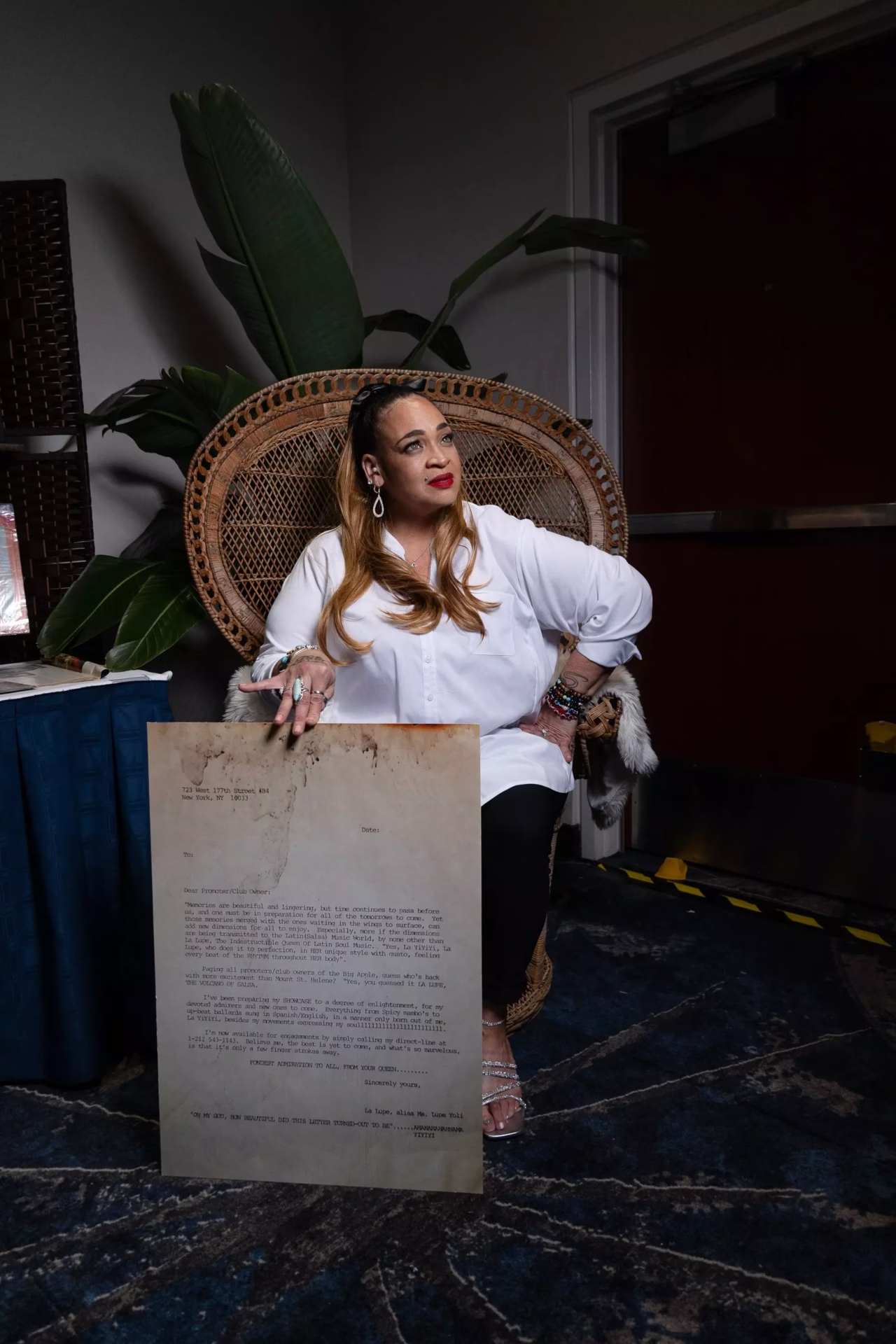
La Lupe's daughter, Rainbow “La Yoli” Garcia, with a letter her mother wrote┃ISM
Although she performed at Madison Square Garden in '77, La Lupe's career was a shell of its vibrant self by the decade's end. Her personal life was also in shambles, but she continued to stump for herself and her artistry.
The ISM exhibit featured a form letter that La Lupe sent to promoters and club owners asking for gigs because the industry had pushed her aside. "She's writing to them in English saying, 'Give me a shot. I have a new show.' She's saying, 'I want to go back into show business,'" Rodriguez notes.
In the mid-'80s, La Lupe met an evangelist at a hospital and later became an ordained Pentecostal minister and preacher (she previously practiced Santeria). She died of a heart attack in 1992.
Although La Lupe's work and story have received renewed attention, the issues she faced as an artist with a strong perspective and style remain largely unchanged.
"We see a lot more females in the artistic world now, but it should be more. There should be more opportunities," Rodriguez says. "She was going at it at a time where you barely saw women in salsa. Even to this very day, you still don't see many women in salsa, and that's not the way that it should be."
Tito Puente Was Meticulous — With Himself And Others
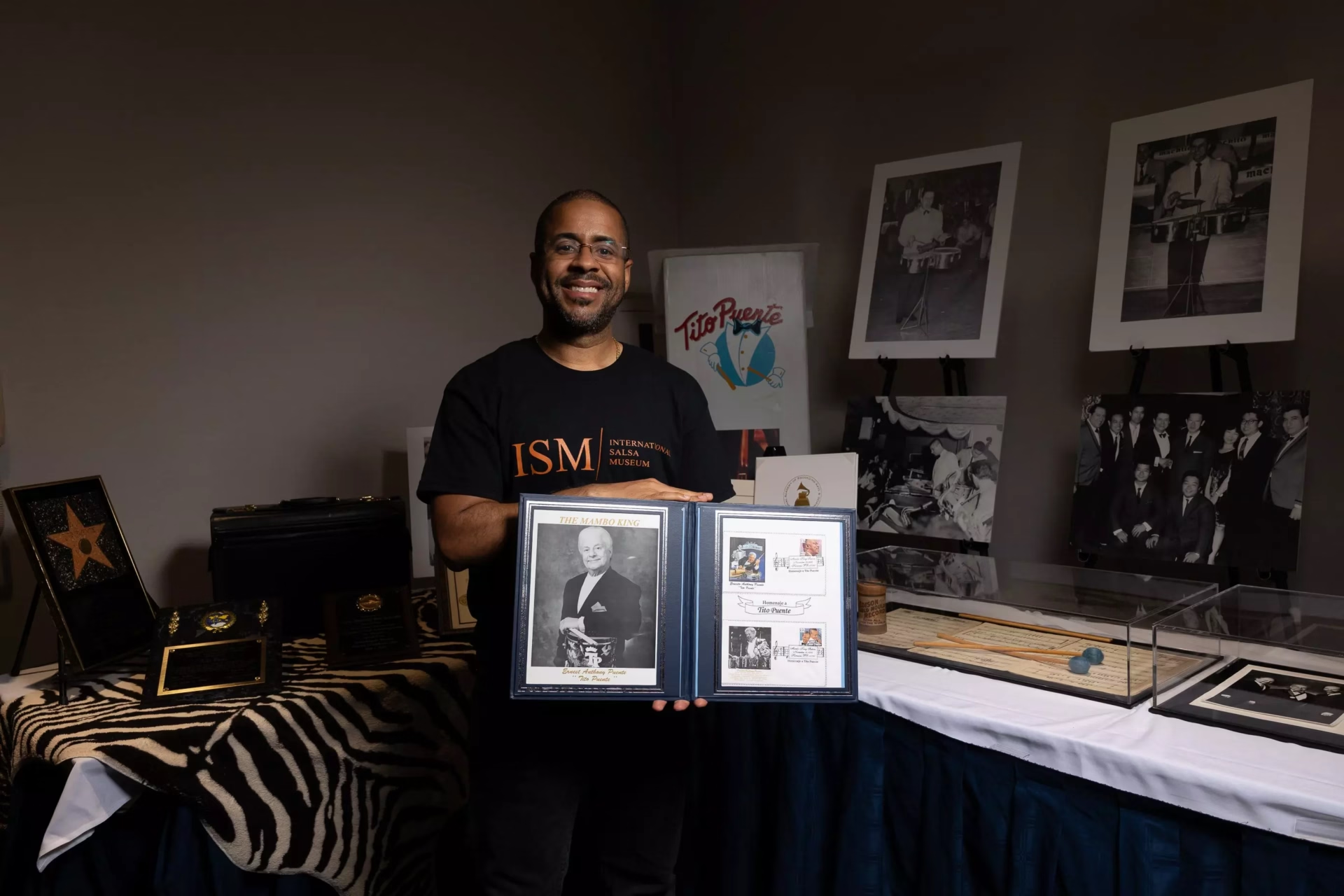
International Salsa Museum Co-Founder Willy Rodriguez┃ISM
Today, Tito Puente is synonymous with Latin music of the 1950s and '60s, becoming known as the "King of Mambo." The six-time GRAMMY winner had a decades-long career, was the go-to person for salsa legends, and continued to write and perform through the 1990s. Puente was known for his work ethic, and was active in the music industry until his death in 2000.
"He was very meticulous with the way he did things, with the way he directed the bands," says Rodriguez, who is the musical director for Tito Puente Jr.'s band. "If you were bad or did something not-so-good on stage, he would let you go and call somebody else. There was always another person that would want to play in his band."
Tito Puente Had Multiple Honorary Doctorates, Among Many Other Awards
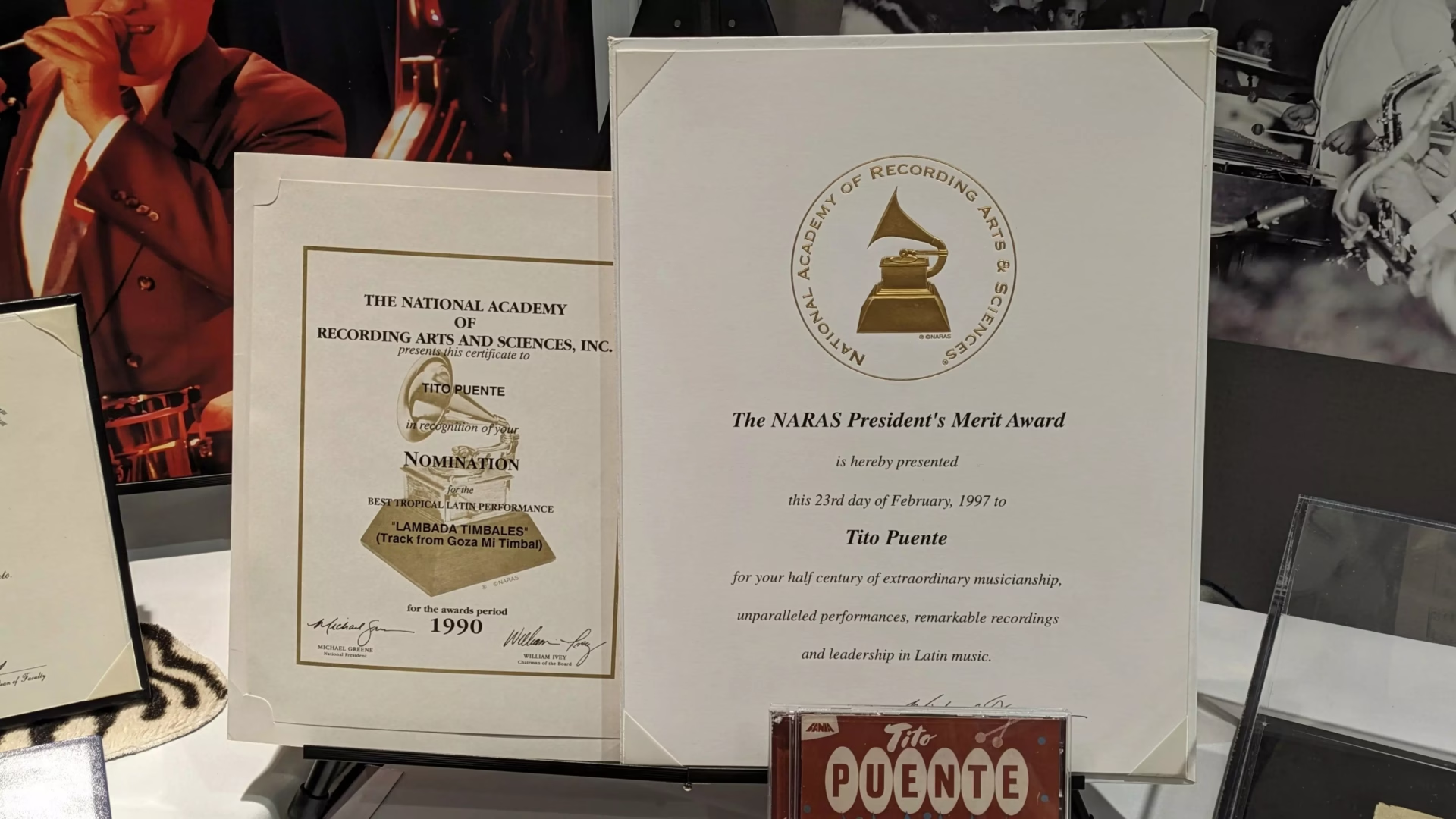
Several of Tito Puente's many awards ┃Jessica Lipsky
Tito Puente traveled the world, performing in dozens of countries and receiving multiple awards. His last (and posthumous) GRAMMY win came at the 2001 GRAMMYs, where his collaboration with Eddie Palmieri, Obra Maestra, earned a golden gramophone for Best Salsa Album.
Among his many honors, Puente received honorary doctorates from Columbia University and Berklee College of Music.
He also has a star on the Hollywood Walk of Fame. In 2003, Puente received a posthumous Lifetime Achievement Award from the Recording Academy.
Tito Puente Handwrote And Numbered His Sheet Music
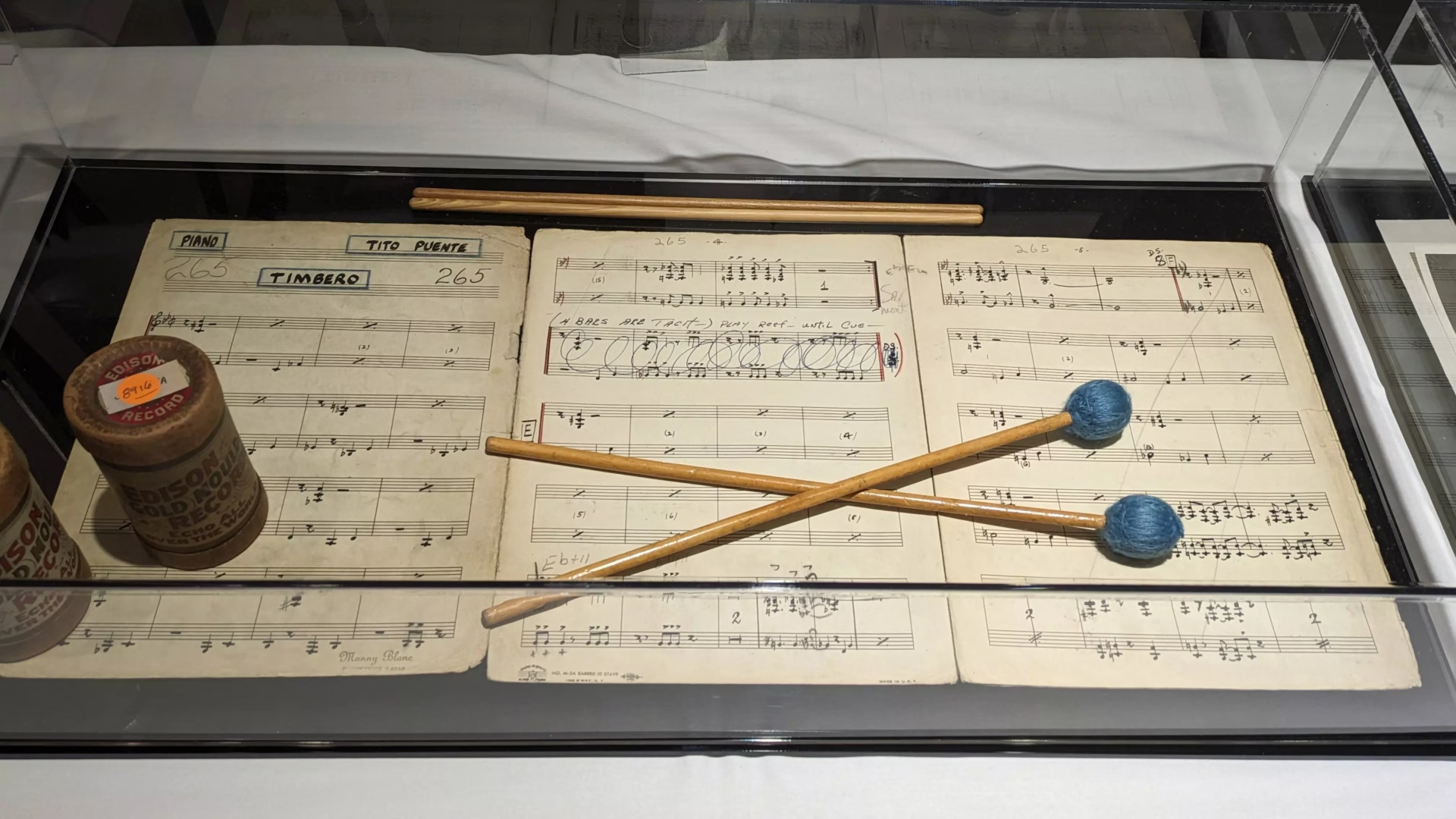
Tito Puente's sheet music┃Jessica Lipsky
Tito Puente numbered each of his musical charts and by the 1950s, was already on his 265th composition. On display is the chart for "Tito Timbero" and his timbale mallets.
"This was one of his first original songs that made him famous," Rodriguez notes.
Puente Kept His Contracts
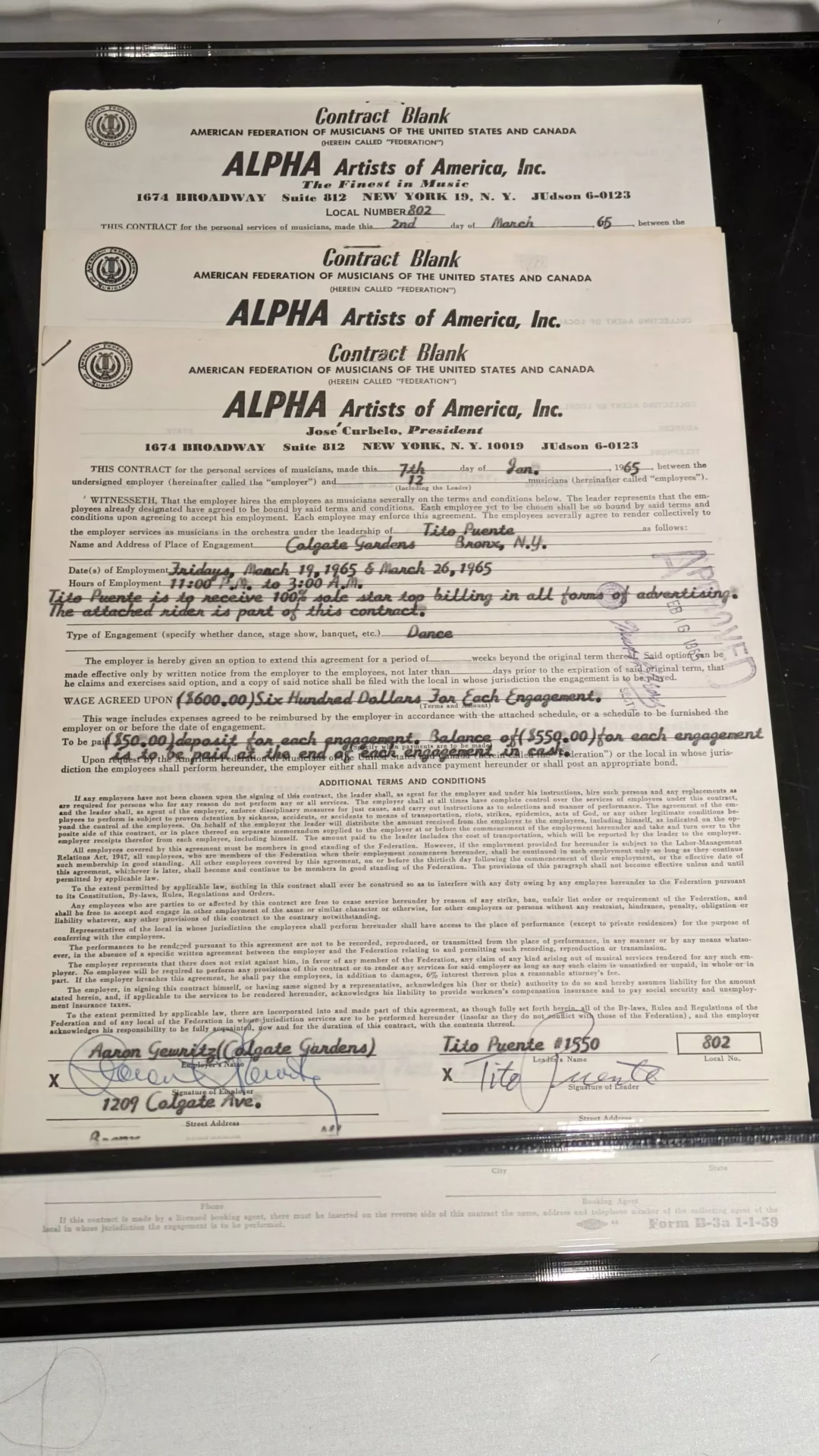
An appearance contract┃Jessica Lipsky
While many musicians were subject to flimsy contracts and meager pay, Tito Puente kept meticulous records. The ISM pop-up had several of Puente's contracts on display from 1965, for which the musician made between $600 and $1,000 per engagement.
"His oldest son was telling me that back in the day, you could do a lot with that amount of money," Rodriguez notes.
Adjusted for inflation, Puente would be making between $5,800 and $9,700 per gig today.
Salsa Is A Family Legacy
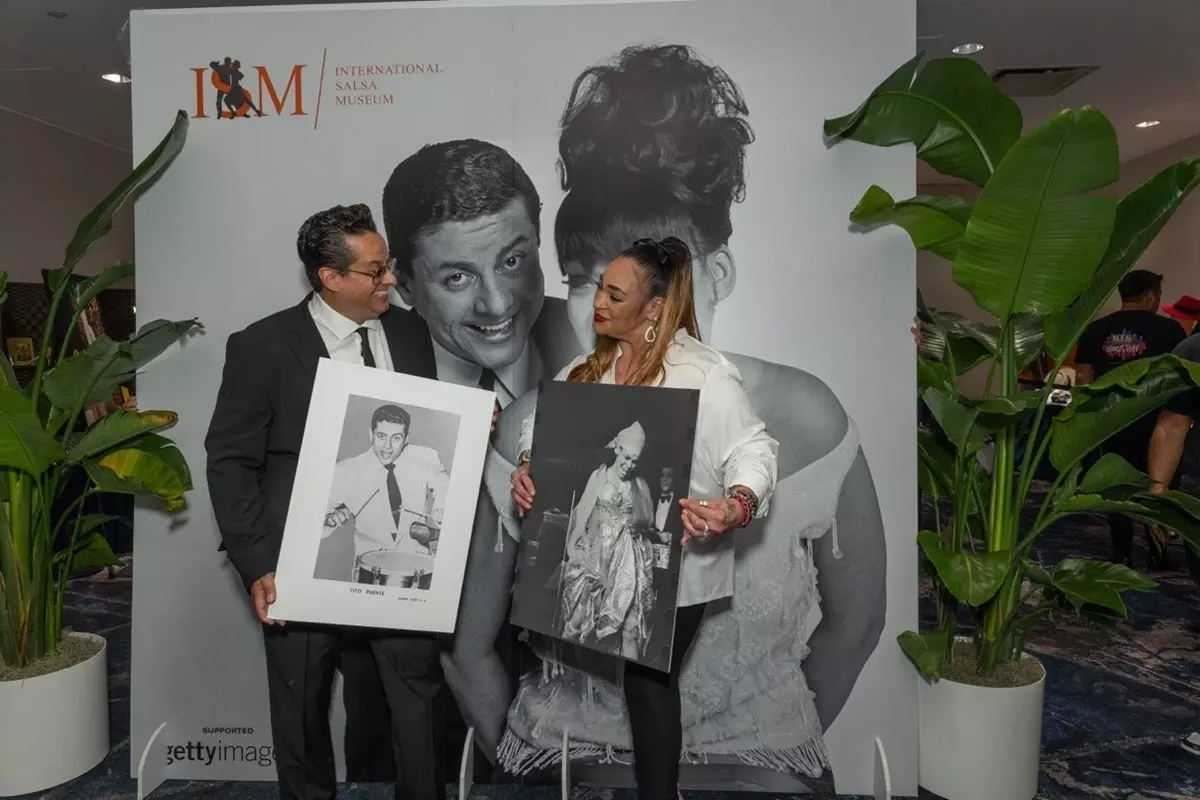
Tito Puente Jr. and Rainbow "La Yoli" Garcia┃ISM
Puente’s son Tito Puente Jr. and La Lupe’s daughter, Rainbow “La Yoli” Garcia, reunited at the International Salsa Museum pop-up and were heavily involved in its curation. As Rodriguez explains, the exhibit is ideally just the beginning of honoring legacies in the way this one did.
"[Once] we share the story about the legends, how do we keep this culture moving forward?" Rodriguez questions." It's our motto; it's our mission statement: Preserving the past, educating the present, influencing the future."
ISM's team hopes to raise enough capital to open up a museum at the Bronx’s Kingsbridge Armory, where they will build teaching recording studios for youth and adult producers and musicians
"The only way we're going to move forward is by creating," Rodriguez adds. "We don't move forward by recycling the same songs; we have to create."