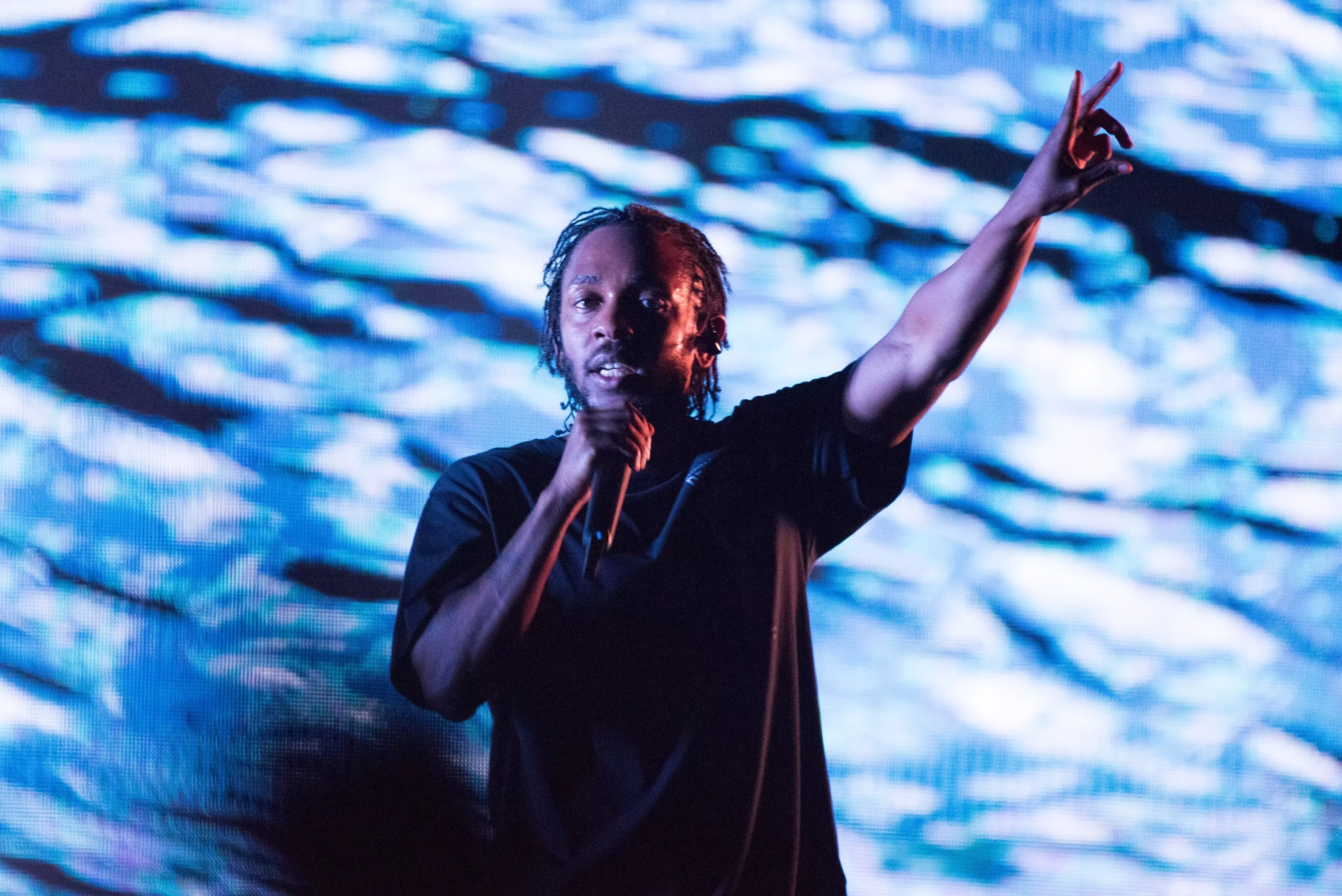
When you’re as big a star as Kendrick Lamar, you remain a trending topic even during a four-year hiatus. Fresh off a Super Bowl halftime performance, the 13-time GRAMMY winner is extending his rare availability by joining Spotify’s The Big Hit Show podcast to help break down arguably the most ambitious album in his storied career: To Pimp a Butterfly.
The 2015 project served as the follow-up to Lamar’s now-classic debut album, good kid, m.A.A.d city (GKMC). To Pimp a Butterfly earned the Compton native mass critical acclaim, including three GRAMMY wins and No. 19 on Rolling Stone’s list of the 500 Greatest Albums of All Time. One Pulitzer Prize and nearly seven years later, Lamar and The Big Hit Show are shedding light on the album through multiple hour-long episodes, with interviews from Barack Obama, Sounwave, George Clinton, Dave Free and others.
Here are five takeaways from the first two episodes:
1. There were three different versions of “King Kunta”
Mark “Sounwave” Spears, a frequent producer of Lamar, breaks down the different versions of the track by their respective amounts of groove.
“The original was completely different, super jazzy, it didn’t have the groove that it had,” Sounwave, a two-time GRAMMY winner, shared.
Following a request for more listener-friendly elements, Sounwave said he shared a much more complex version of the track that featured a piano and flute — but Lamar already knew exactly what he wanted.
Sounwave said Lamar beatboxed his preferred version, and after a studio session with Thundercat, created the version of “King Kunta” the world knows today.
2. Prince was supposed to be on the album
According to Dave Free — a two-time GRAMMY nominee, and longtime Lamar collaborator and friend — To Pimp a Butterfly was partly inspired by Lamar’s fascination with Prince.
The collaboration went as far as Lamar and Prince doing a session at Prince’s home studio in Chanhassen, Minn. While the work from that session never made it onto To Pimp a Butterfly, Free said that the spirit of Prince (a seven-time GRAMMY winner) taught Lamar an important lesson.
“Prince don’t care man. He’s doing him. That’s what we learned the most,” Free recalled on the podcast. “Do you. Do it with poise. Do it with respect. Do it with intention. But do you.”
3. The deep meaning behind “U”
Jammed between GRAMMY-winning tracks “Alright” and “These Walls,” “U” has been memed to oblivion since its initial release. These memes usually represent frustration or anger, albeit jokingly, but also capture the song’s raw emotion. “U” kicks off with a jarring scream and showcases what some close to Lamar consider to be his darkest moments.
Lamar felt powerless following the 2013 drive-by shooting and later death of his close friend, 23-year-old Chad Keaton. The passing happened at a time when the world was beginning to crown him the best rapper alive.
“A friend never would leave Compton for profit or leave his best friend brother, you promised you’d watch him,” Lamar raps on “U,” referring to the loss.
As painful as Lamar's lyrics and the accompanying sounds of crashing alcohol bottles are, descriptions from artists in the studio at the time of the track’s recording are just as heavy.
“I’ve never seen him like that,” Sounwave explained. “I felt him bombard himself with every hard thought that was hitting him at that moment just to get that feeling.”
4. Anna Wise helped come up with the album’s name
Singer/songwriter and producer Anna Wise isn’t the biggest name on the list of Lamar collaborators, but following their collaboration on GKMC’s “Real,” Lamar reached out to the former Berklee student for the title of his next album.
“I was thinking of butterflies, but I thought that was kind of silly,” Wise explained.
However, that thought stuck with Wise as she searched her local library’s metaphysical section for an album name. The first page she opened was a new chapter titled “Conversations with a Butterfly.” The three-time GRAMMY nominee took a picture, sent it to Lamar and the rest is history.
Wise would also go on to feature on the Best Rap/Sung Collaboration-winning track “These Walls” from To Pimp a Butterfly.
5. South Africa and Kanye West share credit for influencing the album
Collaborators of Lamar don’t agree on any single, influential source on To Pimp A Butterfly, but they do all circle back to two major sources of inspiration: South Africa and Kanye West’s 2013-14 Yeezus tour.
After sensing reluctance to join him on tour, West offered Lamar a selection of beats and two tour buses: one for traveling and one with a built-in studio for recording, where Lamar dove into sounds that collaborators described as experimental.
“It was the first time I’ve ever seen someone have a proper studio on the tour bus,” GRAMMY-winning producer Flying Lotus recalled.
Lamar’s trip to South Africa, between GKMC and To Pimp a Butterfly, was far less transactional. According to Top Dawg Entertainment President Punch, Lamar’s emotional connection to Africa got so extreme following his trip that he had to ask the 39-time GRAMMY nominee to tone it down.
“He went to Africa and it changed his perspective on a lot of different things. I had to remind him ‘Yo, you went to Africa. Your whole audience didn’t go to Africa,” Punch says.
Lamar himself speaks on the importance of his South Africa trip throughout episode two of the podcast, reflecting on an emotional experience inside Nelson Mandela’s cell.
“I remember going inside that cell and how humble I was that this man that was fighting for equality served 18 years in that small, little cell but still kept his mental capacity. It inspired me 100%,” Lamar recalled. “I can’t let these four corners define who I am or who my homeboys are. The whole concept about To Pimp a Butterfly was to share that experience with them, to go back to Compton and tell them what I’ve learned.”