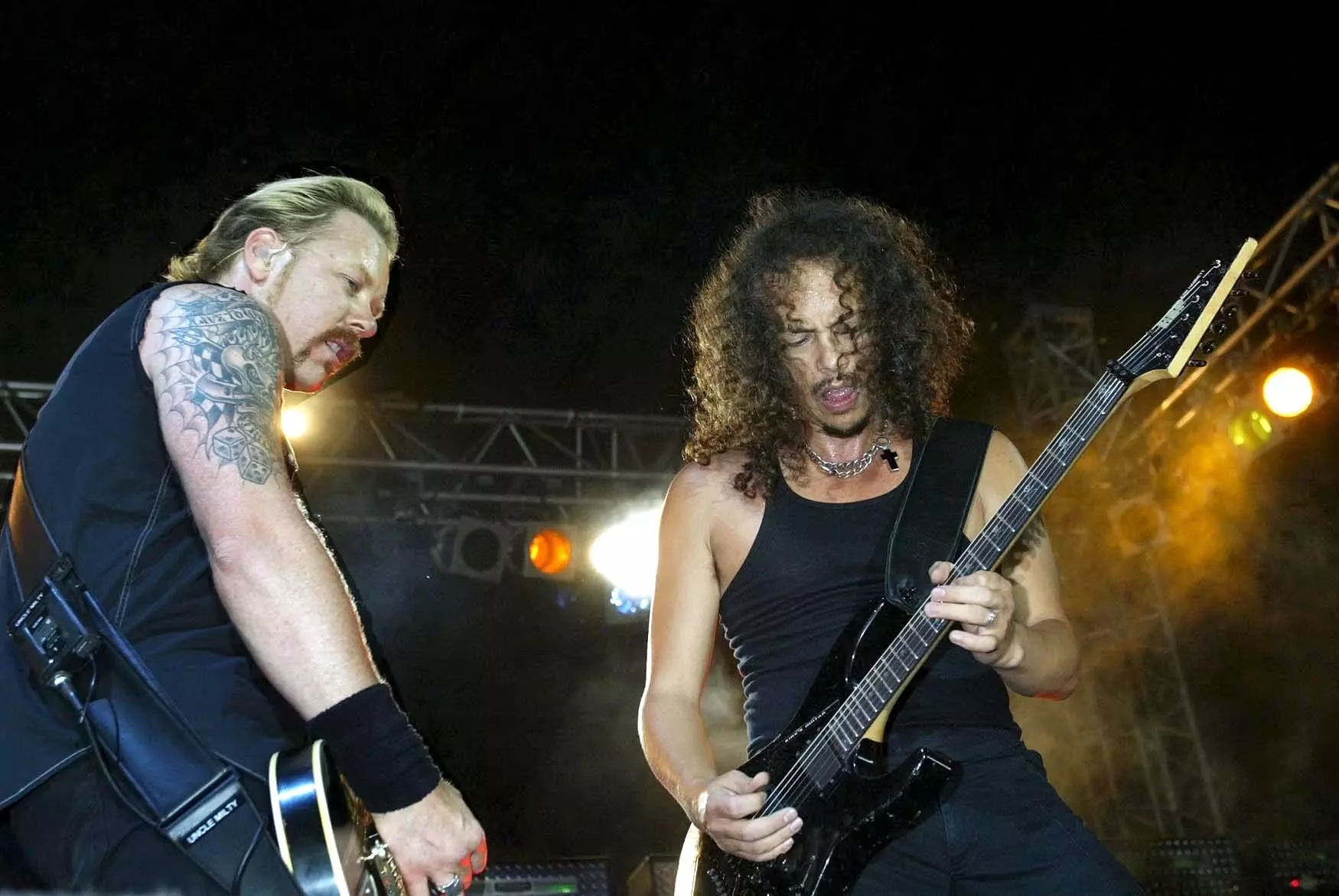
Since its release in 2003, there's been a consistent (pingy) drumbeat of chatter about Metallica's St. Anger.
The quixotic snare sound — which bassist and producer Bob Rock claimed he spent about 15 minutes crafting — is central to the St. Anger discourse; a Google search for "metallica st. anger snare" yields about 661,000 results. As for why the eight-time GRAMMY winners uncharacteristically nixed guitar solos? That question yields millions of hits.
Then there's the 2004 documentary Some Kind of Monster, one of the most uncomfortably revealing portraits of a rock band engulfed in a mid-life crisis. Memorable moments abound, but for one scene alone — drummer Lars Ulrich's Middle Earth-looking dad hearing a take, and telling his son to "delete that" — the film is a must-watch.
Given the controversial status St. Anger has accrued, it may seem like the metal community may want to, well, delete it. While your mileage may vary, this hotly debated album shouldn't be consigned to any internet-snark dustbin.
Listening with the benefit of temporal distance, tracks like "Frantic," "Some Kind of Monster" and "The Unnamed Feeling" sound raw and alive — perhaps of their time, given its adjacency to then-ascendant nü metal. Ultimately, they conjure the sensation of a reset, rather than a capitulation to trends.
Today, St. Anger seems to hew less to the reputation it's engineered, and more to Rock's characterization of the thing: "To me, this album sounds like four guys in a garage getting together and writing rock songs. There was really no time to get amazing performances out of James. We liked the raw performances… we just did it, boom, and that was it."
To mark the 20th anniversary of St. Anger, here are five facts about the album.
Metallica Started The Album In An Old Army Barracks
By 2001, Metallica hadn't released an album of original material in almost five years, since 1997's Reload (a follow-up to the previous year's Load).
While these sessions ground to a halt due to personal upheaval and frontman James Hetfield heading to rehab — and the band later continued work at a new studio in San Rafael, California — this no-nonsense setting befitted the unvarnished quality of the music.
Bassist Jason Newsted Left The Band Early On
Newsted was the second bassist for Metallica, after the tragic 1986 death of Cliff Burton. Newsted's departure came the month they began St. Anger, which destabilized progress on the album.
"Due to private and personal reasons, and the physical damage that I have done to myself over the years while playing the music that I love, I must step away from the band," Newsted said in a statement. "This is the most difficult decision of my life, made in the best interest of my family, myself, and the continued growth of Metallica."
St. Anger Represented Intense Catharsis For James Hetfield
As Hetfield put it, St. Anger was a valve for which to release intense psychological pressure.
"There's a lot of passion in this. There's two years of condensed emotion in this," he told Metal Edge magazine at the time. "We've gone through a lot of personal changes, struggles, epiphanies, it's deep. It's so deep lyrically and musically… It's so hard to talk about, you really need to hear it."
Accordingly, St. Anger is nothing if not visceral — and two decades haven't sanded off those sharp edges.
As St. Anger's Recording Wound Down, Robert Trujillo Joined On Bass
While producer Bob Rock recorded the bass parts on St. Anger, his instrumental involvement
would prove to be transitional; Robert Trujillo joined Metallica on bass in February 2001.
Having played on all ensuing Metallica albums, 2008's Death Magnetic, 2016's Hardwired… to Self Destruct and 2023's 72 Seasons — all of which were warmly received by critics — Trujillo is now the longest-serving bassist in Metallica.
Critics Were Polarized, Then As With Now
While some contemporaneous critics knocked St. Anger as everything from "an ungodly mess" to having "underwent more processing than cat food," not everyone characterized it that way.
Allmusic called it a "punishing, unflinching document of internal struggle"; Rolling Stone said "there's an authenticity to St. Anger's fury that none of the band's rap-metal followers can touch."
As for the band themselves, they've seemingly come to accept St. Anger, warts and all.
"There are things I would like to change on some of the records, but it gives them so much character that you can't change them," Hetfield said in 2017. "St. Anger could use a little less tin snare drum, but those things are what make those records part of our history."
Unflinching, daring and unpolished, St. Anger is one of the ultimate "line in the sand" albums in heavy music history. Whatever your perception of this ugly-duckling entry is, take its 20-year anniversary as an opportunity to revisit its fury with fresh ears.
How Many GRAMMYs Have Metallica Won? Ahead Of New Album '72 Seasons': 6 Questions Answered