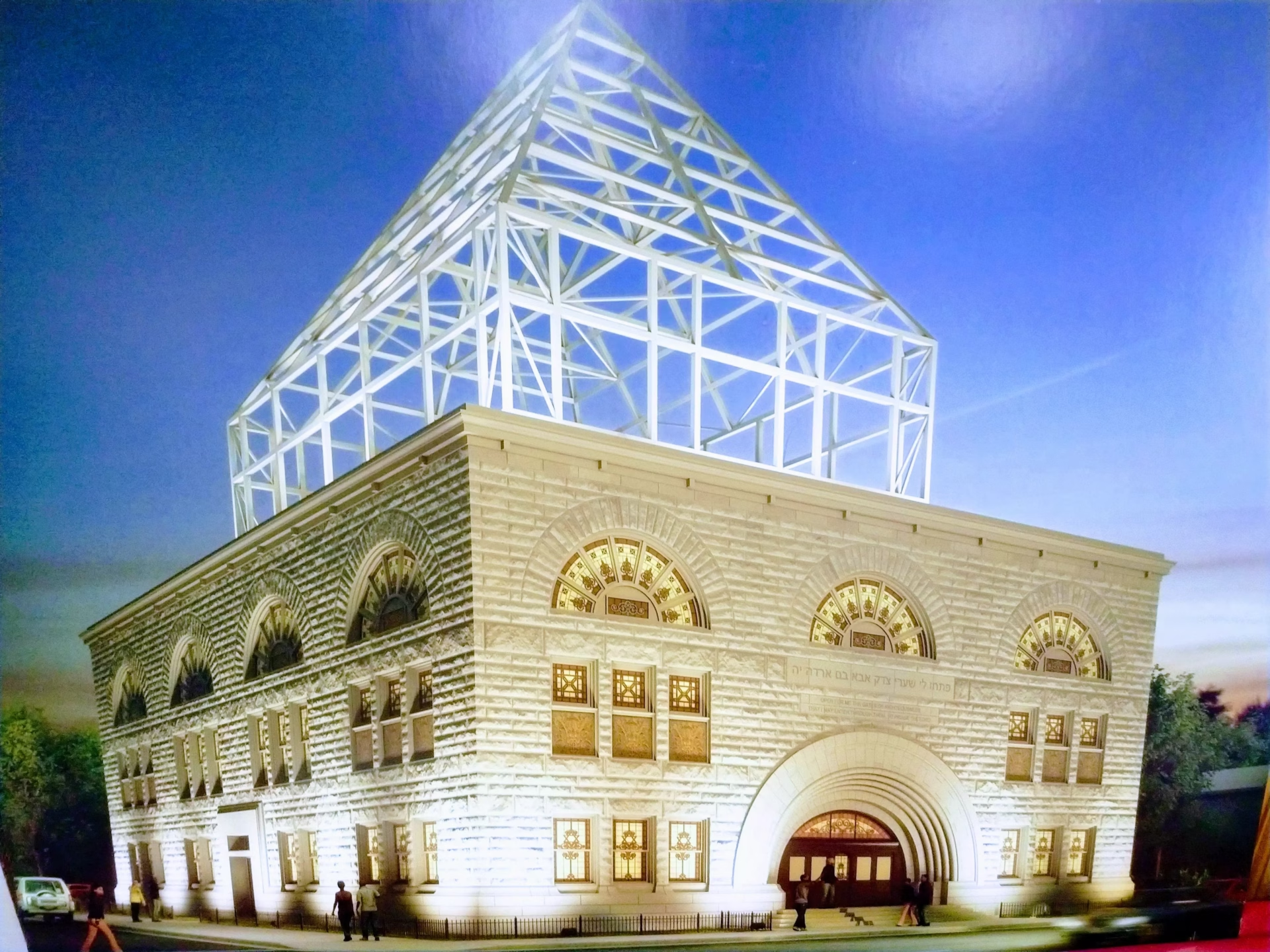
For more than a century, Chicago's Pilgrim Baptist Church stood on 3300 S. Indiana as a beacon of gospel music not only to South Side Chicago, but to America and the world. Until it went up in flames.
On Jan. 6, 2006, it was renovation time for the arguable birthplace of gospel music; as part of the half-million-dollar project, workers were fitting metal coping on the roof with blowtorches.
"And they dropped the torch," Antoinette Wright, the president and executive director of the National Museum of Gospel Music — a museum project centered on its site — tells GRAMMY.com. "When they dropped it, they kind of didn't tell anybody that they had. All they did was scurry off the roof; can you believe that?"
The building committee and assorted congregants alerted the fire department immediately, but it was too late. Congregants like Lakeisha Gray-Sewell, who had wed and planned baptisms for her children at Pilgrim Baptist, were shaken to their foundations. The house of worship where Martin Luther King once offered soaring words — and Mahalia Jackson, Aretha Franklin, the Staple Singers, and other gospel luminaries sent their voices into the rafters — was no more.
"I grew up in this church, my mother grew up in this church, my grandmother grew up in this church," Gray-Sewell told The New York Times upon the Bronzeville fixture's near-total obliteration. "When that smoke clears, I don't know what we're going to see. I'm afraid to see what we're going to see. No matter what, this will always be my church."
The synagogue-turned-church turned out to be completely gutted. Among the remains were those of a baby grand piano — just a charred cast-iron frame and a snarl of melted strings. Gone were the spectacular entry arch, windows, and ornamental panels by cherished Chicago architect Louis Sullivan; gone were boxes of irreplaceable photographs and sheet music by the church's music director, Thomas Dorsey.
Dorsey's legacy at Pilgrim Baptist — and role in gospel's overall evolution — cannot be overstated. Known for his synthesis of sacred music and the blues, the rightly-called "Father of Gospel Music" engendered a form that's central and essential to American music. As Chicago Historical Society curator John Russick told the Times, "he was like the Beatles of gospel music."
The son of a revivalist preacher born in 1899, Dorsey was galvanized early on by blues pianists in the Atlanta, Georgia, area. In the 1910s and '20s, he worked in secular "hokum" music as a composer, arranger, pianist, and vocalist. In 1916, he moved to Chicago and attended the College of Composition and Arranging; the following decade, he toured with Ma Rainey and his own bands.
The poles of the sacred and profane continued to magnetize him. Under the nom de plume "Georgia Tom," Dorsey later wrote the dirty blues "It's Tight Like That" with guitarist Hudson "Tampa Red" Whittaker. While the bawdy, double-entrendred tune was controversial in its day, it proved lucrative for its writer.
From 1929 on, Dorsey worked exclusively within a religious context. He wed blues melodies and rhythms to spiritual concerns; many of his resultant songs, like "Precious Lord, Take My Hand," became gospel standards. Dorsey went on to write and record prolifically in the 1930s, publishing his own sheet music and lyrics. In 1932, Dorsey became the choral director of the Pilgrim Baptist Church in Chicago, a position he maintained until the late 1970s.
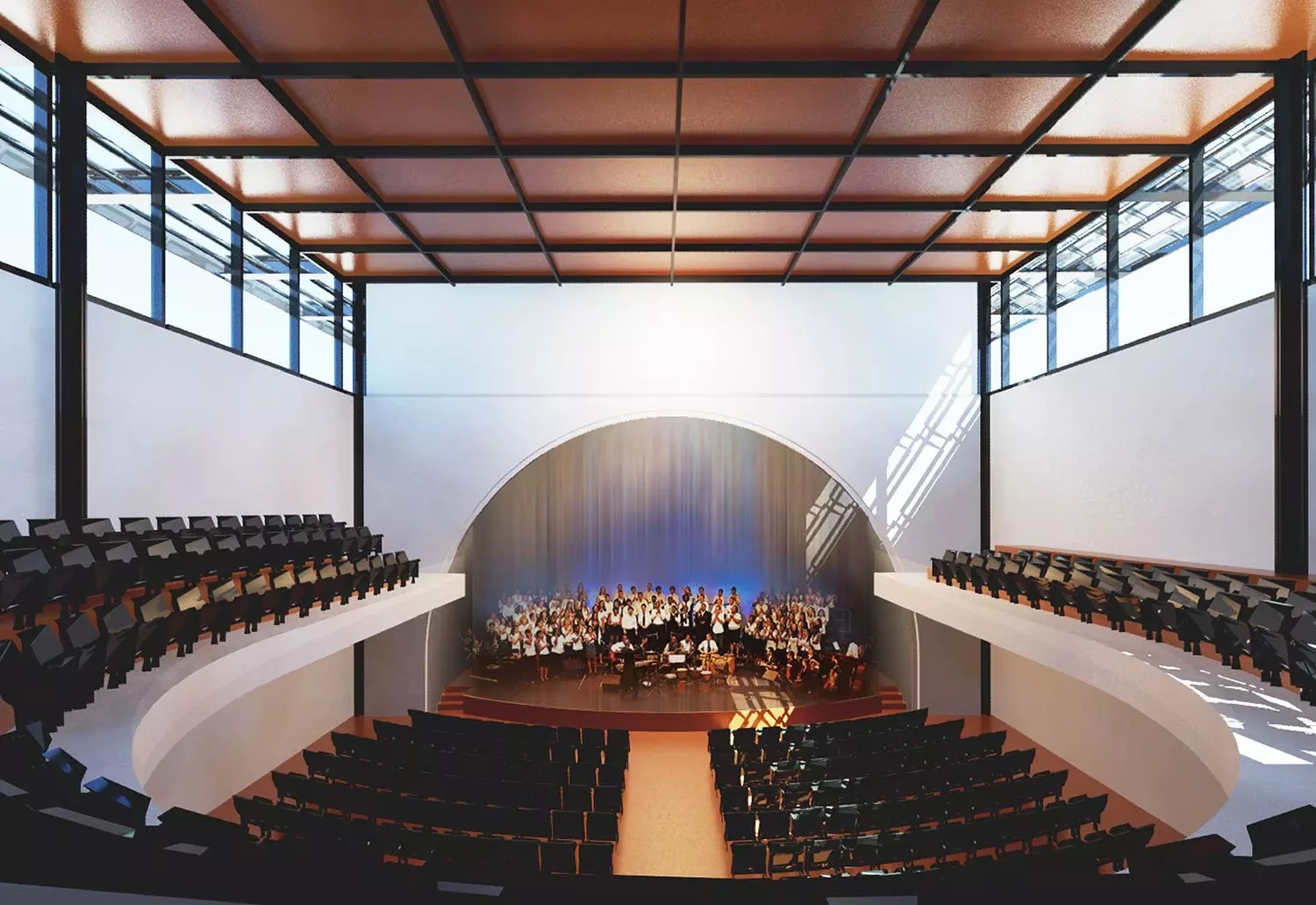
*Photo courtesy of the National Museum of Gospel Music.*
Dorsey's legacy — as well as that of his entire milieu — promises to be on full display at the National Museum of Gospel Music. Don Jackson, the founder and CEO of Chicago-based Central City Productions, and his team — including Wright — are in the midst of establishing the 45,000 square-foot structure on the site of Pilgrim Baptist, itself a National Historic Landmark.
"It will present the most expansive history of gospel music — from the spiritual, slavery area to today — of who the artists are," Jackson tells GRAMMY.com. "What were their contributions, how the music itself encouraged folks, and how the churches played a major part in opening their doors — recognizing those faith-based churches who let these artists perform, giving the credit for all they've done to keep the music alive and growing."
All involved stress that the museum in its final form will be encompassing and inclusive, stretching beyond Chicagoland to the regional scenes nationwide — hence the name. Plus, it will underline the music's resonance today. "I call [the gospel singers] the original rappers, because they're constantly telling the story," Wright says. "Gospel music is very vocal, like the blues. They both had kinship in telling the stories of life."
According to the National Museum of Gospel Music's website, the building will eventually feature "multigenerational programming and educational exhibits, auditorium seating up to 350 designed for television production, exclusive video archives and collection of the Stellar Gospel Music Awards programming," and a "listening and research library."
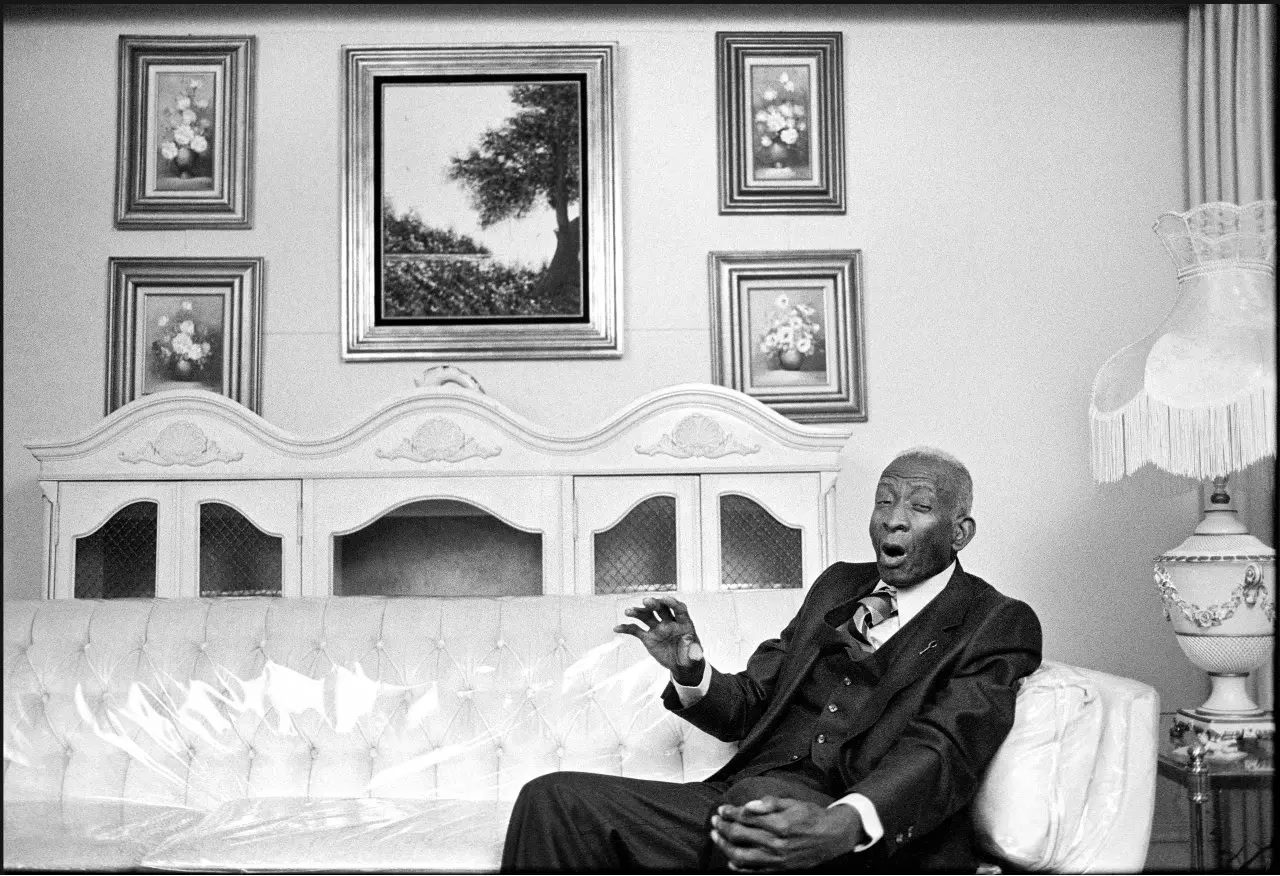
*Thomas Dorsey singing in his living room in 1983. Photo: Chuck Fishman/Getty Images*
The 2006 fire created "a gaping hole that's being burned out of our community," Bronzeville District Representative Bobby L. Rush told the Times. In 2020, 100 m.p.h. winds damaged the remaining southern and east walls. Today, all that remains are two limestone walls — one facing Indiana Ave., the other 33rd St. — which are braced and holding steady.
Through a web of scaffolding, you can read a passage from the Book of Psalms on the main entrance: "Open for me the gates of righteousness, that I may enter through them to praise the Lord." Reading those soaring words from the street, they feel bittersweet and poignant. Could this haven for worshippers and hub of musical innovation ever throw open its gates again?
One hint lay in Jackson’s reaction. Instead of viewing the 2020 wind damage as an insurmountable blow he called it a "godsend." "This forces the urgency," he said at the time. "This has been a blessing for the project that says that we need to get started."
The project has already begun. While the interactive museum may not be physically up and running yet, it's open in an abstract sense — Wright calls it "a museum without walls. "It's functioning programmatically," she says, noting that in-person and virtual activities have fired up again. "It is in existence, but we're moving into a permanent home. Instead of saying, 'When is the museum opening?' I have to say 'The museum is open.'"
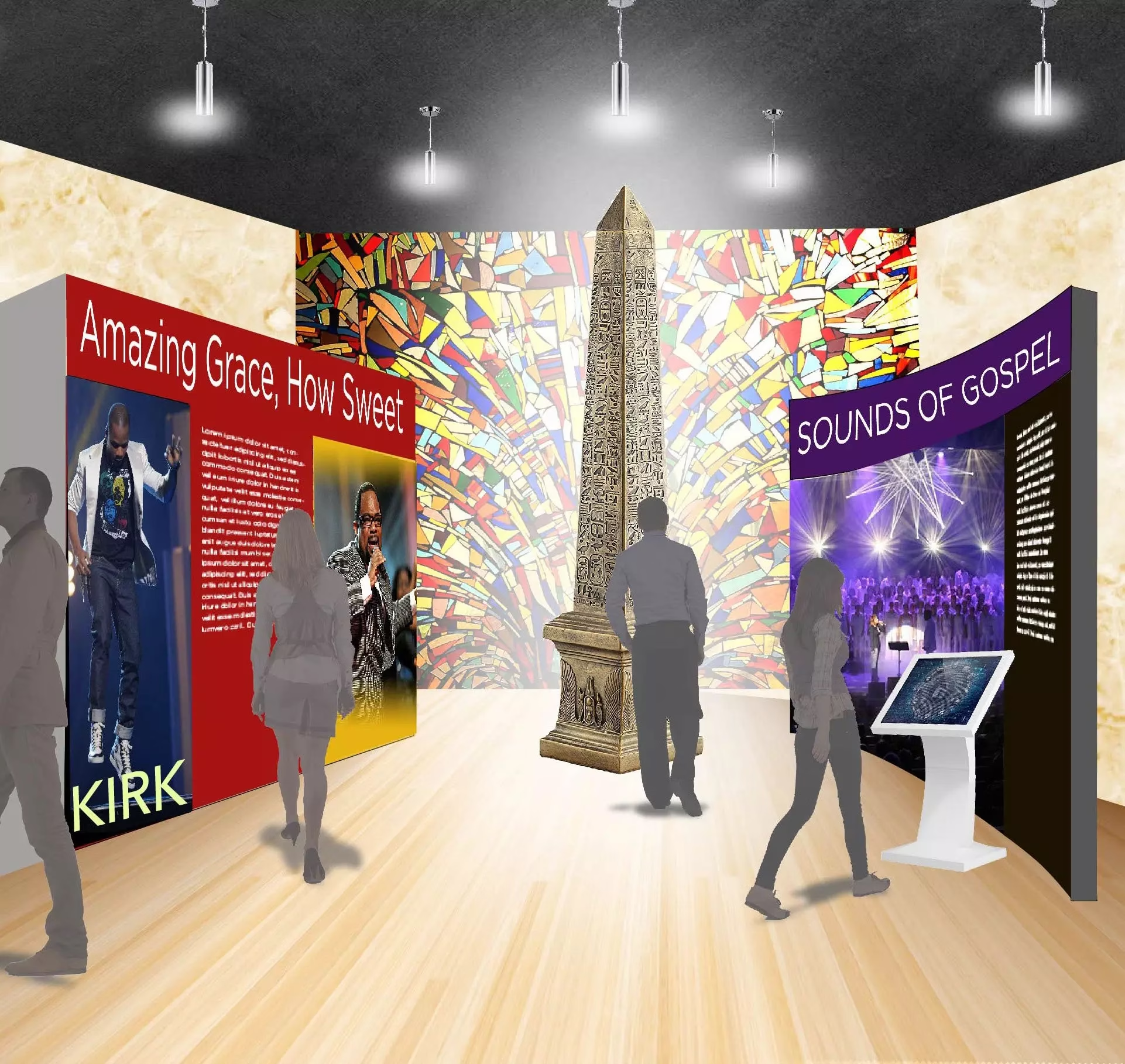
*Photo courtesy of the National Museum of Gospel Music.*
Speaking to GRAMMY.com back in 2021, when the pandemic was more of a going concern, museum fundraising and construction was in more of a holding pattern; when asked if fundraising was going as Wright hoped, she replied, "Of course not." These days, she has better news to share: they've secured almost enough for the first phase of enclosing the building.
"We're meeting with different foundations; my idea is that you can buy a wall and your name can be on the wall," Wright explains. For the sake of argument: "This is the McCormick wall; this is the ComEd wall. This is the City of Chicago rooftop," she adds. "We want to give people the opportunity to know how important it is to enclose the building."
Like her colleagues, Wright is optimistic about the project's imminent fruition, partly because she's looked around at similar initiatives. "You think about the National Museum of African American History in Washington," she says. "Now, that facility took a hundred years to get there."
Between city, state and federal funding and donations from the public, as well as an accumulation of museum pieces, whose details can't be disclosed yet, the Gospel Museum is moving ahead. This is despite a litany of bureaucratic headaches, and its incremental nature; this is how projects of this scale tend to go.
"For the next 18 months, we'll be working on that building. People will see things being done, and that's going to increase our fundraising as well," the National Museum of Gospel Music's Chairwoman Of The Board, Cynthia Jones, told GRAMMY.com in 2021.
"We're going out to various foundations and benefactors," she continued. "And we just know we're going to be successful this time because they're going to actually see the work that's being done — because we've gotten some of the money we need to restore and preserve that building."
As the National Museum of Gospel Music forges ahead, there are pragmatic ways to engage with and support the institution. You can donate via their website. You can follow them via Facebook to stay abreast of virtual and in-person event programming. Because when the physical building finally culminates, it promises to be a glorious thing.
"I'm hoping, at the end of the day, it would not be just a museum talking about the music, or saying how the music improves life," Jones added. "I want it to stimulate and inspire people to do different things for the betterment of mankind."
The Real Ambassadors At 60: What Dave Brubeck, Iola Brubeck & Louis Armstrong's Obscure Co-Creation Teaches Us About The Cold War, Racial Equality & God