Presented by GRAMMY.com, Songbook is an editorial series and hub for music discovery that dives into a legendary artist's discography and art in whole — from songs to albums to music films and videos and beyond.
Cue up almost any Willie Nelson performance from the last 10 years, and you'll find something intriguing. Many other country greats are tight and precise onstage; Nelson is decidedly not.
While his Family band easily catches a groove on well-worn classics like "Family Bible," "Crazy" and "Funny How Time Slips Away," our permanently bandana-ed and pigtailed protagonist is attuned to deeper and stranger rhythmic dimensions. A Willie Nelson show is a particular kind of miasma — at times, it coheres; at times, it hovers almost beatlessly.
Sometimes, Nelson’s famously jazz-inflected syncopation threatens to swing him off the road — he'll strike his famously battered and weathered classical guitar, Trigger, at a moment that seems jarringly off the beat. His light and flinty voice has developed distinguished cracks and fissures with age. But if you're disappointed by his relative lack of polish, you're not just missing the point — you're missing the beauty.
First, nobody has ever picked up a guitar and sang a song like Nelson. The gods only made one of him, and the most fabulously expensive guitar on the market could never sound like Trigger. Second, the soul of country music is impactful storytelling and direct emotional transference, and nobody wields those twin abilities like Nelson, both as a songwriter and interpreter.
Indeed, without him as its cockeyed embodiment and one of its foundational figures, the world of country music would be unrecognizable — period.
Despite a few minor off-ramps during his almost seven-decade career, Nelson has built an astonishing body of work not via overhauling or reinvention, but becoming more himself every year. With every release, he digs deeper into his time-tested toolbox and aesthetic — often to heartening, comforting, and wizening results.
You don't approach the recently released A Beautiful Time, Nelson's fourth album in two years, for left turns; you do so because you want to know what the Beatles' "With a Little Help From My Friends" and Leonard Cohen's "Tower of Song" mean to him — as well as the state of his songwriting.
While the resin-caked hayseed vibe Nelson has embraced since the '70s may be a far cry from his crop-topped beginnings, you can drop the needle on any decade and hear an essentially unchanged artist and person. Whether he's channeling George Gershwin and crooning Broadway tunes, or running from the IRS on record — or even making reggae-inspired music, as on 1995's Countryman — Willie is Willie is Willie.
That said, the 10-time GRAMMY winner and 53-time nominee has either dozens or hundreds of albums, depending on how you count them. Where does one possibly begin? Given that he doesn't really have specific, delineated eras, it's more helpful to cherry pick the most essential albums, decade by decade, while still noting relatively minor entries of interest.
Let's go places we've never been, and see things we may never see again — in this edition of Songbook.
Listen to GRAMMY.com’s Songbook: An Essential Guide To Willie Nelson playlist on Spotify, Apple Music, Amazon Music and Pandora.
The 1960s
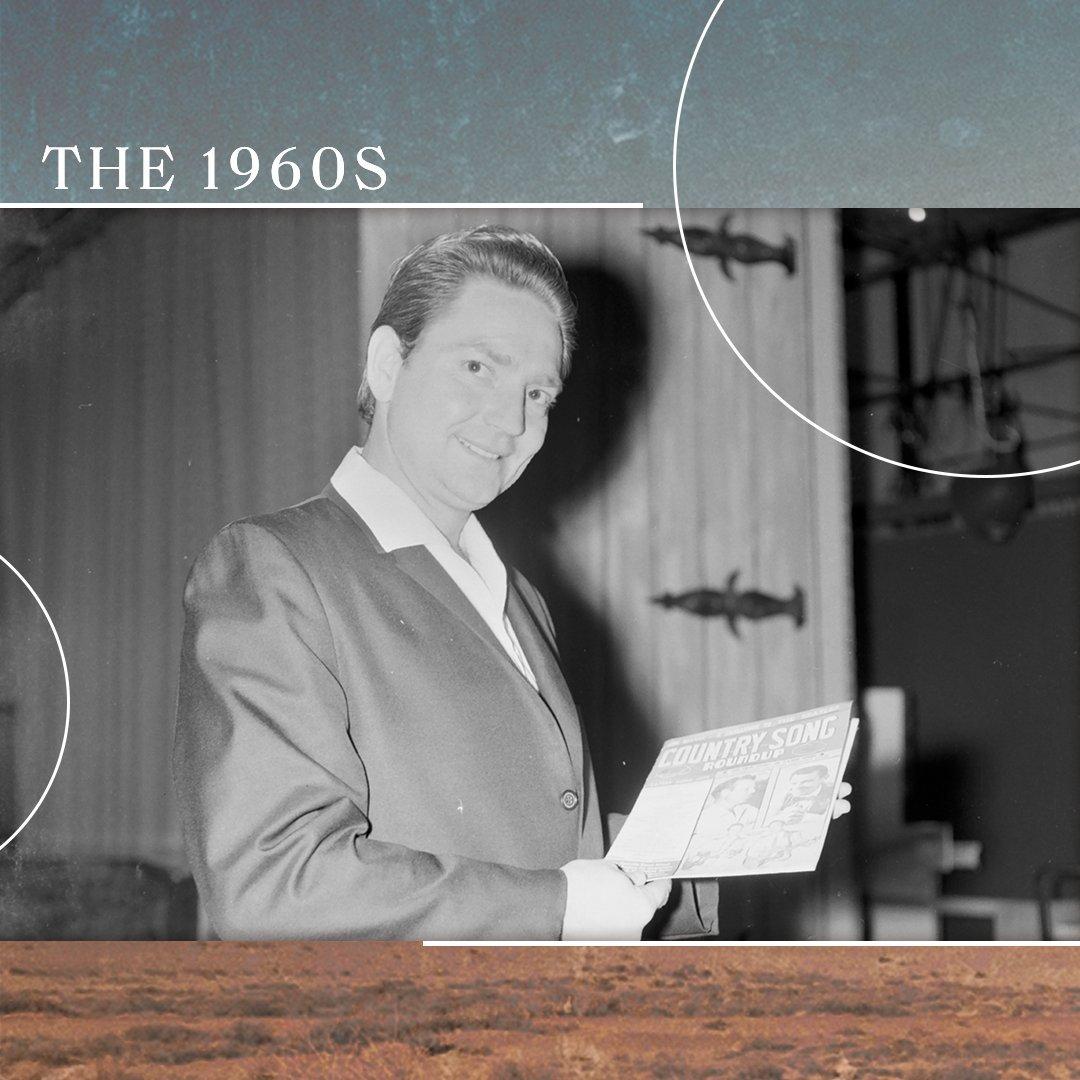
Willie Nelson backstage at "Arizona Hayride" TV show in November, 1964, in Phoenix, Arizona | Photo: Johnny Franklin/andmorebears/Getty Images
While Nelson made his first recordings in the mid-1950s, his discography began in earnest in 1962, with his debut album …And Then I Wrote.
…And Then I Wrote is absolutely worth hearing for its decadent production, introduction of Nelson's Django Reinhardt-inspired nylon-string picking, and key early compositions like "Funny How Time Slips Away" and "Crazy."
The baby-faced country crooner on the cover was in for the adventure of a lifetime. Listen to …And Then I Wrote, consider how Nelson's voice is pretty much the same 60 years on — albeit weathered by age and weed smoke — and you'll realize he essentially came out fully formed.
Do you dig the songs on …And Then I Wrote, but don’t like the semi-excessive reverb and instrumentation typical of Nashville back then? Head for 1965's Country Willie: His Own Songs for alternate versions of tracks like "Funny How Time Slips Away," "Mr. Record Man," and cuts from his second album, 1963's Here's Willie Nelson. But all in all, seek out 1973's The Best of Willie Nelson for a handy sampler platter from his first decade on record.
The 1970s
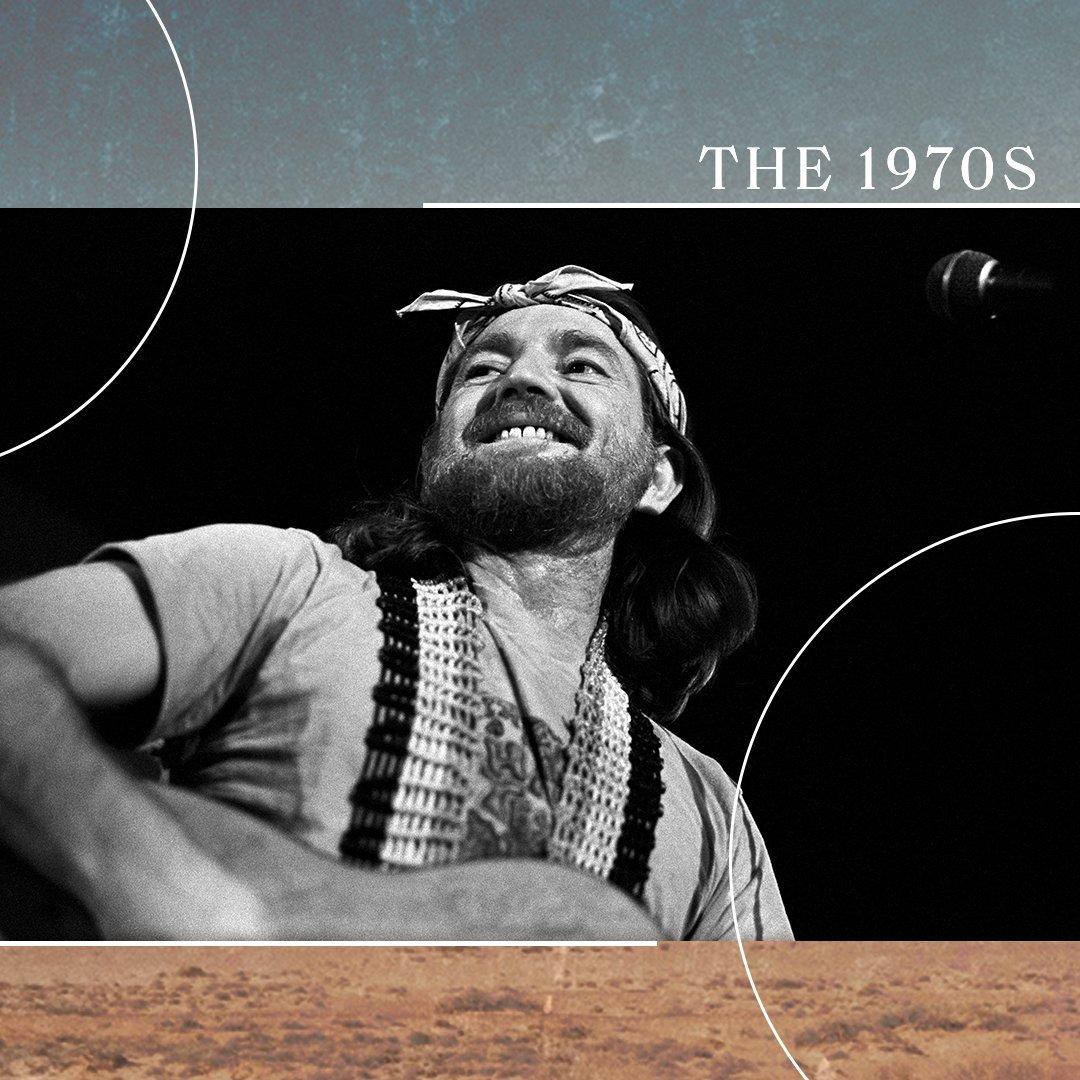
*Willie Nelson performs at the Great Southeast Music Hall on October 27, 1975 in Atlanta, Georgia | Photo: Tom Hill/Getty Images*
Forged and rebirthed by a ranch fire and divorce — not to mention professional bumps in the road — Nelson entered the 1970s with his first masterpiece: 1971's Yesterday's Wine, which contains classics like "Family Bible" and the title track.
Begin your trawling through Nelson's '70s with that record, then follow up with his 1973 breakthrough, Shotgun Willie, whose sound, attitude and songs helped forge the "outlaw country" subgenre. 1974's slightly less discussed Phases and Stages is a heady exploration of a marriage’s unraveling.
Then drop the needle on 1975's Red Headed Stranger, which further cemented Nelson's reputation as an outlaw-country mainstay and contained his immortal version of Fred Rose's "Blue Eyes Crying in the Rain." (Talk about making a shopworn song your own!)
If you want a more raucous Nelson offering from this decade, seek out 1976's The Troublemaker, a rough-and-tumble collection of traditional songs.
1977's To Lefty From Willie, a tribute to country singer Lefty Frizzell, is Nelson's first album-length tip of the hat to another artist — he'd later do the same for Ray Price and George Gershwin. And 1978's Waylon and Willie is worth engaging with simply to hear two titans appear on the same record.
The other 1970s entry you must hear is Stardust, which veers away from Nelson's outlaw-country image in favor of jazzy renditions of traditional pop songs, like "Unchained Melody," "All of Me," "Moonlight in Vermont," and — most famously — "Georgia on My Mind."
Given there has never been a jazzier country artist than Nelson, Stardust is a pivot point in his discography by concept alone — one that shows the true depths of his artistry. Seek it out for that reason, and stay for the luminous music.
The 1980s
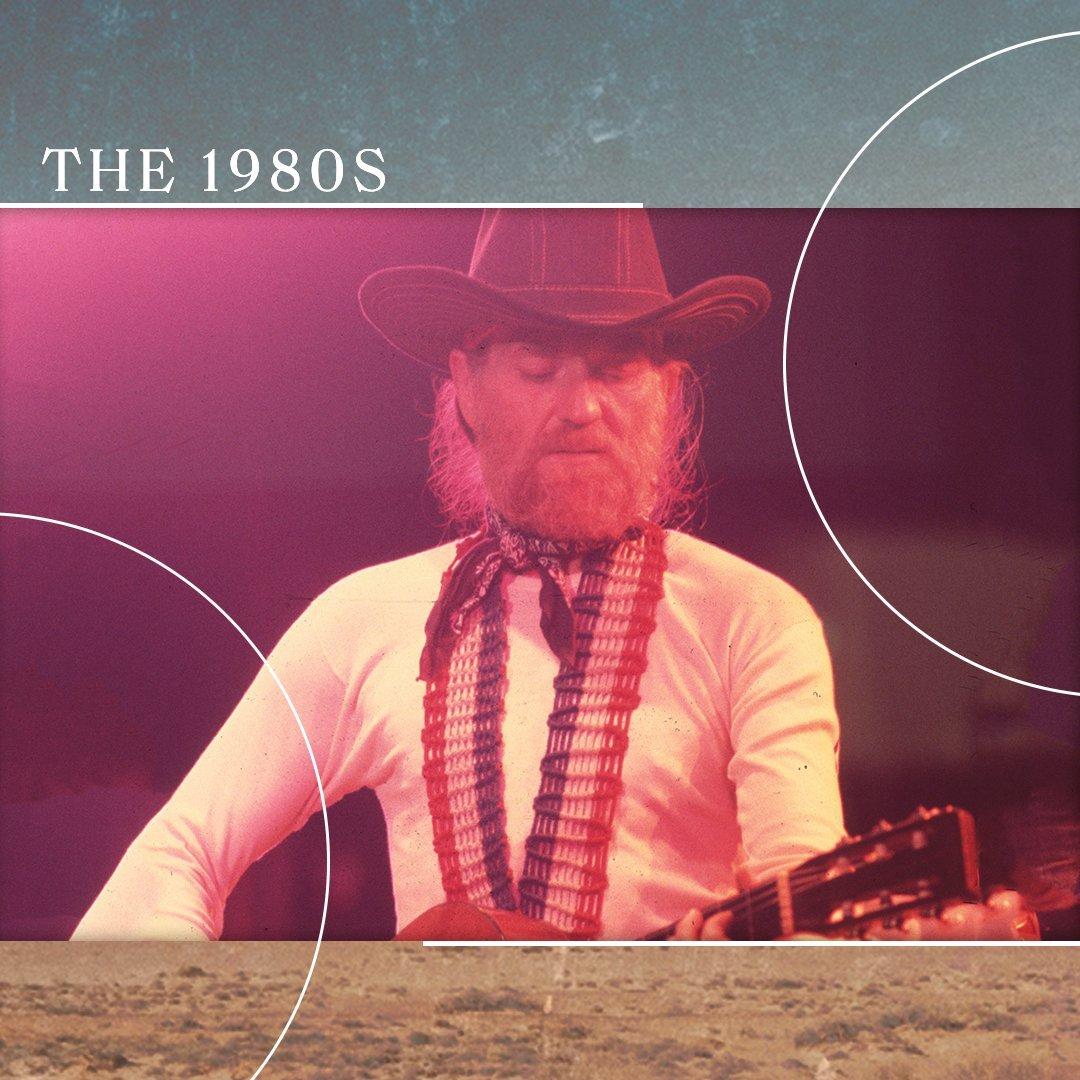
*Willie Nelson performs in 1980 | Photo: Chris Walter/WireImage*
Nelson kicked off the '80s with San Antonio Rose, a collaborative album with Ray Price that illustrated the profound bond between two foundational country figures. Also released in 1980, Family Bible was a duet album with Nelson's sister, pianist Bobbie, who passed away in 2022.
A successor of sorts to 1979's covers album Sings Kristofferson, Music From Songwriter was a duet between the pair. It also soundtracked the titular, well-recieved 1984 film, which starred both men.
The one drop-dead essential Nelson album of the decade, though, is 1983's Pancho & Lefty, his inspired team-up with fellow outlaw-countryman Merle Haggard.
The album featured unforgettable tunes like the Townes Van Zandt-penned title track — a narrative about a wanderer and Mexican "bandit boy" — as well as Haggard's "Reasons to Quit" and Jesse Ashlock's "Still Water Runs the Deepest." It also spawned multiple sequels, from 1987's Seashores of Old Mexico to 2015's Django & Jimmie.
The 1990s
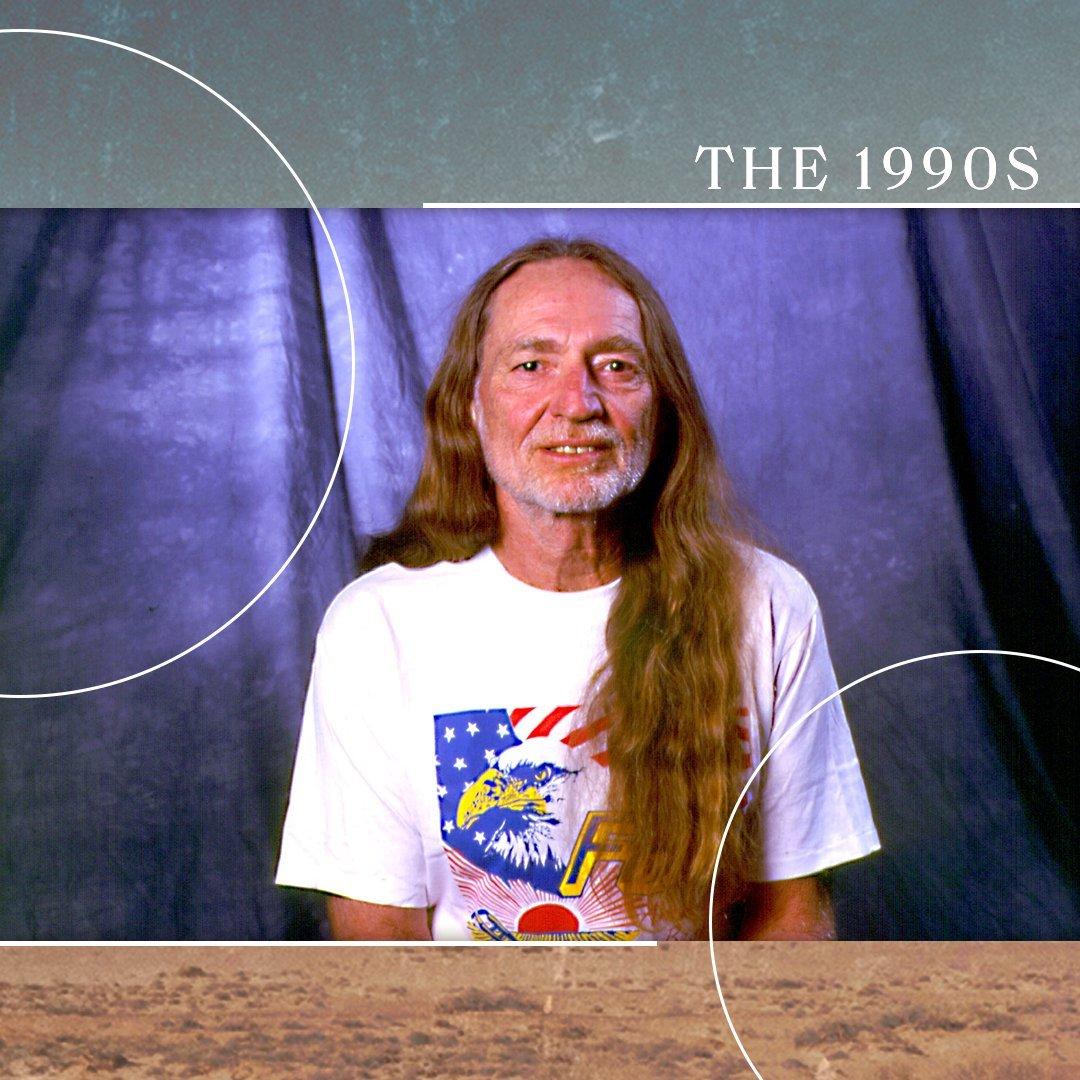
*Willie Nelson in New Orleans, Louisiana, in 1994 | Photo: Paul Natkin/WireImage*
Nelson had a beyond rocky start to the decade: in 1990, the Internal Revenue Service seized most of his assets, claiming he owed a whopping $16 million. Long story short, he recorded Who'll Buy My Memories: The IRS Tapes to pay off part of the debt.
Although the album was well-received, it's safe to say it exists more of a reminder of this bizarre yarn than a standalone album worth cherishing. (Thank goodness Trigger survived the property seizure — Nelson's daughter, Lana, shipped it to him in Hawaii.)
A far more essential '90s Nelson listen is the haunting, stripped-down, Spanish-influenced Spirit, a quintessential "real heads only" album.
Featuring fiddler Johnny Gimble of Bob Wills and His Texas Playboys, Spirit consists solely of crepuscular, yearning originals, like "Your Memory Won't Die in My Grave," "Too Sick to Pray" and "I Guess I've Come to Live Here in Your Eyes."
Also of interest from this decade in Nelson's discography: Teatro, which Daniel Lanois recorded in an old movie theater in Oxnard, California and features vocal contributions from the estimable Emmylou Harris.
The 2000s
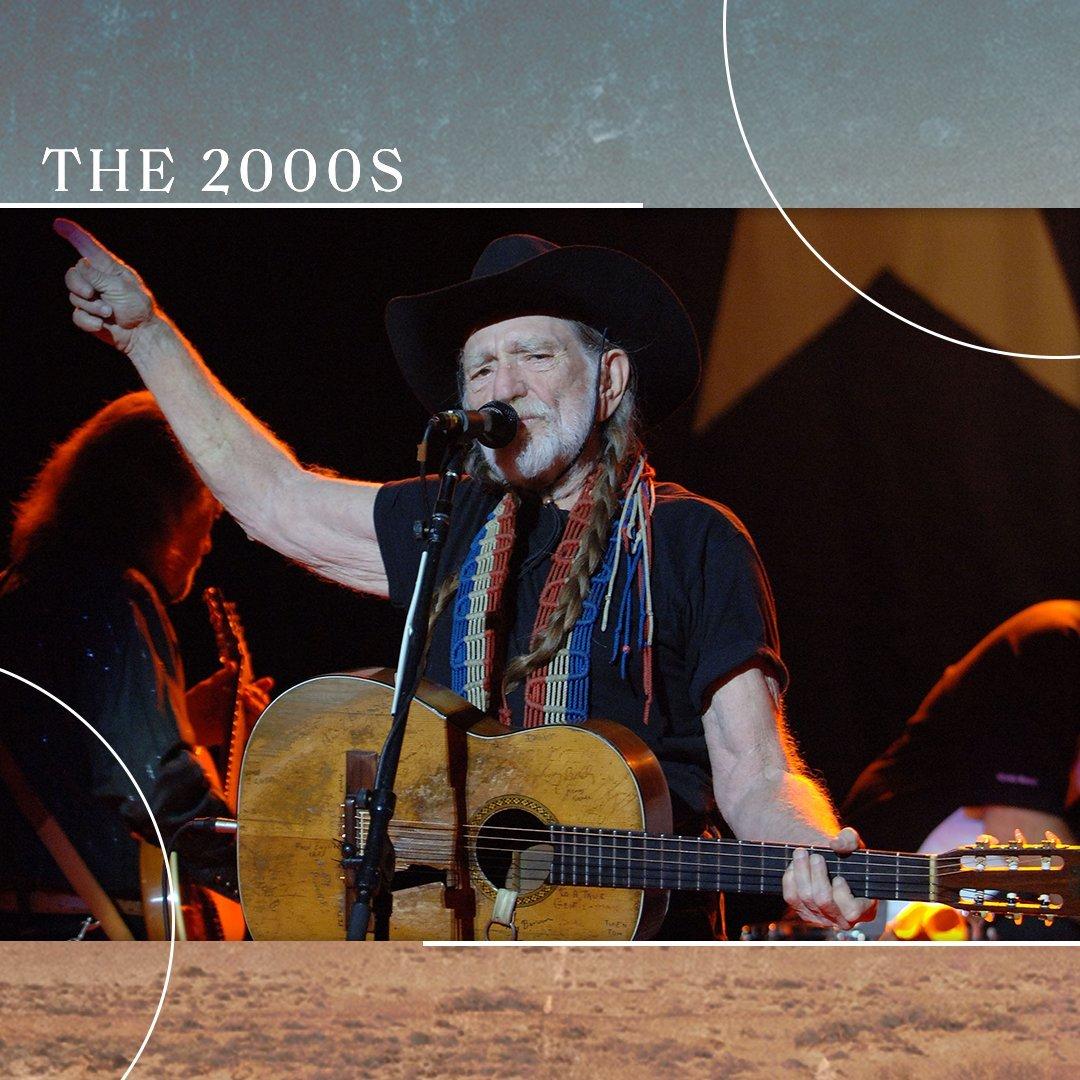
*Willie Nelson performs at The Mizner Park Ampitheatre in Boca Raton, Florida, in 2006 | Photo: Larry Marano/Getty Images*
In the young millennium, Nelson hit the road even harder than he did in the '90s, and collaborated with artists as divergent as Toby Keith ("Beer for My Horses"), Toots and the Maytals ("She is Still Moving to Me," "I'm a Worried Man") and Wynton Marsalis (2008's Two Men With the Blues).
The 2000s are also important in Nelson's development as they marked the start of his partnership with the two-time GRAMMY-winning producer Buddy Cannon. Their inaugural project was 2008's Moment of Forever, and Cannon produces or co-produces Nelson's yearly (or, in some cases, bi-yearly) albums to this day.
Other notable selections from this decade include 2006's Songbird, with Ryan Adams and the Cardinals, and 2007's western-swing excursion Last of the Breed, featuring the triple threat of Nelson, Haggard and Price.
The 2010s
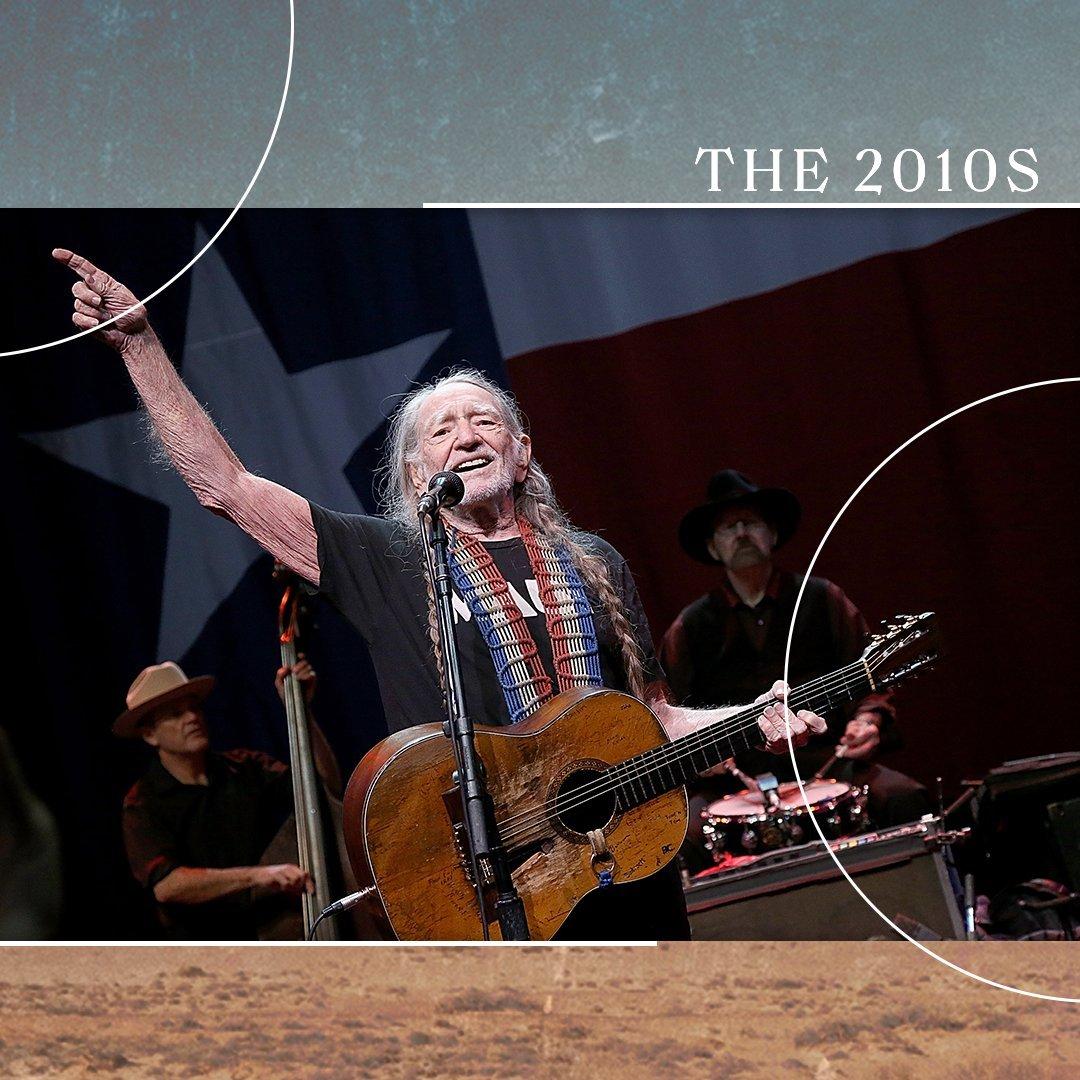
*Willie Nelson performs on New Year's Eve at ACL Live in 2014 in Austin, Texas | Photo: Gary Miller/Getty Images*
Nelson was consistent and prolific throughout the 2010s. If you're a fan or just curious, you can conceivably drop into almost any album — from 2012's Heroes to 2014's Band of Brothers to 2018's Last Man Standing — and walk away smiling.
That said, a few stand out from the pack. Django and Jimmie, which marks Nelson and Haggard's sixth and final collaborative album, is by turns touching ("Somewhere Between") and uproarious (the irresistible stoner boogie "It's All Going to Pot").
What's more, Django and Jimmie is a glorious penultimate dispatch from the very missed Haggard, who died in 2016. Nelson touchingly paid tribute to his fallen friend on "He Won't Ever Be Gone," from 2017's excellent God's Problem Child.
Finish off your exploration of 2010s Nelson with 2018's My Way, a tribute to Frank Sinatra, and 2020's spare-yet-satisfying Ride Me Back Home.
The 2020s
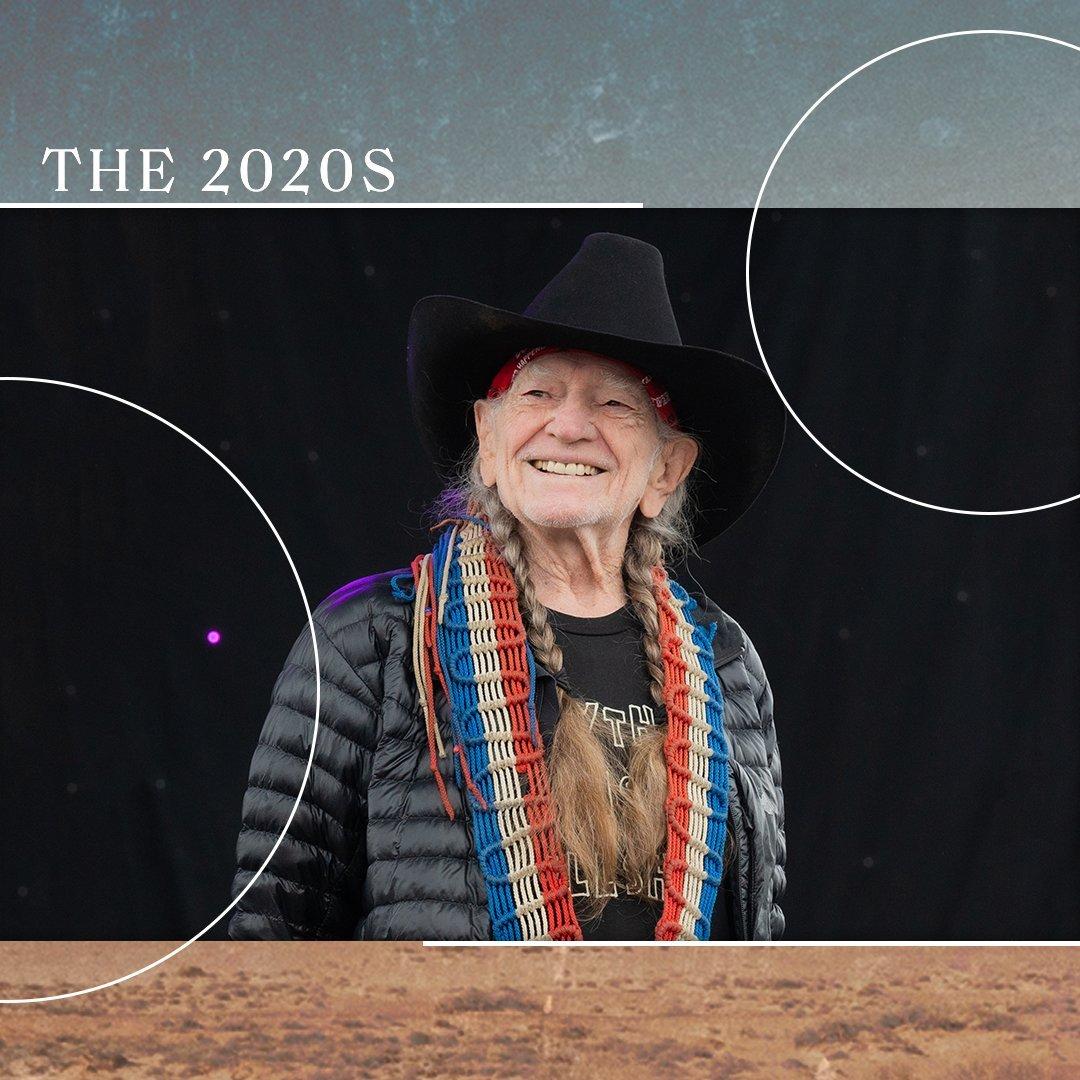
*Willie Nelson performs at the Luck Reunion in 2022 in Luck, Texas | Photo: Jim Bennett/WireImage*
By all available evidence, Nelson is firing on all cylinders in the 2020s. He entered the new decade with 2020's tender First Rose of Spring. Nelson followed that up almost immediately with 2021's That's Life, another excellent tribute to Sinatra.
That year's The Willie Nelson Family reflected his eternal bond with his biological and musical family — Nelsons Amy, Bobbie, Lukas, Micah and Paula. And on April 29, Nelson gave us A Beautiful Time, a gorgeous collection of originals and covers, with an especially touching title track written by Shawn Camp.
"If I ever get home/ I'll still love the road/ Still love the way that it winds," Nelson sings therein. "Now when the last song's been played/ I'll look back and say/ I sure had a beautiful time."
The song carries a tinge of finality, and on the cover, Nelson strolls into the sunset. Does it signal that Nelson is finally winding down? It'd be presumptuous to say so, even though he's numberless albums deep and will turn 90 in 2023.
Despite recent health issues, Nelson is magically, gratefully still on the road. He sings as well, or better, than ever. And his guitar playing alone remains an idiosyncratic force — to say nothing of his still-intact songwriting and interpreting talents.
For all his travails and triumphs, Nelson has remained creatively vital and deeply himself throughout his astonishing career and into his seventh active decade — partly because of his family’s support, partly for staying uncompromising, but also because he never let the old man in.