Living Legends is a series that spotlights icons in music still going strong today. This week, GRAMMY.com spoke with Roger McGuinn, a founding member of the Byrds and folk-rock pioneer who, at 80, remains active as a solo act. A new coffee-table book about the early history of the band, The Byrds: 1964-1967, is available now.
Roger McGuinn is still tinkering.
Decades ago, he helped codify the Rickenbacker 360/12 as a rock 'n' roll armament. He electrified his beloved folk music to make it jangle and chime. He wrote immortal odes to celestial voyages and alternate dimensions, and threw down incendiary "out" solos that would make John Coltrane proud. And that maximum-curious mind is still humming.
This is wholly apparent in his one-man show currently criss-crossing the East Coast. Therein, the 80-year-old former Byrd clarifies, contextualizes and canonizes his life story, perhaps working it out for himself just as much as he is for his audiences.
And as far as the folk canon that galvanized and mobilized him in the first place, he's far from finished with his decades-long analysis. On his website, he releases free-to-download interpretations of songs from the folk, gospel, sea-shanty, and calypso traditions, among others — under the umbrella of his "Folk Den Project."
On top of that, he remains a lifelong enthusiast for all things engineering, aviation, gadgets and science fiction. From the road, McGuinn explains that his engineer grandfather got him interested in all things that light up and whir.
"I take LEDs and put them in a little box with a switch on it and make them blink, just for fun," he tells GRAMMY.com. "I love taking things apart and trying to put them back together."
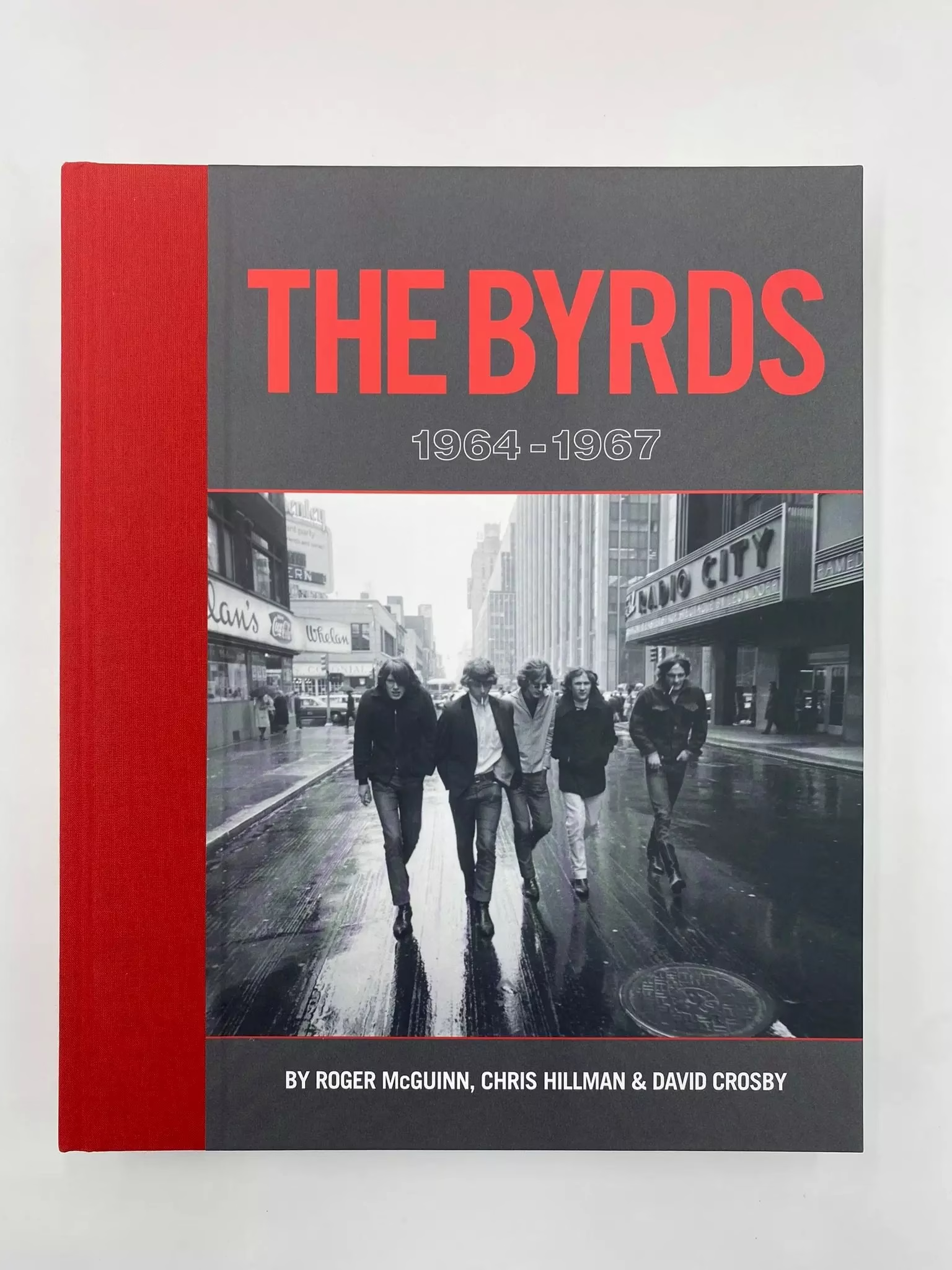
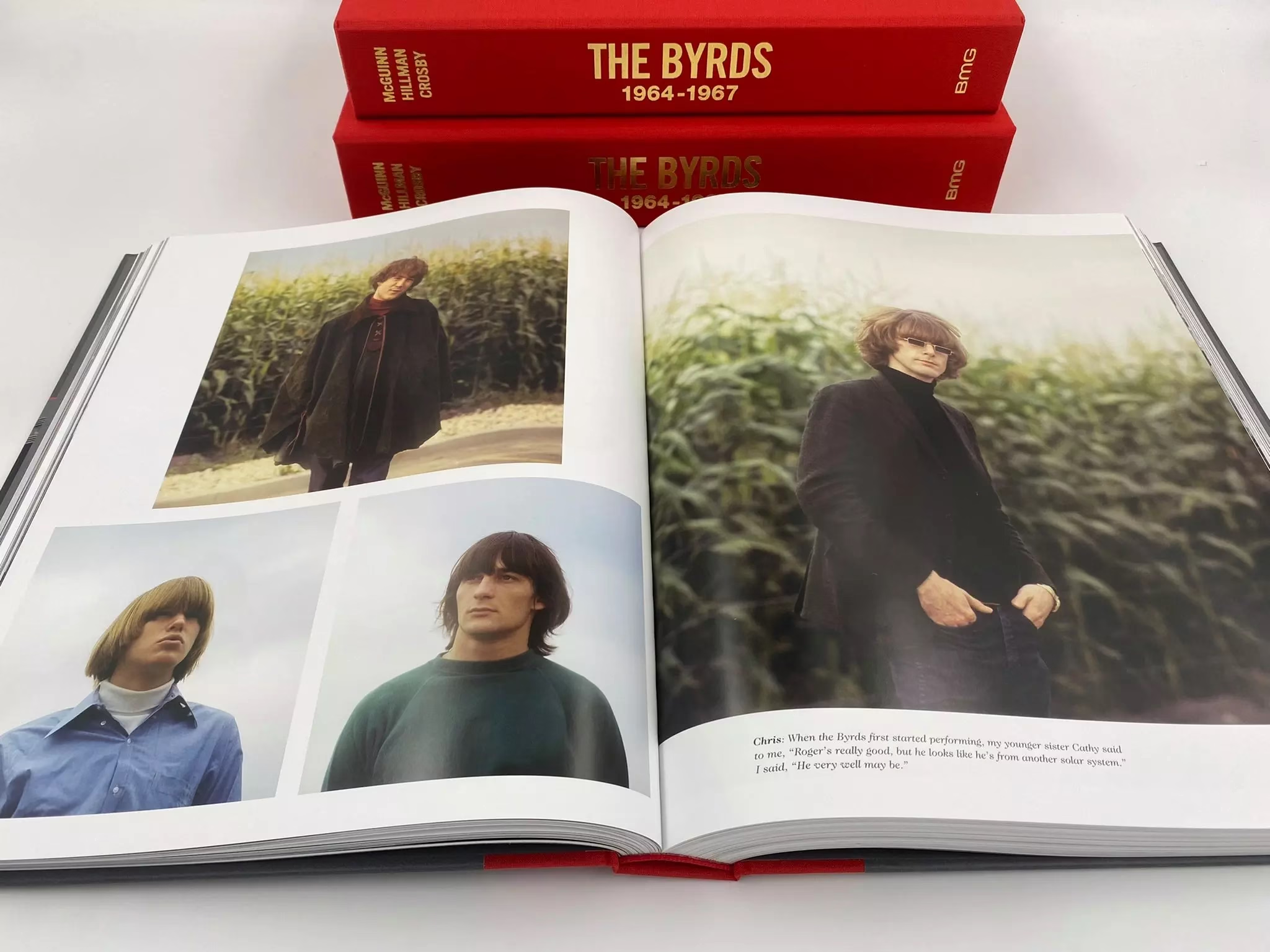
Fortunately for all of us, McGuinn isn't all that different from the man we learn about in The Byrds: 1964-1967, a lavish new coffee-table book that hit shelves on Sept. 20.
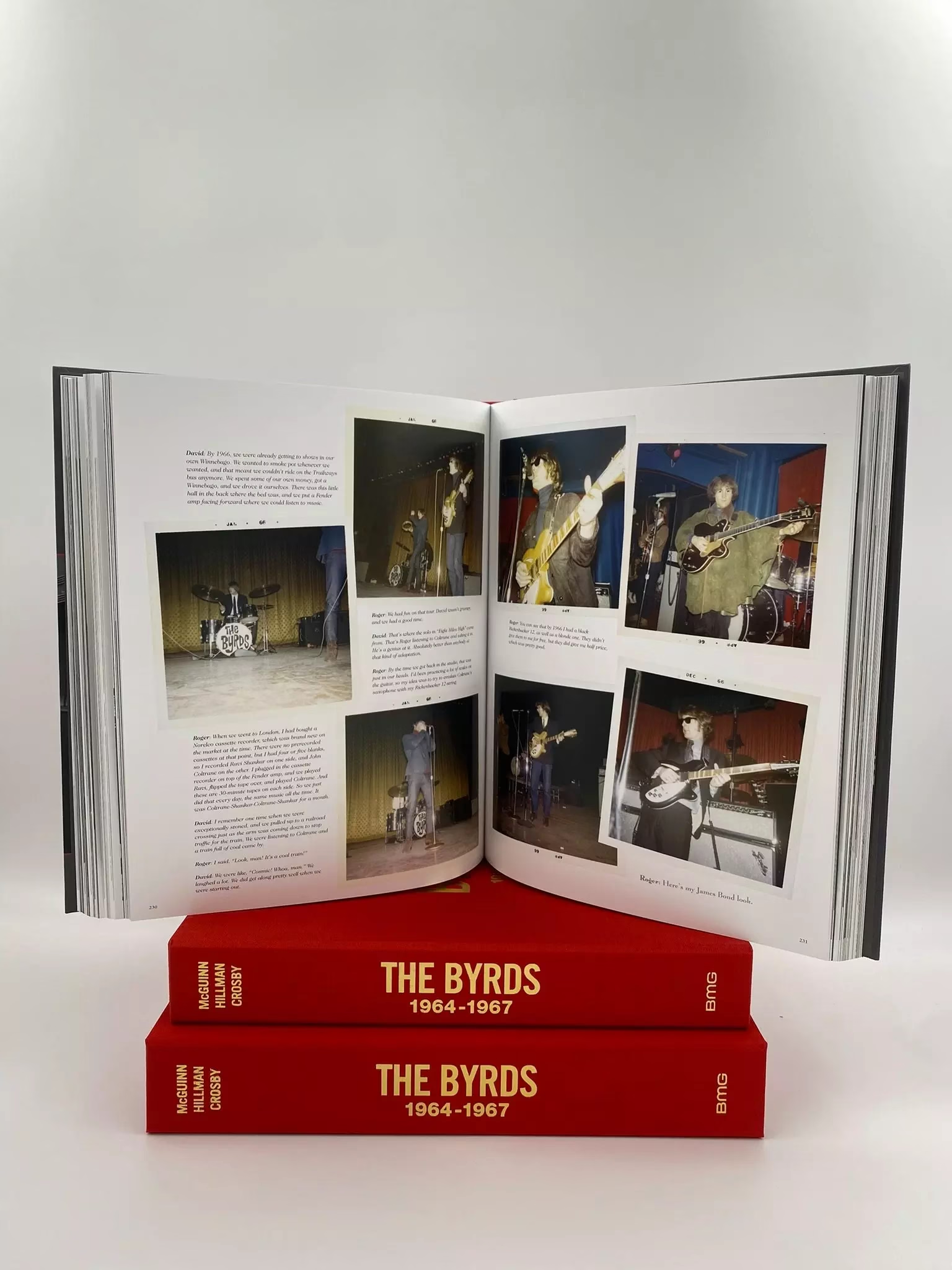
Featuring 400 pages of more than 500 illuminating photographs and an oral history courtesy of surviving Byrds McGuinn, Chris Hillman and David Crosby, the book is a definitive account of the band's genesis, commercial breakthroughs with "Mr. Tambourine Man" and "Turn! Turn! Turn!" and on-ramp to their eventual plunge into psychedelia.
In his post-Byrds life, McGuinn deepened in profound ways — not only in diving deeper into the folk tradition and honing his storytelling acumen, but focusing on his Christian ministry alongside his wife, Camilla. These days, he may have little interest in getting the old band back together, but he arguably remains their most active and public custodian — one one-man show at a time.
Read on for a history-spanning interview with the three-time GRAMMY nominee about the new book, his folkie origins, how he picked up the Rickenbacker, the importance of Gene Clark and Clarence White, and myriad other Byrdsy subjects.
This interview has been edited for clarity.
Before we time-warp to 55 years ago, I think it's important to lead with a question about your life and work today. What's creatively percolating for you?
Well, I've been touring since [hesitates, chuckles] 1960! I'm still doing it at 80 years old. We're on a tour right now. We're going to play a theater in Brattleboro tomorrow night. I think it's a month-long tour; it's going to take us around to Easton. So, that's one thing.
When I'm home, I record; I've got a Folk Den Project that I do every month; I record a song and put it on the internet for a free download, in a section called The Folk Den on my website, McGuinn.com. It's a public service sponsored by UNC Chapel Hill.
I record other things. We've recorded CDs, but CDs are kind of a dying breed, so we've had to find some other way. The streaming thing is working out well.
For people who may know the Byrds, since they've been in the ether for so long, but haven't caught you live, what can they expect from you in performance?
I do a one-man show. I do, like, the life of Will Rogers, except it's not about Will Rogers; it's about me. [Chuckles.] I tell the story about how I was inspired early on in my teens to get a guitar; I played guitar in the Old Town School for Folk Music and got hired by the Limeliters and the Chad Mitchell Trio. [I played with] Bobby Darin and Judy Collins and became a studio musician and writer at the Brill Building in New York.
Tell me how The Byrds: 1964-1967 came to be. Why did it feel appropriate to tell the story of the band's early history mostly through photographs, with an oral history threaded through them?
I wasn't really on the inside of this, but Chris Hillman did an autobiography a couple of years ago for BMG Publishing. They acquired a number of photographs of the Byrds, and I guess they had so many, they couldn't use them all.
So, they said, "What are we going to do with these?" They decided to make a coffee-table book — 400 pages, 500 photos, printed with Italian paper. It's beautiful; it's a gorgeous edition.
Before we dig into this era of the band reflected in its pages, can you tell me about your early love of all things related to technology, outer space and sci-fi? To me, that's one of the most captivating facets of the band — that sense of far-out curiosity, that futuristic bent.
Well, I got into it when I was living in Chicago. My grandfather had been an engineer for the Deering Company or something — I'm not sure of the company — but he was instrumental in building bridges over the Chicago River.
He was always in engineering, and he used to take me to the Museum of Science and Industry in Chicago every Sunday. That's where I developed my love of technology. I'd push buttons, things would light up and whir, and I'd go, "Wow! That's cool!"
That's where it all came from. I've just got a little bit of engineering in my blood.
Are you still a tinkerer to this day?
Oh, yeah. Absolutely. I love taking things apart and trying to put them back together. [Chuckles.] Building little things. It's a lifelong hobby.
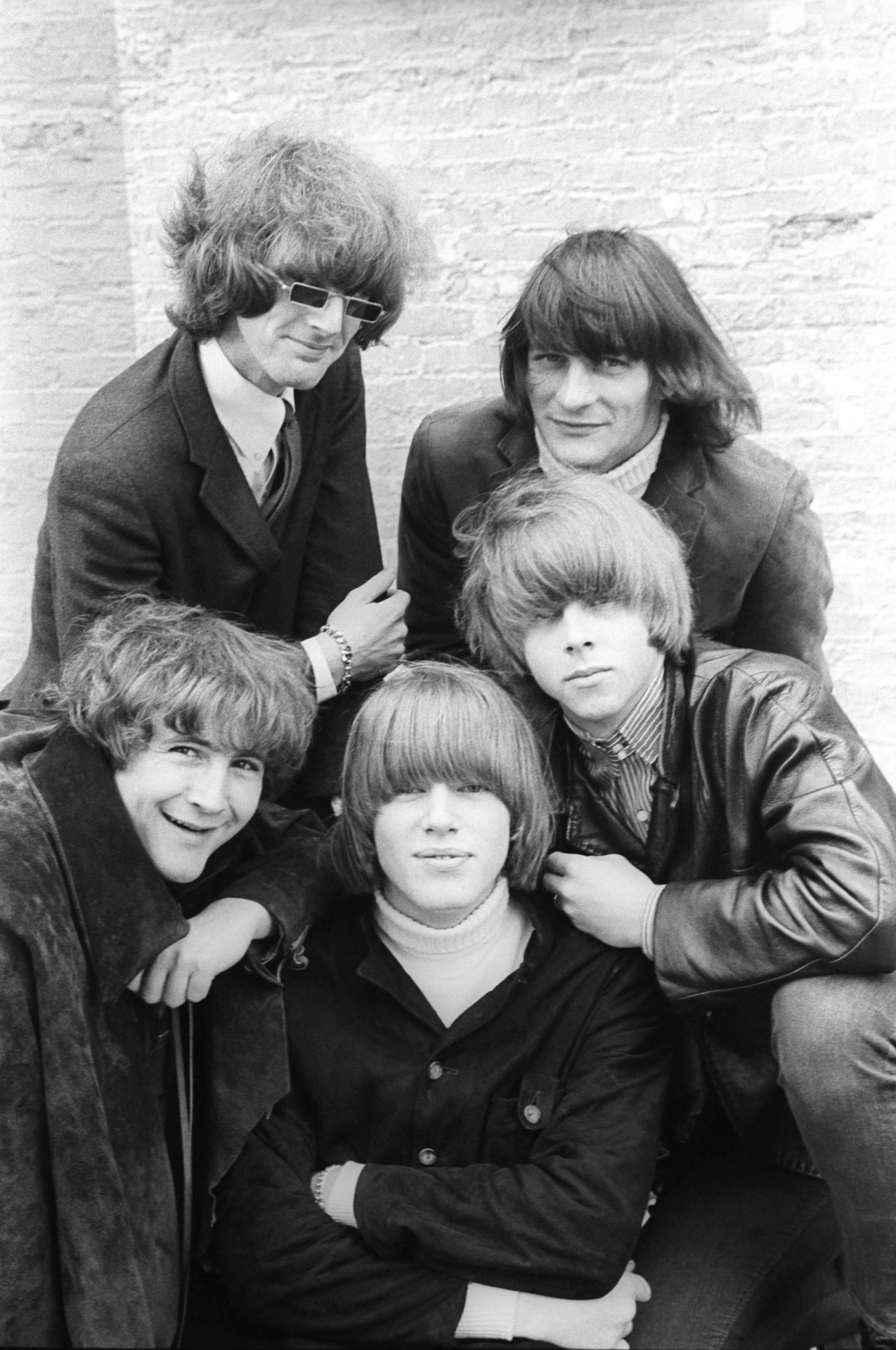
*The Byrds in Chicago, 1965. Photo: Jim Dickson Archive, courtesy of Henry Diltz Photography*
This coffee-table book goes pretty deep into the band's synthesis of influences, from folk music to the Beatles. But I'm most interested in how the Byrds were almost predicated on a single instrument; that's a rare concept. What attracted you to the bell-like sound of the Rickenbacker so early on?
I was a 12-string player back in the folk days. I got my first 12-string guitar in Chicago in 1957; I believe it was a Regal 12-string. I was interested in the 12-string because of Lead Belly and Pete Seeger and Bob Gibson, who was kind of an acolyte of Pete Seeger.
When I was a studio musician in New York, I was the go-to guy for acoustic 12-string for a lot of folk acts. I was the musical director on Judy Collins' third album [1963's Judy Collins #3]; I played on the demo of "The Sound of Silence" for Paul Simon. The Irish Rovers, a lot of folk acts.
So, I was already a 12-string player, and when the Beatles came out, I was enthralled with [them] because they were using folk-music chords in their rock 'n' roll. I noticed that George Harrison had a Rickenbacker electric 12-string, and I'd never seen one of those before. It was a new instrument at the time; in fact, his was only the second one ever made. The first one went to somebody named Suzi [Arden], who was in a group in Las Vegas, doing lounge acts.
When I found out about the Rickenbacker electric 12-string, I went to a music store and traded in my acoustic 12-string that Bobby Darin had given me and a five-string, long-necked banjo — a Pete Seeger style — and I got the Rickenbacker electric 12.
It was just such a great-sounding instrument. I played it eight hours a day!
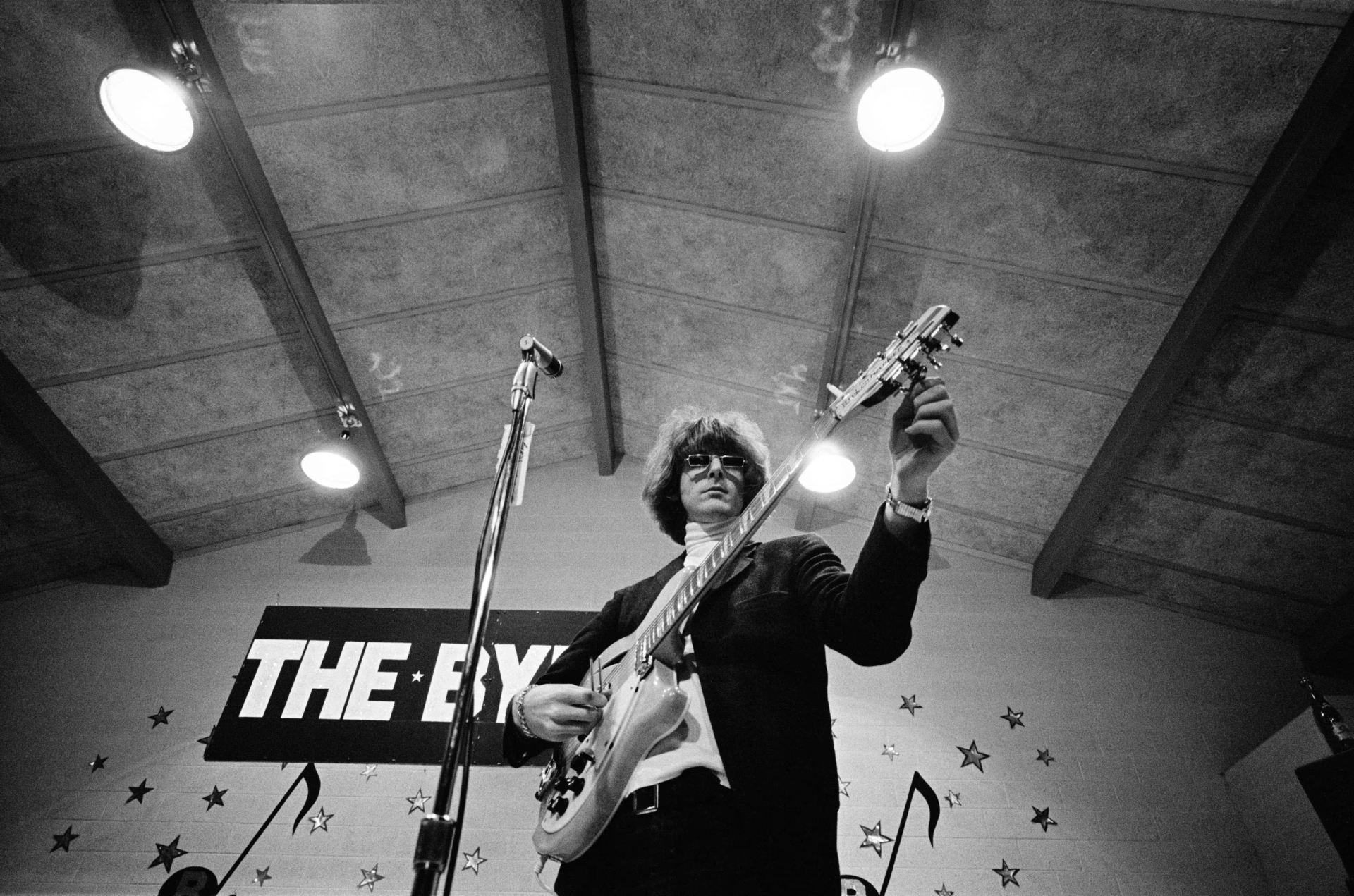
*Roger McGuinn performing with the Byrds in 1965. Photo: Barry Feinstein Photography*
I don't think most people grasp how much of a pressure cooker the mid-1960s pop market was like; we hear stories about the Beatles needing to rush out Rubber Soul by Christmas, and so forth. The Turn! Turn! Turn! album came out only six months after Mr. Tambourine Man. Did you guys feel that crunch, that market demand?
We had a contract with Columbia where we had to do an album every six months, so it really did put the pressure on. We came out of the box with a No. 1 hit, and we had to live up to that. Fortunately, "Turn! Turn! Turn!" became a No. 1 as well.
It was a lot of pressure. We had Gene Clark as the main writer; he was doing great. Then, when he left, it was more difficult to come up with enough material for a good album. Every six months — that was part of the contract.
Gene is often framed as the tragic figure of the band, but The Byrds: 1964-1967 lays out what a force he was; he was the most prolific writer in the band. How would you describe his role in the creative machinery early on?
Well, he was obviously the main songwriter. He and I started the group; we started writing songs together, and he and I wrote some songs. Then, Crosby came along, and he wasn't really writing songs at that point.
We were doing some outside material, like Dylan and Seeger, and Gene kept writing every day. He must have written 30 songs a month; some of them were really good, so we ended up using those.
Read More: David Crosby On His New Album For Free & Why His Twitter Account Is Actually Joyful
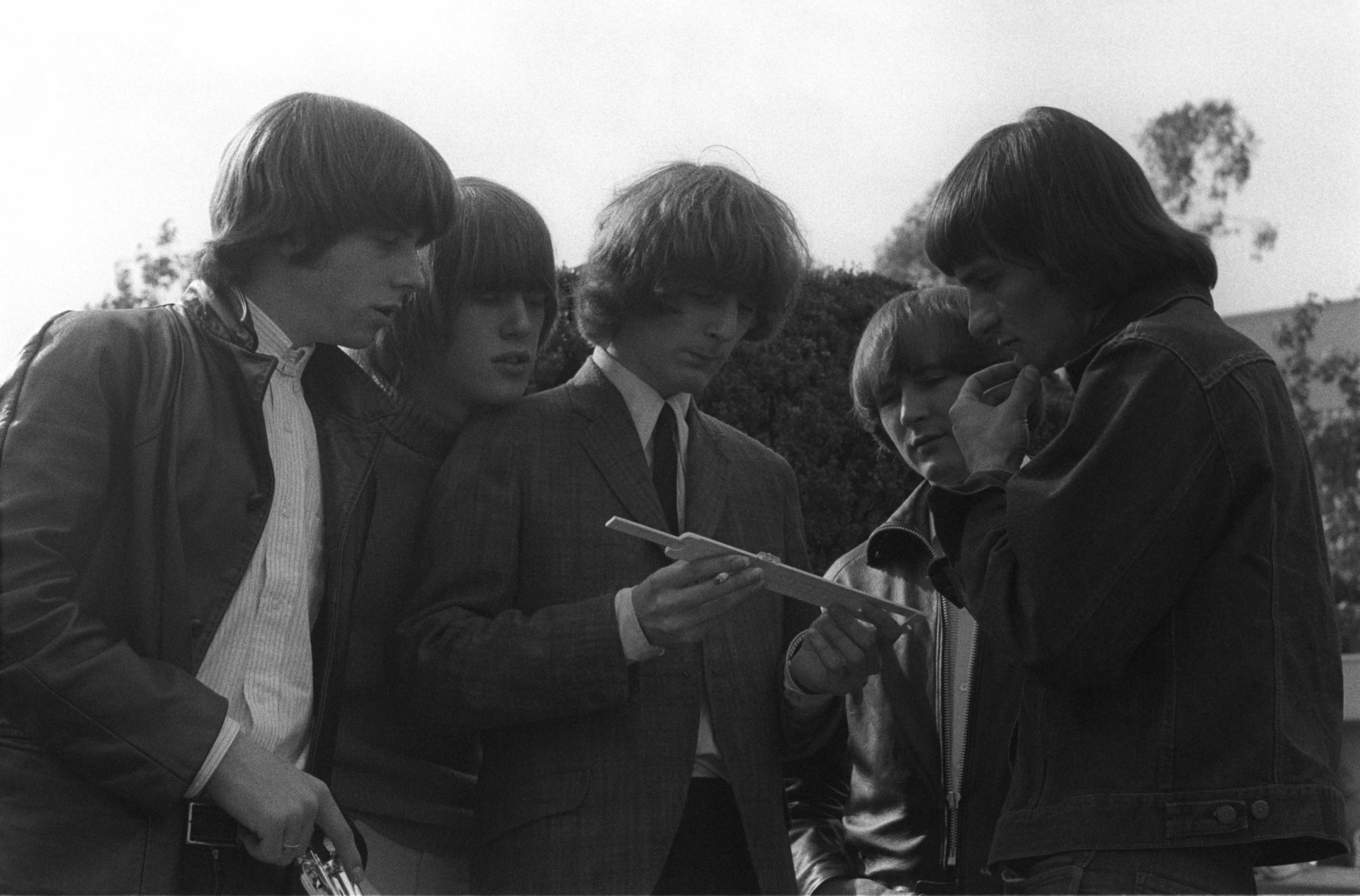
*The Byrds in Beverly Hills, 1965. Photo: Jim Dickson Archive, courtesy of Henry Diltz Photography*
The book closes right at that jumping-off point into 1968's The Notorious Byrd Brothers, which means we go deep on that delicious transitional period, with songs like "5D" and your cover of Dylan's "My Back Pages." Those are probably my two favorite Byrds tracks; can you share any memories regarding them?
"5D": I wrote that while I'd been reading a little book called 1, 2, 3, 4, More, More, More, More [by Don Landis]. It was about multiple dimensions — kind of like string theory, or something. I thought that'd be an interesting subject for a song.
"My Back Pages": Jim Dickson had been the Byrds' manager, and we'd fired him. One day, I was in L.A., driving up La Cienega, and came to a stoplight, and Dickson pulled up next to me and rolled down the window. He said, "Hey, Jim!" — that was me — "You guys ought to record Dylan's 'My Back Pages!'"
I said, "Thank you." It had been a while since the Byrds had a Top 20 hit. So, I went home, got the record out, and listened to the song. It was in 3/4 time, and I had to rearrange it for rock 'n' roll. So, I did, and it became — I think it was No. 22. I'm not sure. [Writer's note: The song peaked at No. 30 on the Billboard Hot 100.]
I feel like "5D" fell into that space where, for decades, people presumed it was about drugs. No such thing: it's the product of a curious mind, which you still possess.
Exactly. It was more of a spiritual thing than a drug thing.
A lot of people don't grasp how incredible, in my opinion, the band remained in the late '60s and early '70s after so many lineup changes; just recently, I was wigging out to the 16-minute live version of "Eight Miles High" on 1970's (Untitled). What do you remember of this time? Are these happy memories for you?
Well, [Byrds guitarist and mandolinist] Clarence White and I were good friends, and we loved playing together. He was probably the best guitar player we ever had. It was like having Jimi Hendrix or Eric Clapton in your band, or something.
I remember one time at the Whisky, Jimi Hendrix came backstage, and he went running right over to Clarence and shook his hand. The first time we played at Fillmore East with Clarence and the band, there was a big difference between the way it had been with the audience reaction [and the way it was then].
The audience was used to a certain level of Byrds musicianship, and when Clarence came out there, he just slayed them. He was just incredible.
We lost Clarence too young, just like Gene. What was it like to have those guys in the room?
Well, they didn't hang out in the same room. [Chuckles.]
I know — separately, I mean!
Clarence and I hung out more than Gene and I did. Gene was kind of off to himself; he had his life. But Clarence and I were on the road together, and we'd hang out more. Clarence was just a really nice guy and a brilliant guitar player.
What misconceptions still float around regarding the Byrds and your role therein that you'd like to correct, if any?
Oh, I don't really need to fix history. I tried that once on Wikipedia. Somebody put out some stuff on there that wasn't correct, so I went on Wikipedia and corrected it. And they banned me, because some 15-year-old kid in Canada had changed it!
Oh my gosh. Do you remember what the falsehood was?
I think it had something to do with the Subud religion. I'm not sure. [Writer's note: McGuinn changed his name from Jim to Roger in 1967 during a period of experimentation with Subud.]
[McGuinn's wife, Camilla, interjects in the background.] Oh! I forgot that. My wife says I had friends who went on and corrected it for me.
That's good to hear. The historical record can become distorted. A lie travels around the world before the truth is still putting on its shoes, as they say.
Right, we've heard that saying. I think Henry Ford said, "History is bunk."
Robby Krieger's Memoir Set The Night On Fire Offers A New Perspective On The Doors & Jim Morrison: "There Was Another Side To Him"