Miki Yamanaka tried to play music in her own home. She found her front door knob covered in peanut butter.
The year was 2020, and the pianist and her drummer husband were deep into lockdown. Despite numerous attempts at transparency and compromise with their Harlem neighbors, she says, they opted for harassment and hate mail — including the threatening application of the lunch spread. For Yamanaka, this felt like death by a thousand cuts.
With no gigs or recording dates to speak of — nor assurance she'd ever work again — it was destabilizing to be unable to hone the craft that made her a living. "My visa was about to end," Yamanaka tells GRAMMY.com. "My bachelor's degree is in earth science in Japan. [I thought I'd] have to go back and restart my career or some s—."
When all hope seemed lost, something magical transpired. Realizing her colleagues, the revered saxophonist Mark Turner and top-flight bassist Orlando le Fleming, were also busy doing nothing, she invited them to take COVID tests and record in her living room.
Turner and le Fleming accepted, and the three made resplendent music together, as heard on 2021's Stairway to the Stars. "It was such a wake-up call for me that this is absolutely what I love. This is why I am alive," Yamanaka tells GRAMMY.com. "I got to remind myself that I love playing music."
Yamanaka's expressions speak to how this cataclysm defined the current crop of emerging jazz talent. While the pandemic was a universal experience, it can't be overstated how much it throttled this musical community. (There's a reason it still pops up in numberless press releases.)
A livewire, interconnective artform contingent on human beings gathering in close proximity, jazz was practically first on the list to go. By the time it returned, some talented practitioners had abandoned that dream — often for understandable reasons. But due to sheer gumption, a confluence of life circumstances, or both, others felt galvanized to charge through it.
In this reshaped jazz landscape, here are 10 artists who are currently perforating the scene — and the conversation.
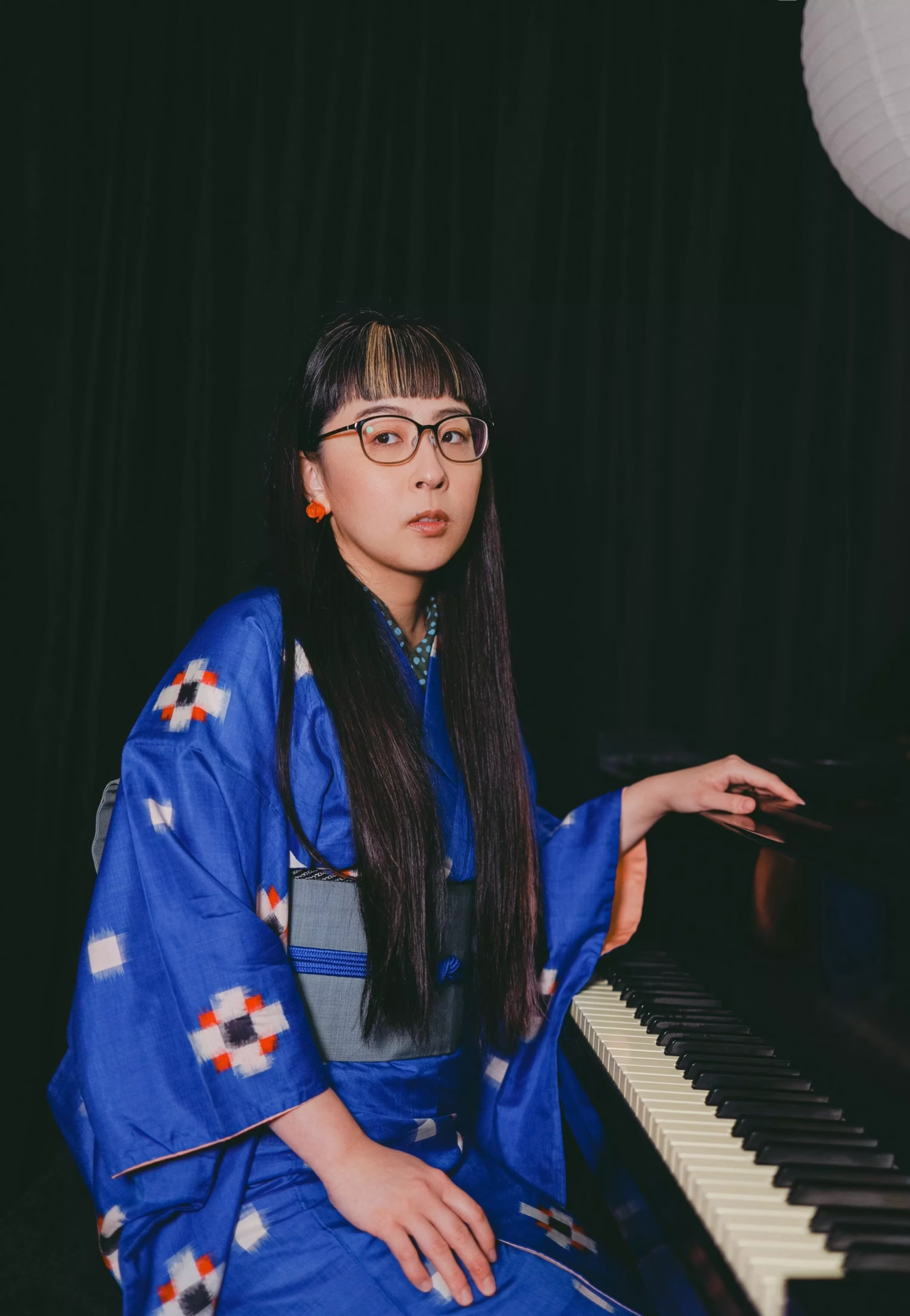
*Miki Yamanaka. Photo: Martina DaSilva*
Miki Yamanaka
During a recent album release show for the trombonist Nick Finzer at Birdland in New York City, Yamanaka's pianistic touch was ear-turning. Comping, or accompanying, behind a soloist isn't arbitrary or automatic; it's an artform all its own; Yamanaka brings this musical truth into stark relief.
"I have such a huge passion for comping. If I don't play, that creates one vibe. If I play a lot, that creates another vibe," she says. "I could play super inside the chord changes, rhythmically, like Horace Silver would do, or I could play a lot of different re-harms like Herbie [Hancock] would do."
But, to transcend one-to-one comparisons: "The music is not supposed to be a muscular technique, per se. It's about the emotions," Yamanaka says. "It's about the colors and textures, but also rooted[ness] to the tradition."
Yamanaka comes from a big-band background: the foundational works of Count Basie, Buddy Rich and Duke Ellington moved her early on. And artists more associated with small groups, from Oscar Peterson to Cedar Walton to Sonny Clark, filled out her early influences.
These days, contemporary giants like the late Geri Allen and Paul Bley pique Yamanaka's interest: "For now, my interest is moving forward in a different direction."
To date, Yamanaka has released four albums as a leader: 2012's Songs Without Lyrics, 2018's Miki, 2020's Human Dust Suite, and Stairway to the Stars. While the lion's share of her work is as an accompanist, the latter proves she's rapidly coming into her own as a leader.
"For my future, I want to step up more — and even travel more — to bring my music, the excitement, and work with other people that I admire," she says. "To make their music even more interesting — that I could partake, and make it special."
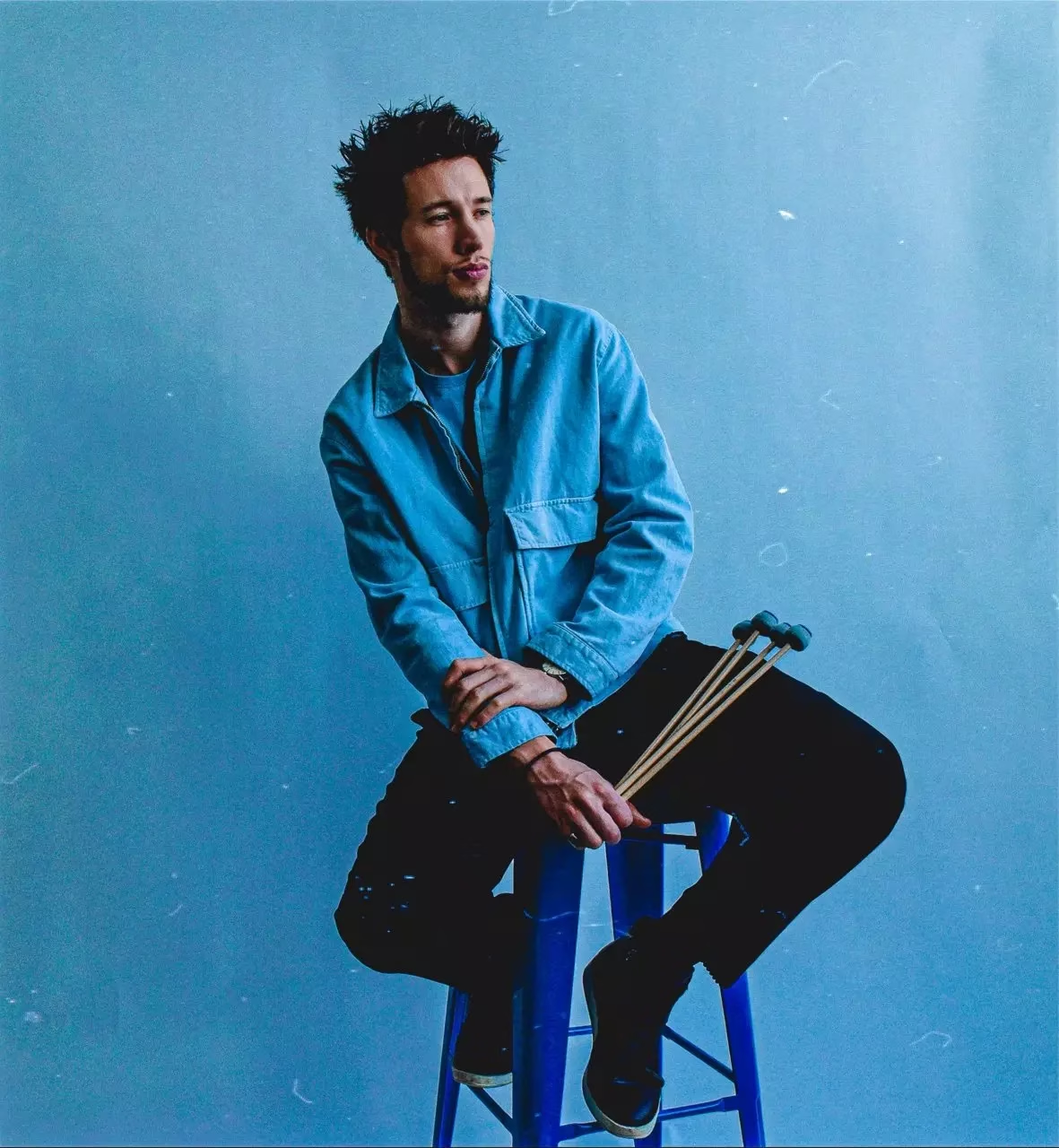
*Simon Moullier. Photo: Shervin Lainez*
Simon Moullier
Vibraphonist Simon Moullier dazzled at the Jazz Gallery in Manhattan last winter, supporting his latest album, Isla. Accompanied by pianist Lex Korten, bassist Alex Claffy and drummer Jongkuk Kim, Moullier's capacity for impressionistic effect beautifully counterweighted his technical acumen.
One might walk away thinking Moullier was born for the vibraphone. Not the case, he says.
"It's never really been much about the instrument itself," Moullier admits to GRAMMY.com. "The vibraphone is just something I chose because I was a percussionist, and it was an immediate way for me to get to the expression I [desired]."
To be clear, "I love the instrument," he adds. "But my love for it is not even close, compared to composing, playing or improvising. I don't really think about the instrument as much as I think about what I'm trying to express on it."
Moullier's concept for this quartet hinges on the timbral marriage between the piano and vibes. "We play a lot of things together in the same register," he explains, "which means both instruments kind of blend together and almost create this third, invisible instrument."
Aesthetically, Isla is something of a rapprochement between his first two albums: 2020's electronic-tinged Spirit Song and 2021's Countdown, a raw, acoustic trio album of standards.
"Even though I love electronics, I think learning how to treat acoustic instruments and combine them is really fun to do," Moullier says. "Sometimes, from limitations comes a lot of possibilities."
While classical impressionism looms large in Moullier's musical DNA, he connects it to modern-jazz giants like Horace Silver and Wayne Shorter. ("There are a lot of similarities between Horace Silver and Ravel, harmonically speaking," he notes.)
And judging by the luminescent Isla, the future is boundless as to how he can straddle these worlds. He has a trio album with bassist Luca Alemanno and Kim in the can — the same trio featured on Countdown. He's checking out West African and Brazilian music. He's eyeing film scoring.
All in all, whether you're a fan of the vibes or forward-thinking composition writ large, you'd be remiss not to keep tabs on Moullier.
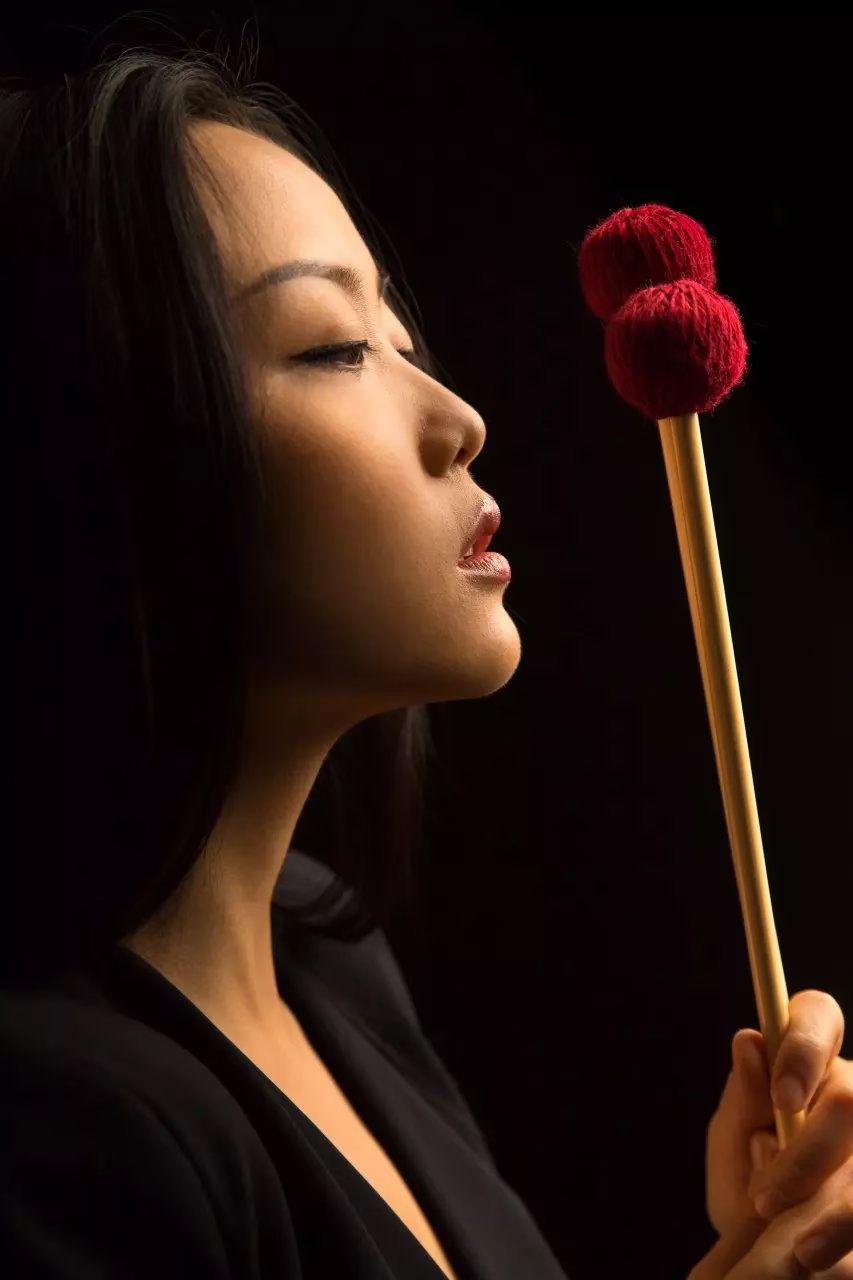
*Chien Chien Lu. Photo: Stephen Pyo*
Chien Chien Lu
Fellow vibraphonist Chien Chien Lu initially cut her teeth in her native Taiwan's contemporary classical scene. To put it lightly, it wasn't for her.
"I didn't really like the culture that much," Lu tells GRAMMY.com, adding that she was rankled by the stiff, contrived nature of the performances. "We were all playing written music, and you need to be pretty and smile onstage and that kind of stuff."
This, coupled with its hard-drinking, politically freighted nightlife, compelled her to shift gears professionally.
When Lu heard vibraphone royalty Roy Ayers and Milt Jackson on the radio in Taiwan, she was enamored. "I was like, 'My god, they are also doing percussion, but they do it with so much soul," she recalls.
Lu fled overseas to Philadelphia to study jazz, but initially hit a wall. "I found out that it's almost impossible to start to play jazz with a classical mindset," she admits. "I had to train a new skill muscle."
While spending "eight to 10" hours in a practice room building that muscle, Lu shifted her mindset and struck gold. The skeleton key was to access that casual precision, that personality-forward approach — that soul — that Ayers and Jackson embodied.
"I can just be myself on the stage and do my improvisation," she remembers realizing.
One thing led to another: just as she relocated to New York, esteemed trumpeter Jeremy Pelt took her under his wing as an accompanist on three of his records. Her debut album, The Path, arrived in 2020.
Her working relationship with the exceptional jazz-funk-rock bassist Richie Goods — who appeared on The Path — has reached new heights in recent years: their co-billed album, Connected, arrived at the top of 2023.
Despite being recorded remotely due to pandemic concerns, tunes like "Water," "Embrace the Now" and "Someday We'll All Be Free" are suffused with camaraderie and love.
Being that Lu's of Asian descent and Goods is Black, they came to commiserate about the traumas that plague their communities.
As the pair considered issues as thorny as racial violence, they conceived Connected as something of a tranquil counterweight — complete with shimmering textures and sinuous R&B grooves.
In all her expressions about her artistry and career, Lu's gratitude to have a foothold in the New York scene shines through. "I feel like, with this rise, I'm confident to say what I want to say," she says, and corrects herself immediately: "To say what I need to say."
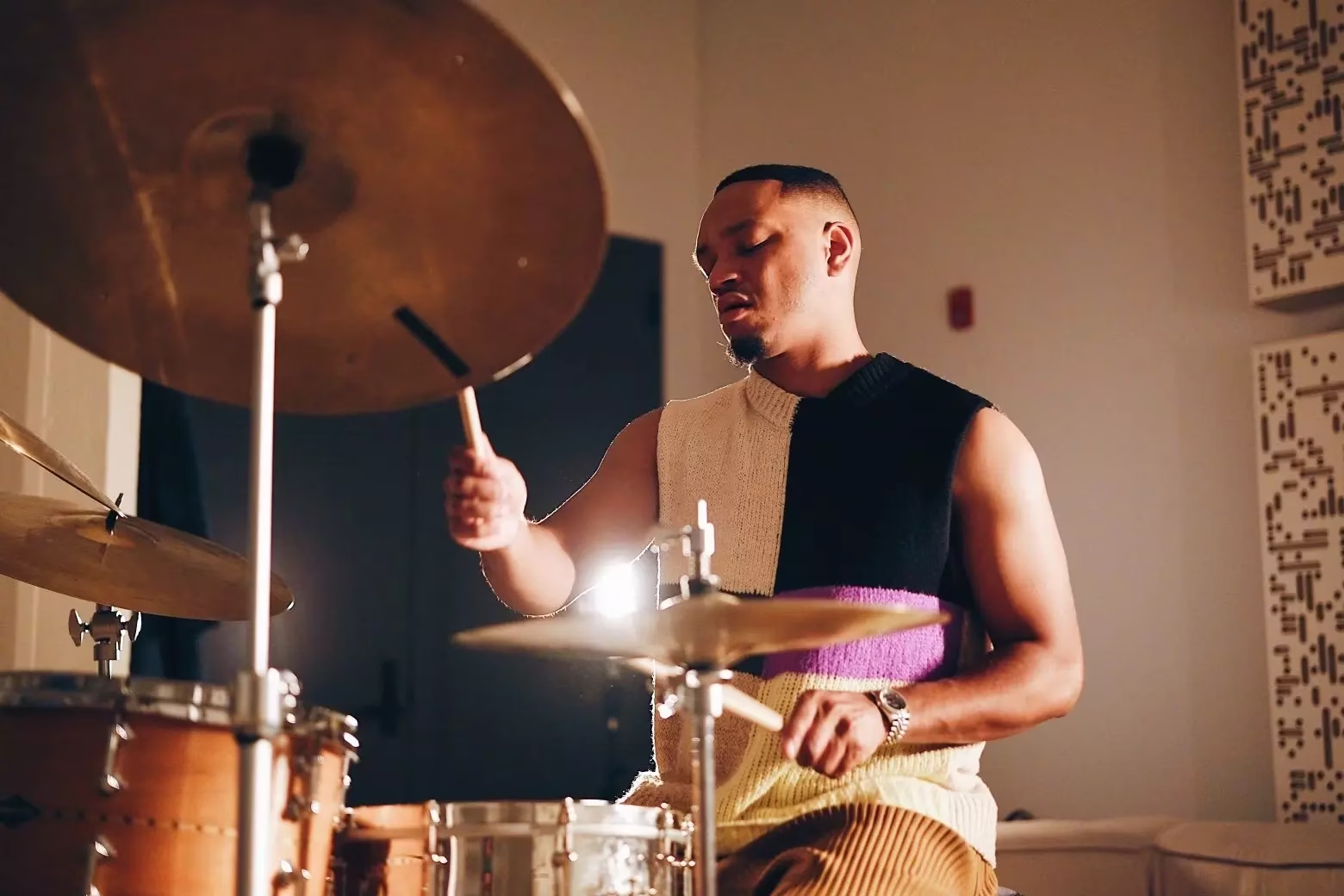
*Jeremy Dutton. Photo: Jason Rostkowski*
Jeremy Dutton
Germane to an era where matters of mental health and capitalistic workaholism are front of mind, a theme has popped up in young jazz artists' PR narratives: the grind.
Uprooting from a faraway home country, being laughed out of jam sessions, scuffling for gigs 24/7: artists are talking about it, reassessing it, making music about it. And it's at the essence of drummer extraordinaire Jeremy Dutton's debut album, Anyone is Better Than Here, out June 16.
"It's a call-out to this idea that once we get to a certain place, we'll be happy in life," he tells GRAMMY.com. "If I get these gigs, if I get these opportunities, I'll be fulfilled; I'll be happy… obviously, they can bring you some amount of joy, but I think the ultimate amount of satisfaction and joy comes from accepting yourself and allowing yourself to be who you are."
Indeed, the supple, cerebral Anyone is Better Than Here is permeated with Dutton's personality; he labored over these tunes for years before they finally emerged. Dutton wrote every tune on the album, from "Waves" to "Shifts" to "The Mother."
"I tend to think visually a lot," he says of his process as a composer. "I think cinematically, which I think relates closely to the drums, because the drums can be a very cinematic instrument." (As another exemplar of the drums-composition relationship, Dutton cites Kendrick Scott, who produced Anyone is Better Than Here and is out with his own superlative album on Blue Note, Corridors.)
The album is augmented by new and old compatriots, who happen to be cats of the highest order: vibraphonist Joel Ross, saxophonist Ben Wendel, trumpeter Ambrose Akinmusire, and others, who all appear in various configurations.
"The musicians on this record are all people that I've met at different points in my musical journey," Dutton explains. "We're all like-minded in the sense that we're all very committed and serious about the music… through exploring the music, exploring our lives and identities, and honoring the tradition of the musicians that have come before us."
Anyone is Better Than Here represents the culmination of Dutton's legacy as a sideman: he's worked with artists who rightly, and often, occupy the center of their sphere, like trumpeters Marquis Hill and Keyon Harrold, saxophonists Melissa Aldana and Immanuel Wilkins and pianists Vijay Iyer Iyer and Gerald Clayton.
Wherever Dutton goes from here, it'll bear the marks of his finely-attuned musical philosophy. "I think of a melody being memorable being memorable in the sense that, can you remember the shape of it? Is there a clear shape that's running through it?"
With this auspicious debut, Dutton himself has an arc: one trending skyward.
*Mali Obomsawin. Photo: Abby Lank and Jared Lank*
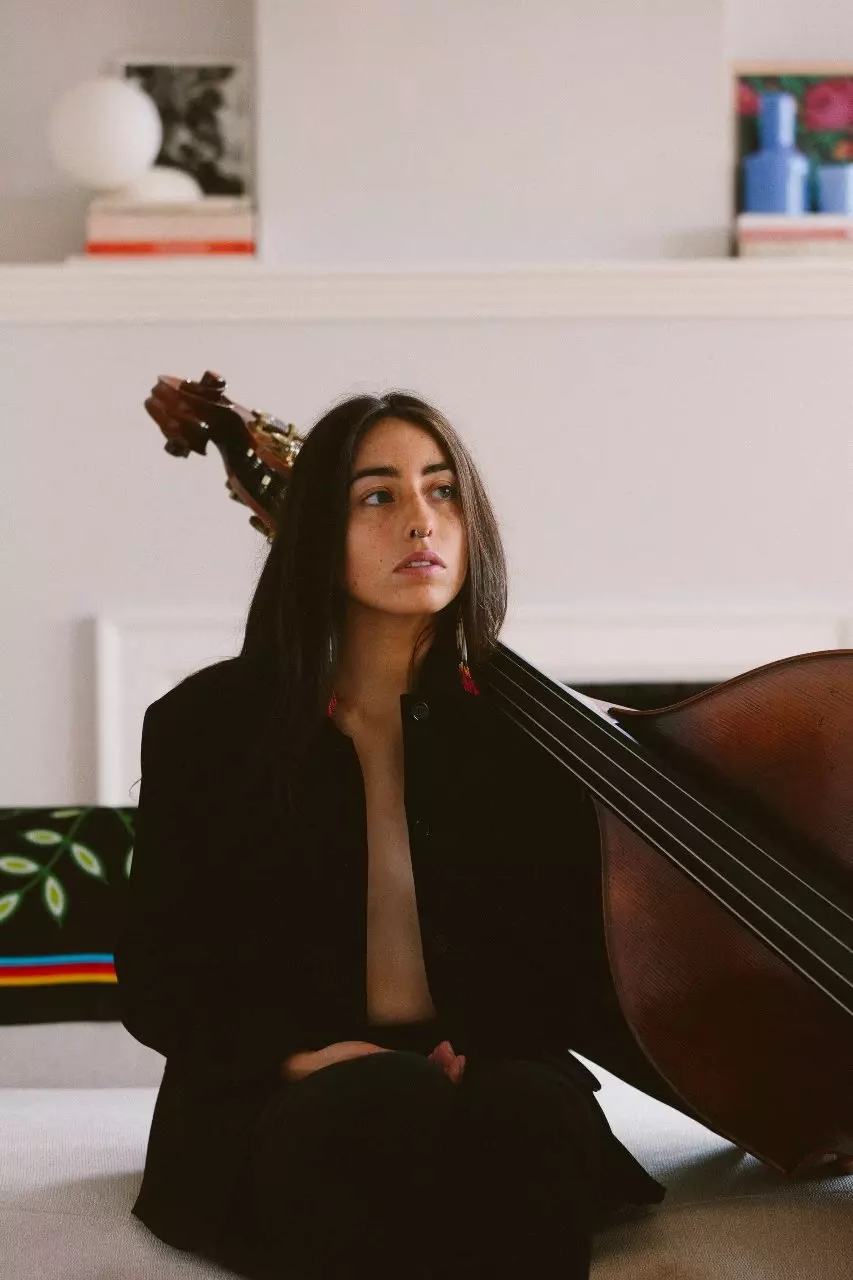
Mali Obomsawin
As declared in press stretching all the way up to the Gray Lady, Mali Obomsawin — who hails from the Odanak First Nation — is part of a new wave of Indigenous jazz artists. From trumpeter Delbert Anderson to pianist Renata Yazzie to singer Julia Keefe, these artists are changing the conversation about the confluence between Native American and American musics.
Is that true? Is there a "there" there?
Obomsawin laughs at the question, just prior to her drive from Maine to her rez in Canada.
"I think we're still trying to get there to be a 'there' there," she admits to GRAMMY.com. "The New York Times did that piece on Delbert. But when it comes to meat and potatoes… in addition to doing a land acknowledgment, why don't you hire an Indigenous big band to play there?"
This debate and others like it will rage on; it's probably aflame right now on Indigenous Instagram. But when considering Obomsawin's art — as captured on her critically acclaimed 2022 debut, Sweet Tooth — one thing is clear: Obomsawin is an exceptional and eminently tasteful composer, bassist and bandleader.
While finding a balance between bassist and bandleader can be tricky, Obomsawin is the central pillar, the heartbeat, a steward of her accompanists — as exemplified on Sweet Tooth.
"I think there are moments to shine, but a lot of times, bassists feel like they haven't had their moment because they're doing their job," Obomsawin says. "So, when they're in the writer's seat, they write themselves all the solos that they wish they had been offered in the past."
Billed as "a suite for Indigenous resistance," tunes like "Fractions," "Lineage" and "Blood Quantum," showcase cornetist and flugelhornist Taylor Ho Bynum, saxophonist Noah Campbell, clarinetist and alto saxophonist Allison Burik, guitarist Miriam Elhajli, and drummer Savannah Harris. (Sweet Tooth is an exceptional showing from Elhajli, who picked up the electric guitar for the first time on this record and plays with McLaughlin-esque fire: watch out for her, too.)
Obomsawin is working toward another jazz album, but notes "I think I hit my threshold with being too much in one place, or too much in one framework." Instead, she's just recorded — of all things — a shoegaze album.
"We're thinking of calling it Greatest Hits," she says with a smirk. "I feel like I'm going to make myself a perpetual outsider by getting people to pay attention to me in jazz and then, 'You know what, though? I'm going to put out a shoegaze record." (It's not that much of a stretch; after all, Obomsawin and her group recently opened for Yo La Tengo.)
Perhaps there is a "there" there. It's just that "there" isn't going to define her.
*Jonathan Suazo. Photo: Gina Principe*
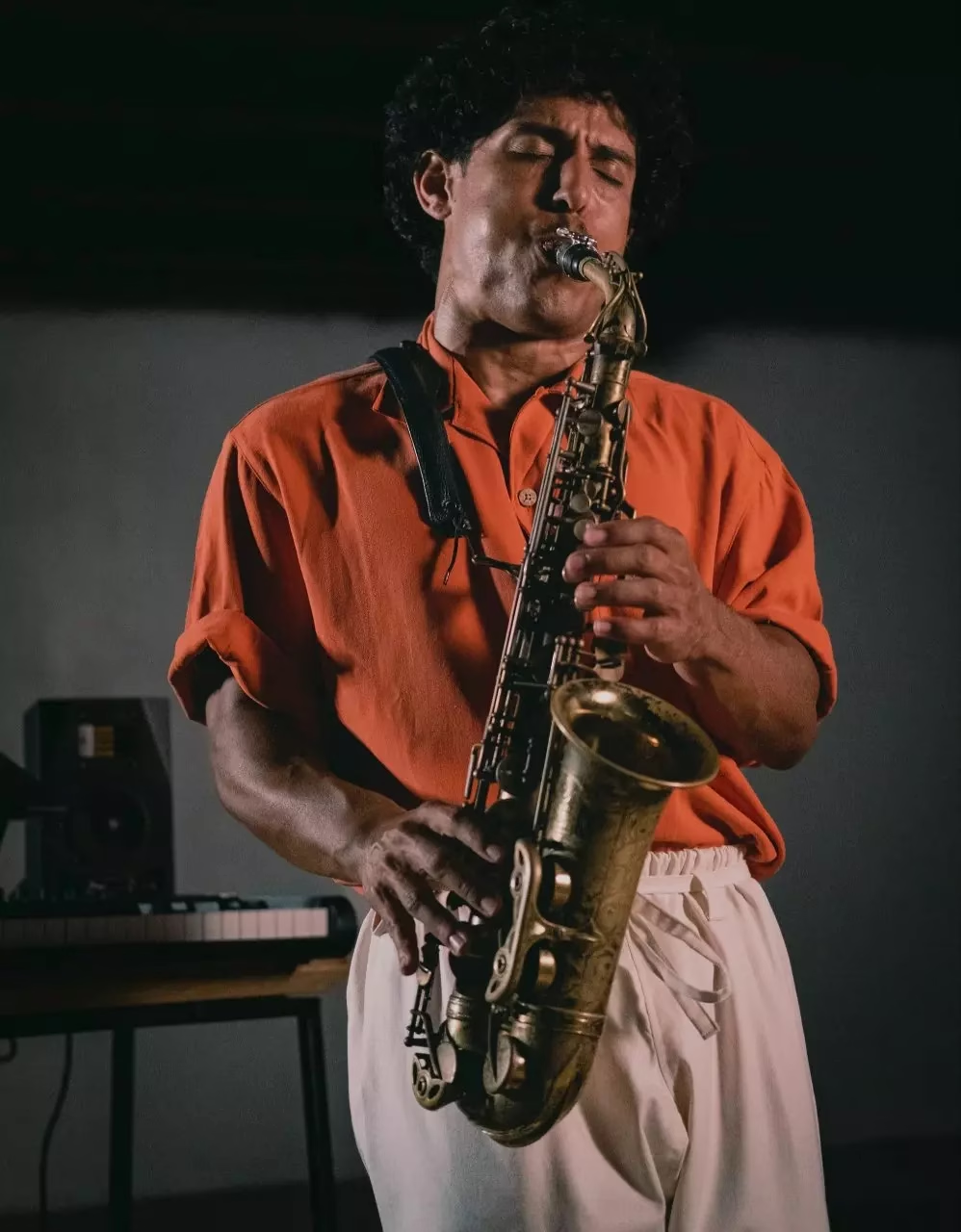
Jonathan Suazo
When it comes to creative inspiration, many artists experience a big-bang event: music bios and docs are so riddled with them, it's almost a cliché.
But there's nothing trifling or trite about Jonathan Suazo's eureka moment: a single note on saxophonist Kenny Garrett's "May Peace Be Upon Them," from his 2006 album Beyond the Wall. Seeming to reach the limit of what he can express with his horn, Garrett screams into the mouthpiece. Listen to it at 5:47; try not to get goosepimples.
"That's the life-changing note," the Puerto Rican saxophonist tells GRAMMY.com, still audibly flabbergasted. "I wanted to play that note, or the equivalent of that note, one day."
That note may have sent Suazo on a journey, but it was never a given it'd be successful. When he started at the Conservatorio de Música de Puerto Rico, he found that his feet weren't touching the bottom.
"I sucked," he says. (He admits he may be exaggerating, but the answer is a jolt anyway.) "I wasn't on par like I thought I was."
Suazo's father was the one who turned him on to Beyond the Wall; on his deathbed, Suazo had promised him he would make something of the saxophone. So he set aside a year — stretching from 2008 to 2009 — that would form an ultimatum: Either you do this, or you don't.
The year of doing nothing but woodshedding paid off: first via a big break by way of gigs with percussionist Paoli Mejias, then tutelage at the Global Jazz Institute in Boston — often by way of masters of this music, like bassist John Patitucci and saxophonist Joe Lovano.
Things ramped up in 2019, when Puerto Rican saxophone titan Miguel Zenón invited Suazo to perform at a concert series. Right then, Suazo found himself making regular trips to New York, immersing himself in its jazz firmament.
Suazo entered a period of "reawakening" and "reevaluating" during the pandemic years: "Things were so rough, that I was contemplating not doing the music thing for a second," he admits.
But Suazo emerged from the mire, first slowly — via a Kennedy Center remote series — and then rapidly. He's gearing up to release his formal debut, RICANO, in August — a celebration of his dual roots in Puerto Rico and the Dominican Republic.
"I started doing a deep dive into my roots as an important exercise to find something in the source of your identity that can carry the rest of your career forward," Suazo explains of his time at Global Jazz Institute. "Something that you personally identify with that can be translated into your music."
Each tune on RICANO highlights a specific musical tradition — Dominican salve on "Héroes," Puerto Rican yubá on "Don't Take Kindly," so on and so forth. Taken as a compositional cycle, it acts as both a loving tribute to his origins and lodestar as to his future evolution.
Speaking of that evolution, we've left out one crucial part.
"In one of those practice sessions, I figured out how to convey emotion like Garrett in my own way," he says. "I figured out how to play that thing." That thing being: Garrett's growl, and how he managed that galactic caterwaul, which seemed to shake the concept of music to its foundations. It may have been the skeleton key to Suazo's destiny.
*Anthony Hervey. Photo: EBAR*
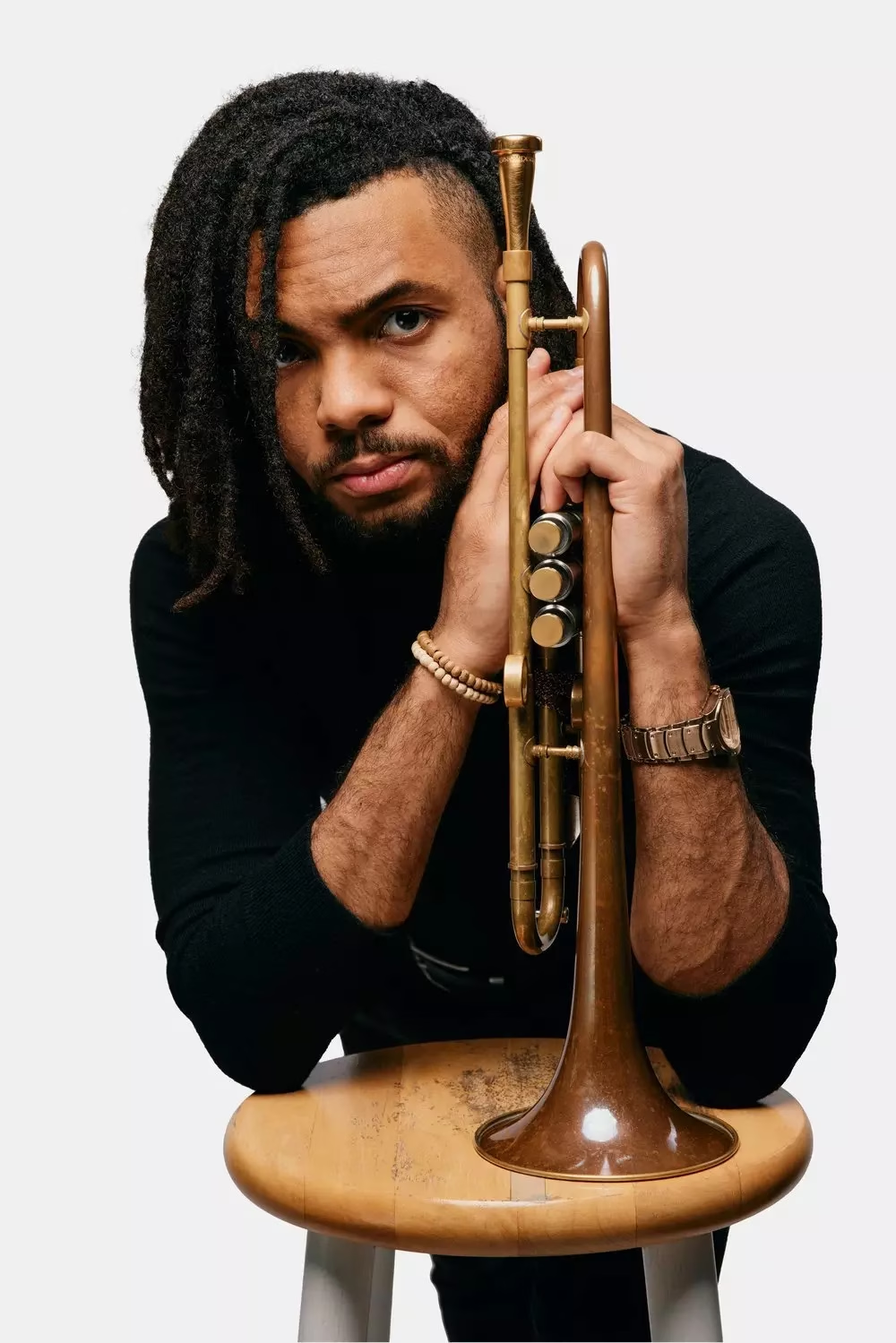
Anthony Hervey
Whenever Anthony Hervey picks up his trumpet, he does so donning a charm reading a simple phrase: "When words fail, music speaks."
"That's a big part of my concept and sound," he tells GRAMMY.com, connecting the axiom to the title of his upcoming debut album, Words From My Horn, out in June 2023. "It's about the power of sound to reach people in a place beyond words." (None other than Wynton Marsalis has sure offered some words about him: he called him "beautiful trumpet player of the first magnitude.")
In an effort to "transcend the barrier between my soul and my music," he finds clever ways to communicate without words: flipping the rhythms of poems he's written into tunes, and even transmuting sung verses into phrases. ("I'm a singer," he says. "Well, kind of.")
It doesn't hurt that Hervey is steeped in some of the greatest trumpet communicators of the past — Louis Armstrong, Freddie Hubbard, Lee Morgan — and present, like Sean Jones and Ambrose Akinmusire.
He also finds inspiration in his cohort of young trumpeters, among them Giveton Gelin, Noah Halpern and Summer Camargo. "Each one has a distinct voice," Hervey says says. "I would say I'm another voice in addition to that."
Marsalis played a tremendous role in paving Hervey's path; he spent time with the nine-time GRAMMY winner while studying at Julliard. From there, the associations spiderwebbed; he came to perform with Christian McBride, Ulysses Owens Jr., Jon Batiste, and other leaders in this field.
Now, his time as a sideman has led him to step out with Words From My Horn — his own statement of purpose as a leading trumpeter in the straight-ahead scene.
"On one hand, you're trying to deal with changes and vocabulary and all that stuff, but once you get past that, what is your sound saying?" Hervey says, outlining his creative philosophy. "Behind all the notes you play, it's your sound, and that's what people hear."
Indeed, as soon as Hervey raises the horn to his lips, a connection is established — from your mind and heart to his.
*Bokani Dyer. Photo: Raees Hassan*
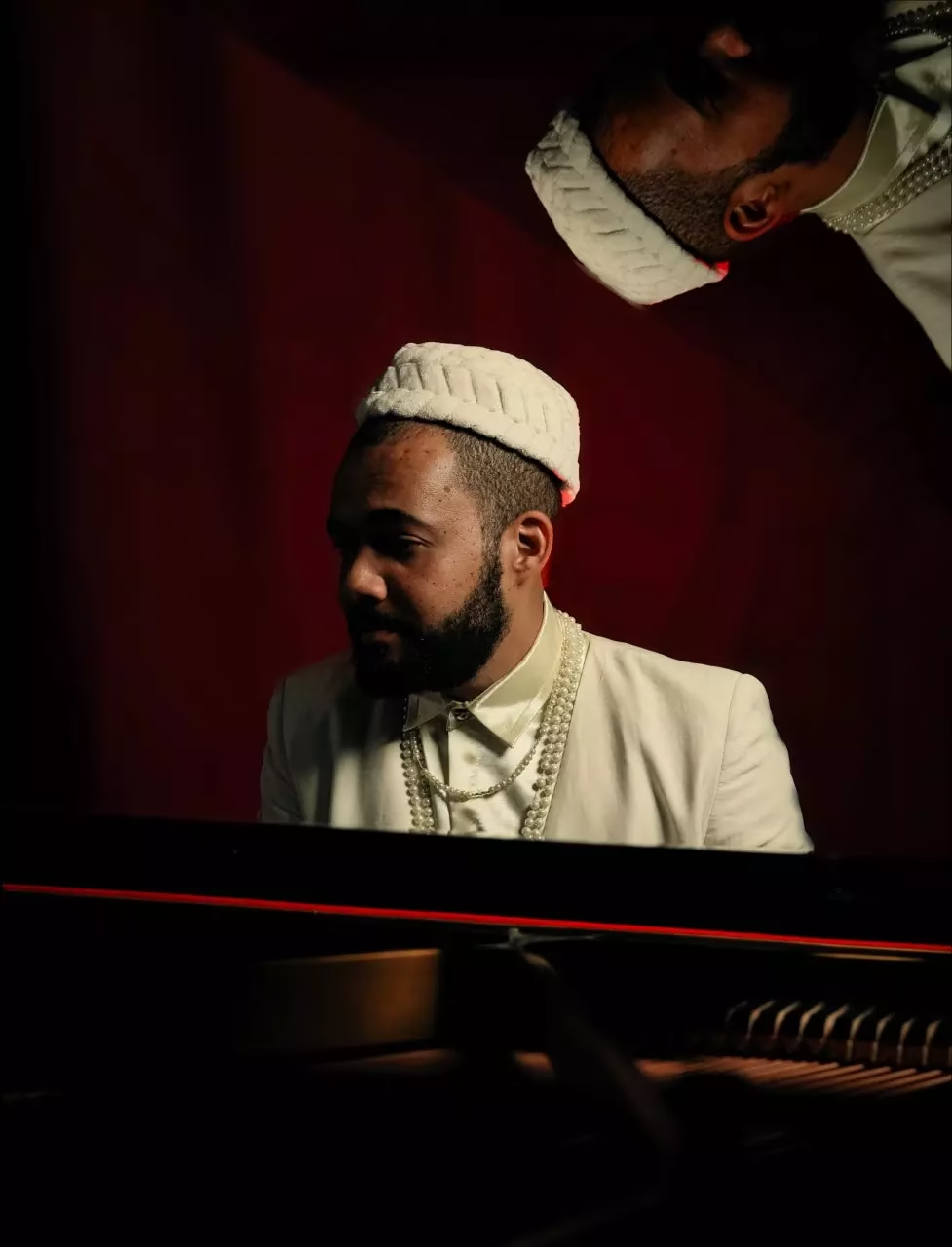
Bokani Dyer
South African pianist, composer and producer Bokani Dyer describes his new album, Radio Sechaba, as "a roundabout journey back into my earliest inspirations in music-making." But that statement belies that these incentives are beamed from all directions — not just his home country.
When discussing his musical history and interests, Dyer's citations reach far and wide: alternative hip-hop, salsa, soul, R&B, house, D'Angelo. While channels to study newer music are scarce in South Africa, that was just as well: "Jazz influenced more heavily these types of music, that I was more interested in," Dyer tells GRAMMY.com.
If the pantheon of Black music is a sprawling tree, just about every branch seems to offer ripe fruitage for Dyer's pianistic inspiration. (He even prepares his piano to give it an African timbre.) This omnivorousness led him to play in all manner of styles and idioms in college.
"To fast forward today and to this album," Dyer says, "I was looking at collaborators who either shared the same ideas when it was time for me to let them do their thing, or people who are just great musicians."
The glue that coheres this multitude of concepts is the notion of nation-building — hence Radio Sechaba's title. (Sechaba meets "nation" in Setswana.) Part of that came from his recent completion of his master's degree, where he was prompted to contemplate the role that music can play in social justice.
Still, a society can only be healed from the inside out; accordingly, Dyer is firm that Radio Sechaba is, at its core, individual-forward. "A lot of the music is actually about internal reflection and personal challenges," he says. "Trying to liberate oneself to become a stronger member of the community and nation."
Featuring guests from rapper Damani Nkosi to Botswanan folkies Sereetsi and the Natives to pianist and singer Tonela Mnana, Radio Sechaba is packed with so many ideas that it can provide hours of entertainment: turn it like a prism, and you'll find something new every time.
And when the album arrives on May 12, expect Dyer to step onto a similar level as other South African leading lights, like fellow pianist Nduduzo Makhathini.
"We've done a few shows," Dyer says of him and his ensemble, "and hopefully a lot more will come as a result of the album. I'm looking for some high-energy, kind of Afrobeat, socially conscious, beautiful music — an unbridled expression of positivity."
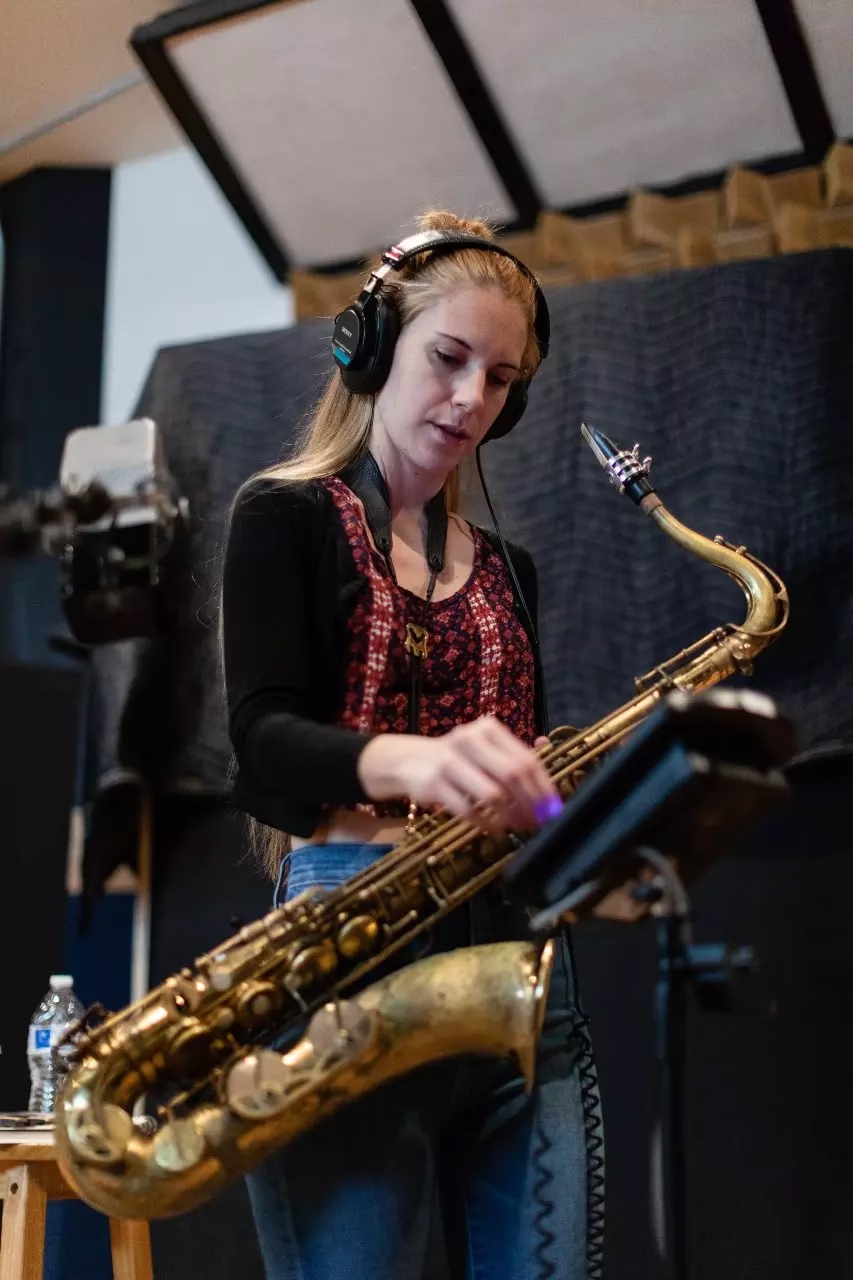
*Julieta Eugenio. Photo: Anna Yatskevich*
Julieta Eugenio
If you're a fan of tenor saxophonists in that Goldilocks zone — neither too harsh nor too mellow; tuneful, but with a subtle edge — seek out Julieta Eugenio immediately. Indeed, few younger musicians can access that satisfying Ben Webster or Lester Young frequency like her.
"She doesn't need to play extremely aggressively to say what she's trying to say through her instrument," bassist Matt Dwonszyk, who accompanied on her 2022 debut, Jump, told JazzTimes that year. "She writes the melodies [to her compositions] first, then puts chords to [them], which is very interesting. And, of course, the melodies are beautiful."
The Jump tunes are occasionally tinged with influence from her native Argentina. But these days, Eugenio is pulling them from many other parts of the world, and sometimes from sources far afield from jazz.
"I don't listen to much Argentine music," she admits to GRAMMY.com. Instead, she points to the Malian kora master Toumani Diabaté and Nina Simone ("I've been obsessed with her lately") as providing a well of communion.
Eugenio has a slew of new music written for the chordless trio on Jump — herself, Dwonszyk and drummer Jonathan Barber — and is preparing to debut it at the legendary New York club Smalls later in the month. (She's also eyeing a recording date later this year.)
"It hasn't been easy, and it's not easy still," Eugenio admitted to JazzTimes, "but I keep pushing." But with such a mature, self-assured debut out in the world, and its follow-up on the way, that door may soon swing wide open.
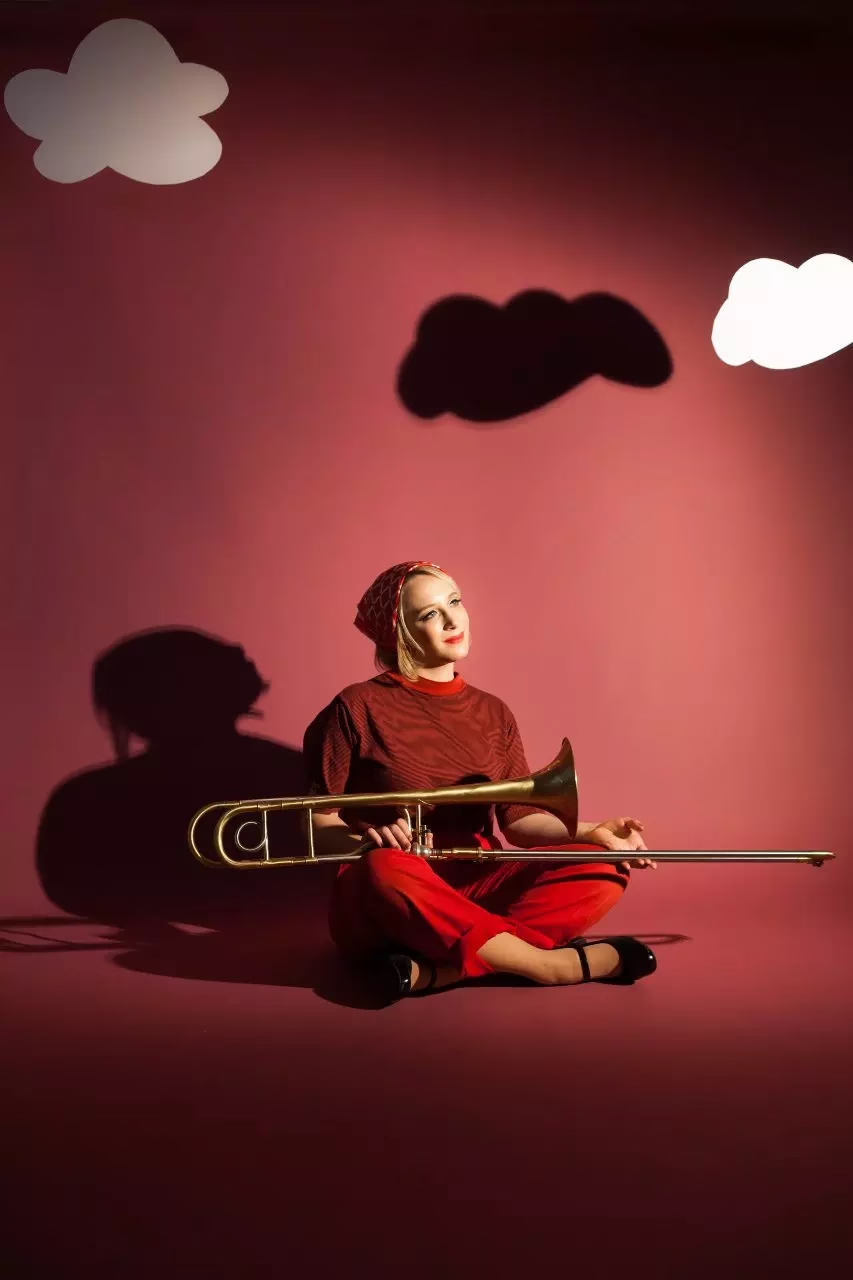
*Hailey Brinnel. Photo: Emilie Krause*
Hailey Brinnel
As a singer and trombonist who interprets the Great American Songbook, Hailey Brinnel has two potential associations to dodge: the novelty factor and the imitator factor.
Luckily, she has the perceptiveness and facility to avoid both snares — and her inviting, accessible music resists any reduction anyone might want to impose on her.
"People say trombone and cello are the two instruments closest to the human voice, so it's a really natural connection between the two," she says. "I was always drawn to earlier eras in jazz — swing, New Orleans trad jazz, the Great American Songbook."
Speaking of the latter: how did Brinnel find a livable space within that very well-trodden catalog — and learn to interpret it without falling into been-there-done-that territory?
"A lot of that had to do with my repertoire choice," she explains. "When I started out and had my first quintet gigs, I was trying really hard to do what I thought was cool at the time and would appeal [to the largest number of people]."
Early on, Brinnel thought she could accomplish this through feats of technical bravado and derring-do, like playing the intentionally difficult arrangements in knotty time signatures.
But eventually, Brinnel had the realization that most all great jazz traditionalists do — including Samara Joy, who won the GRAMMY for Best New Artist in 2023. Which is: carving out her niche in the jazz space isn't contingent on reinventing the wheel, but being herself.
That's the energy that fed into Brinnel's charming and companionable new album, Beautiful Tomorrow, which dropped in March and cemented her status as a Philadelphia it girl. In equal parts sweet and swinging, classics like "Tea For Two" and "There's a Great Big Beautiful Tomorrow" swim alongside originals "I Might Be Evil" and "The Sound."
An inspired version of Donald Fagen's solo The Nightfly tune "Walk Between Raindrops" shows she's got big ears and a big record collection: in conversation, her enthusiastic shout-outs to the Beatles and Harry Nilsson show she's a classicist in more ways than one.
"All of the selections in the album are so me, and from different points in my life, and reflect a lot of things about my personal past," she says. "I was picking the songs during the pandemic lockdowns, wanting that feeling of optimism: the acceptance of today might not be wonderful, but there's a promise of a beautiful tomorrow."
Because these 10 artists kept the flame burning, what could have ended the music altogether spurred them to write, sing and play like they never had before.
We Pass The Ball To Other Ages: Inside Blue Note's Creative Resurgence In The 2020s