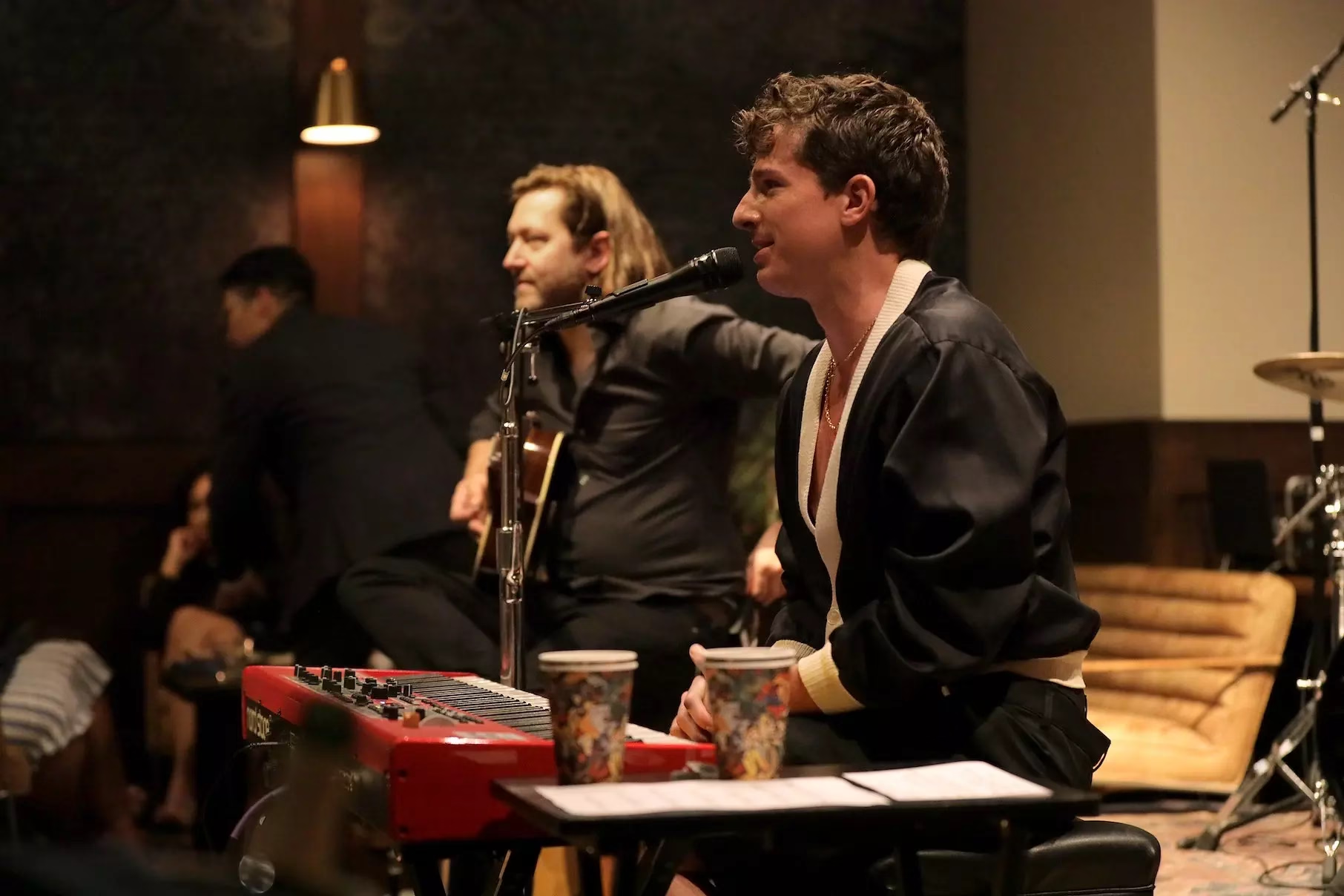
Just after Charlie Puth wrapped his North American tour on July 11, the pop hitmaker treated 150 fans to the ultimate fan experience: brunch with a side of Puth.
Part of The GRAMMY Museum's Sunday Brunch With… series, the event — a fundraiser for the organization's GRAMMY In The Schools program that was sponsored by City National Bank and Porsche — invited fans to enjoy a three-course brunch followed by an intimate 45-minute acoustic set from Puth.
From the stage at his friend (and 17-time GRAMMY Award-winning mixer) Manny Marroquin's restaurant, VERSE LA in Toluca Lake, California, Puth told stories about his days at Berklee College Of Music and his journey to stardom. He also let attendees in on his songwriting process, performing some of his most beloved tracks in the process.
For those who weren't able to make it to the sold-out event, here are six takeaways from Sunday Brunch With Charlie Puth.
He May Just Become A Music Teacher In The Future
Early on in the show, Puth made a point of shouting out one of his old Berklee professors from the stage. Turns out it was Prince Charles Alexander, a multi-GRAMMY Award winning mixer and engineer who has worked with Mary J. Blige, Destiny's Child, P. Diddy, Usher, and Aretha Franklin.
Puth said he'd often pop into Alexander's office to run ideas by him, with Alexander offering up tips in return. Puth told the crowd he still thinks about Alexander's advice when he's making his own records all these years later, and shouted out not just his professor but all music educators, saying that he's a firm believer in the value of music in our schools. He even joked that he'd like to become a music teacher himself "if this whole music thing doesn't work out."
One Of His Songs Was Inspired By A Rainy Walk…
When Puth wrote "How Long" back in 2017, it was on a long walk. He was strutting around the town wondering why there weren't more tracks written at a perfect walking tempo when it started to rain. The sound of his feet combined with the wet concrete and suddenly, he told the crowd, "it was like the chords fell out of the sky."
Puth then kicked into a smooth and resonant performance of the song — which sounded excellent on whatever sound system Marroquin installed in his restaurant — prompting one attendee to shout out in glee, "ooh, you better sing!"
…And Another Was Inspired By Ed Sheeran
Puth says he started writing "We Don't Talk Anymore" when he was on the road in Osaka, Japan. He'd fallen in love with the percussive guitar on Ed Sheeran's song "Bloodstream" and wanted to use that same sort of tone on his own track.
Puth says he also wanted to write what he called "the worldliest sounding record," or "a record that would take me around the world." Given that "We Don't Talk Anymore" hit the top 10 in 20 different countries and the video has more than three billion views on YouTube to date, it's fair to say he did just that.
He Likes To Use "Light Switch" To Inspire Up-And-Coming Musicians
When the freshly signed Puth was first in LA in the early 2010s, a producer suggested they take his newly recorded tracks to a club, where they'd play them for the crowd and see what hit. It was a novel idea for Puth at the time, but something he's adapted a bit for the modern age, when he throws bits of songs and ideas up on his TikTok, hoping to see what flies.
That's exactly how his 2022 hit "Light Switch" came to be: The simple percussive sound that you hear when you turn the lights on and off.
In videos he's posted on TikTok, he's tried to show fans that, like that song, music can come from anywhere. "You don't need a multi-million dollar recording studio to make a record," he told the crowd, reminding everyone that Soulja Boy's "Crank That" was self-produced on the rapper's home computer before breaking big on social media.
Anyone, Puth said, can make and release their own music, even if they're not currently in possession of the dream recording set-up. It's just about passion and perseverance, and a desire to make something new.
He Likes To Blend Classical Riffs With Perfect Pop Melodies
When Puth started to write "Attention," it was with a little classical riff he was fooling around with on the piano. He decided to take the classical bars and throw them into a pop song, reminding the room that it's not all that uncommon. For instance, he said, Toni Wine and Carole Bayer Sager's "A Groovy Kind Of Love" contains the Rondo from Muzio Clementi's Sonatina, Opus 36, No. 5. In Puth's view, classical music and pop can live in perfect harmony, feeding off each other and building toward something even bigger than the sum of their parts.
He's Proof Of The Power Of Being Yourself
In 2012, at the height of "weight for the drop" style EDM hits, Puth felt discouraged as he was trying to break into music himself. As he recalled, he'd moved home to his parents house and was laser focused on the pop charts, tailoring his songs to whatever was No. 1 at the moment — but they were all getting turned down by labels. Finally, he said, an A&R person gave him a piece of advice, saying, essentially, "We've heard all this before. We want to hear something from you."
That's how, on his way to record a dance track at some studio in LA, Puth decided to lay down a piano ballad instead. He says it was like "See You Again" fell into his lap and attributes its success to the fact that he wasn't trying to be anyone but himself.
"See You Again changed my life," he told the brunch crowd, noting that he'll be proud and lucky if he gets to perform it for the rest of his life. As he played it live, the whole room joyfully sang along — hinting that Puth may have crafted a lifelong hit.