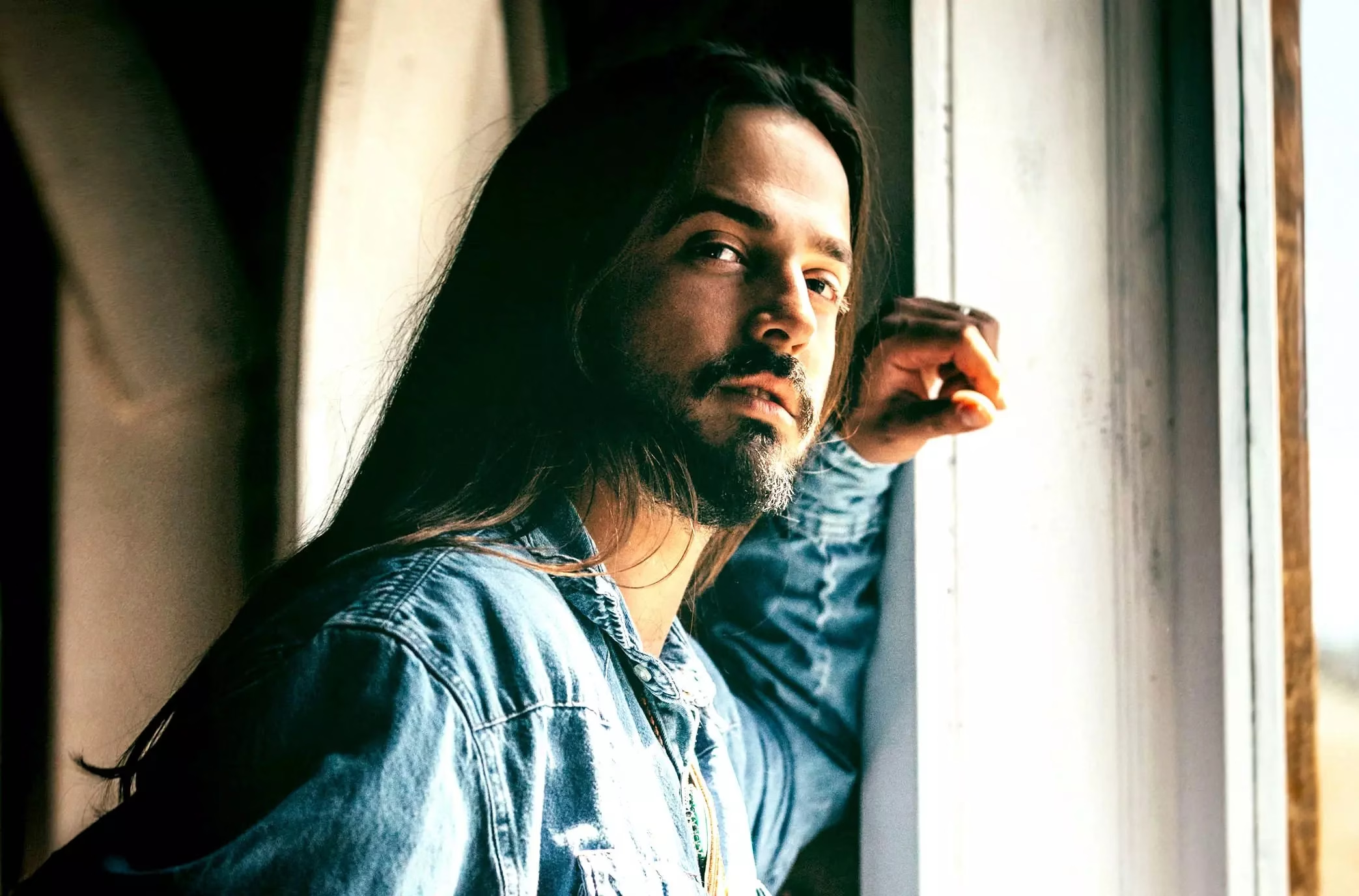
To some, the cool of the Rocky Mountains and its cowboy-populated plains might seem like the setting of an old Hollywood Western. But to Ian Munsick, it's real life — and he wants you to come along for the ride.
The Wyoming native's second album, White Buffalo, doubles down on the Western roots sprinkled across his debut set, 2021's Coyote Cry. Its 18 tracks take listeners straight to the vast and mountainous landscape of Munsick's home state, but also help shine light on the hard-working mentality of those within it.
It's a project that Munsick has always wanted to make, but never really believed he could upon moving to Nashville at 19 years old — in part because he wasn't sure if the artist path was his calling, but more so because he wasn't sure if the stories he wanted to tell would resonate. Yet Munsick's first song, "Horses Are Faster," caught on regionally before he even moved to Nashville, and Coyote Cry was excitedly received. The singer realized his future might not be so uncertain, and he releases White Buffalo with mountain-high confidence.
"Coyote Cry, the tracks on there that people resonated with the most were all about the land and the lifestyle and what makes the Rocky Mountains unique," Munsick recalls to GRAMMY.com. "I think that people are just hungry for the real deal of the West. And if they can't go there, then hopefully they can just press play on my music and be there. That's always the main goal with my music — I want my listeners to be able to close their eyes and be in Wyoming."
Within the first few strokes of fiddle on White Buffalo opener, "From the Horse's Mouth," it's clear that Munsick has aced his mission. The track's scampering melody accents his region's raw, no-bull mindset ("I won't say it behind your back what I won't tell you to your face/ That's just the cowboy way," he declares in the second verse); the song's swirling production carries through the album, too, whether over a mandolin-driven melody in "Bluegrass" or the echoing nostalgia of the title track.
White Buffalo's song titles alone are transportive, from "Ranch Hand" and "Long Live Cowgirls," to "Field of Dreams" and "Indian Paintbrush" — the latter of which is the state flower of Wyoming. One of the more jarring (yet fitting) titles is "Cows— in the Morning," which is a clever take on a breakup song. And though the overtly positive, madly in love Munsick admits he's not great at writing those, he found the perfect breakup metaphor within his cowboy lifestyle: "I'd rather smell cows— in the morning/ Than put up with her bulls— every night."
While he echoes that scorn on "Barn Burner" ("She broke my heart then her barn burned down/ Like one thing led to the other," he sings on the chorus), White Buffalo mostly carries the humility, heart and gratefulness that Wyoming has instilled within Munsick. On "Little Man," he delivers a touching tribute to his 3-year-old son, Crawford; "More Than Me" blends faith with the love for his wife, Caroline. And even when he finds himself in heartbreak on tracks like "River Run," Munsick brings himself back to the peace of the plains: "We just settle like the dust when the day is done/ Her and the river run."
Munsick's ability to turn his Western upbringing into relatable sentiments is the epitome of what makes him special. There's never a moment that feels disingenuous on White Buffalo, and his passion for his homeland — from the culture to the people — rings through in both the lyrics and the musicality.
Yet somehow, his twangy vocals and knack for an infectious melody make White Buffalo feel like it belongs alongside Munsick's radio-friendly country contemporaries — even if he's not singing about beer and trucks. "We don't need any more of those," he says with a smile.
As he continues to dive deeper into the ways of the West, Munsick also recognizes the responsibility that comes with being one of the few current country stars from that region. While he largely aims to debunk beliefs that cowboys and Native Americans are enemies ("people think that it's the 1800s," he quips), Munsick also wants people to know how much both communities respect their land and their traditions.
The singer highlights where he grew up and the people he grew up with, including members of the Crow and Blackfoot Tribes, in the video for "White Buffalo." Between his music and the visuals, Munsick is hoping to shed more light on what he calls a "hidden lifestyle" — and to show that it's not as different as it may seem.
"People living in the Smoky Mountains and people living in the heartland, they're good people that work hard every day, and are just grateful for what they have," he says. "There's nobody more country than the people that live out there."
With nearly 400 million global streams to his name before White Buffalo even arrived, there's no denying that Munsick is reaching audiences outside of his part of the country. But as for those who are in it — whether it's members of the Crow Tribe or fans from the area — they're proud to see their culture presented on a wider scale. Even if the commercial success wanes, Munsick can already rest assured he's done his upbringing justice.
"At the end of the day, if they're the only people that listen to my music, that'll be fine, because those people are who I make my music for," he says. "And I just feel very honored to be able to represent them in country music."
Meet Levi Platero, A Formidable Guitarist Bringing Blues-Rock To The Navajo Nation